

U.S. Senate passes budget bill to 'end shutdown'… House to vote as early as the 12th
Summary
- The U.S. Senate's passage of the temporary budget bill has increased the likelihood of ending the federal government shutdown.
- The temporary budget bill is expected to be finalized after a House vote and President Trump's signature.
- The prolonged shutdown has caused economic impacts such as flight delays and interruptions to support for low-income people.
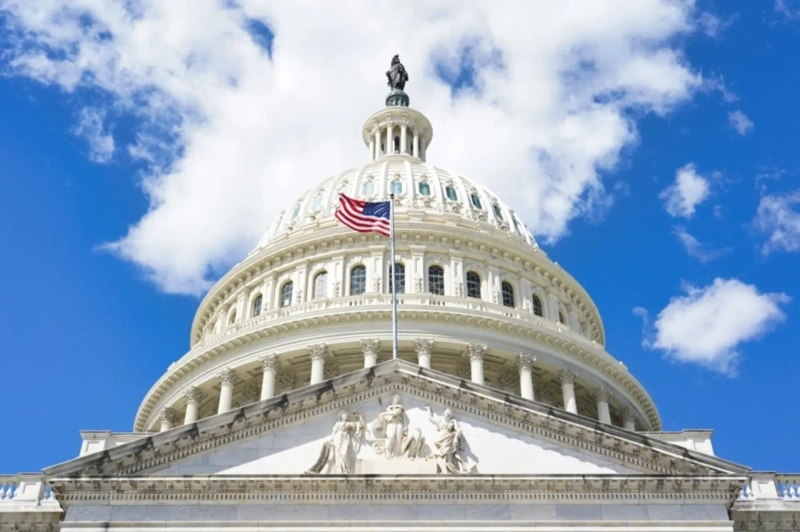
A temporary budget bill to end the U.S. federal government shutdown (temporary work stoppage) cleared the Senate on the 10th (local time). The shutdown, which had continued for 41 days as of that day, is increasingly likely to end after final approval by the House and the signature of President Donald Trump.
In the plenary session held that night, the Senate voted on the federal temporary budget bill and passed it with 60 votes in favor and 40 against.
This shutdown began on the 1st of last month after the temporary budget bill failed to be processed in the Senate due to disagreements between Republicans and Democrats over extending subsidies under the Health Care Reform Act (commonly known as Obamacare).
The temporary budget bill, which had been voted on 14 times before this day during the shutdown, repeatedly failed to reach the required 60 votes for passage because the two parties could not narrow their differences.
However, eight moderate Democratic lawmakers (including one pro-Democratic independent) agreed to support the budget bill after receiving promises from Republicans to guarantee a Senate vote on extending Obamacare subsidies and to reinstate government employees who were laid off during the shutdown, leading to a dramatic reversal in the shutdown situation.
Ahead of the final vote, the 'procedural vote' held in the Senate the previous day passed 60-40, clearing the way to consider the temporary budget bill.
The agreement by the eight Democratic lawmakers with Republicans covers the federal temporary budget through January 30 next year and three fiscal 2026 appropriations bills for agencies and government programs that reached bipartisan agreement.
The remaining House approval process is also expected to pass, as Republicans hold a majority. House Speaker Mike Johnson, a Republican, has asked House members to return to Washington, D.C., immediately. The House vote is expected to take place as early as the 12th.
President Trump also told the press that day that the agreement was "very good" and that he would "abide by the agreement."
As of the 5th of this month, the shutdown exceeded the previous longest record (35 days), setting a new record for the longest shutdown in history.
A shortage of air traffic controllers has led to reduced flight operations, causing flights to be canceled or delayed in succession at major U.S. airports. Food assistance programs (SNAP), which target 42 million low-income people, have also faced the threat of running out of funds.
There is also an assessment that the vote on the temporary budget bill revealed divisions within the Democratic Party. Senate Democratic Leader Chuck Schumer opposed the agreement, saying there had been no progress on extending Obamacare subsidies.
Leader Schumer had proposed on the 7th that he would agree to Republican processing of the temporary budget bill if Obamacare subsidies were extended for one year, but Republicans dismissed it as "not even worth discussing (nonstarter)."
Choi Su-jin, Hankyung.com reporter naive@hankyung.com

Korea Economic Daily
hankyung@bloomingbit.ioThe Korea Economic Daily Global is a digital media where latest news on Korean companies, industries, and financial markets.