

PiCK
Fed 'in-the-dark rate decision' risk…"Will be wandering in cloudy weather" [Sang-eun Lee's Washington Now]
Summary
- "The White House said the U.S. federal government shutdown may have permanently omitted key economic indicators such as October employment and the CPI."
- "It said the omission of economic indicators could lead to the Fed's FOMC rate decision being made amid significant information shortfalls."
- "Hassett emphasized that investors will face difficulties in market assessment and outlook due to the loss of continuity in economic indicators and data gaps."
Missing employment and inflation data from October to early November
White House: "May be permanently missing"
Rapid progress in developing alternative indicators
Airline operations to take one week to normalize
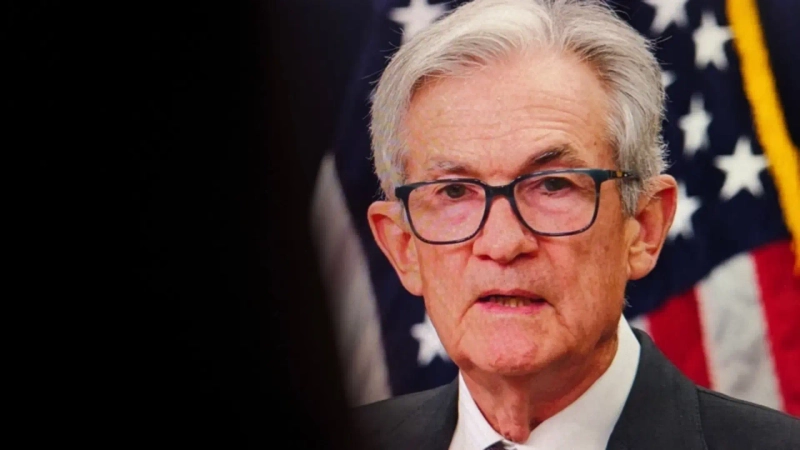
The longest U.S. federal government shutdown ended after 43 days.
President Donald Trump signed the short-term spending bill (a temporary budget) passed by the House on the evening of the 12th (local time). After the bill, which passed the Senate on the 10th, was finally approved in the House with 222 votes in favor and 209 against, the president's signature completed the process and federal government operations resumed in earnest from the 13th.
○Obamacare as a 'hot potato'
The Democrats refused to pass the budget, demanding an extension of the Obamacare (nationwide mandatory health insurance) tax credits that are set to expire at the end of this year. However, as prolonged shutdowns increased harm to low-income groups and the Republicans promised to discuss extending Obamacare, eight Democratic senators in the Senate broke ranks and voted in favor on the 9th–10th, breaking the deadlock.
President Trump claimed that the economic damage from the shutdown amounted to $1.5 trillion dollars (about 220 billion won). He also emphasized the lifting of the shutdown as a "victory for the Republican Party." But since more than 20 million people receive subsidies through Obamacare, if the program ends next year and health insurance prices surge 2–3 times, the political burden could be significant. From the Democrats' perspective, the shutdown made it clear to the public that the Trump administration opposed extending Obamacare, so they do not necessarily view this as a complete defeat. It has laid the groundwork to raise accountability for the current administration in next year's midterm elections.
The Congressional Budget Office (CBO) estimated that if the government shutdown continued for six weeks, fourth-quarter gross domestic product (GDP) growth could fall by 1.5 percentage points (annualized). The CBO said most of the GDP decline would recover later, but it expected $7–14 billion in losses to be unrecoverable.
○Omitted employment and price indicators
With the passage of a budget allowing money to be spent until January 30 next year, federal fiscal operations have a reprieve, but the scars left by a prolonged shutdown far beyond the previous record (35 days) are substantial. Investors, in particular, now face an information shortfall risk from key economic indicators that were scheduled during the government closure and may be permanently missing.
White House spokeswoman Caroline Leavitt said at a briefing that there is a high possibility that the "October employment and consumer price index (CPI) reports will not be published permanently" due to the shutdown. Major statistical agencies such as the U.S. Bureau of Labor Statistics (BLS) and the Census Bureau (CB) and the Bureau of Economic Analysis (BEA) under the Department of Commerce were unable to produce economic data properly during the shutdown.
Concerns that the October reports might not be properly released were raised throughout the shutdown. The U.S. government collects employment-related data each month with field agents surveying randomly sampled households and businesses in the week that includes the 12th, but last month those procedures could not be carried out. Post hoc verification for price surveys also carries significant potential errors. Moreover, with related agency staff reduced by 20–30%, it is difficult to conduct two months' worth of surveys at once.
○Harder to assess the economy
With interpretations of current U.S. employment and price levels diverging widely, the inability to obtain continuous up-to-date data is a major concern for investors. According to Reuters, JPMorgan Chase said in a report that "the October employment statistics might be collected and released in advance (before the November figures), or the BLS might collect them along with the November data." But JPMorgan said "October CPI data were not collected, so they will be omitted or filled with estimates, and some of the November data were also not collected."
Participants in the Federal Open Market Committee (FOMC), which decides the Federal Reserve's monetary policy, are facing an 'in-the-dark rate decision' this month. In October, the FOMC proceeded with some indicators missing, but at that time there were September data available.
Research teams at the Fed and others are collecting other supplementary indicators to gauge the tone in place of regular data. A federal official said, "During COVID-19 as well, data were not properly secured (because field surveys were difficult)," and added, "We are collecting various on-the-ground data that can aid judgment, especially weekly data that can convey sentiment more quickly." Kevin Hassett, chairman of the White House National Economic Council (NEC), said on CNBC the previous day, "Until the data agencies normalize, investors will be wandering for a while in 'cloudy weather.'"
It will also take time for airline operations to normalize. Secretary of Transportation Sean Duffy said in a press release that he would keep the flight operation reduction rate at 6% for 40 major U.S. airports. The U.S. government and the aviation industry predicted it would take about a week for flight operations to return to pre-shutdown levels.
Washington = Sang-eun Lee, correspondent

Korea Economic Daily
hankyung@bloomingbit.ioThe Korea Economic Daily Global is a digital media where latest news on Korean companies, industries, and financial markets.