

From Meta to Google… Growing GPU depreciation debate on Wall Street [Stocks+]
Summary
- It reported that the GPU depreciation period has drawn investor attention amid large-scale AI data center investments by global big tech companies.
- It stated that a company's valuation and profit recognition are decisively affected by the GPU's actual lifespan.
- It reported that with shorter product cycles from major AI firms like Nvidia, volatility and investment risk related to the GPU depreciation period are increasing.
Burry: "AI chip lifespan is 2~3 years"
MS: "Overinvesting in chips increases depreciation risk"
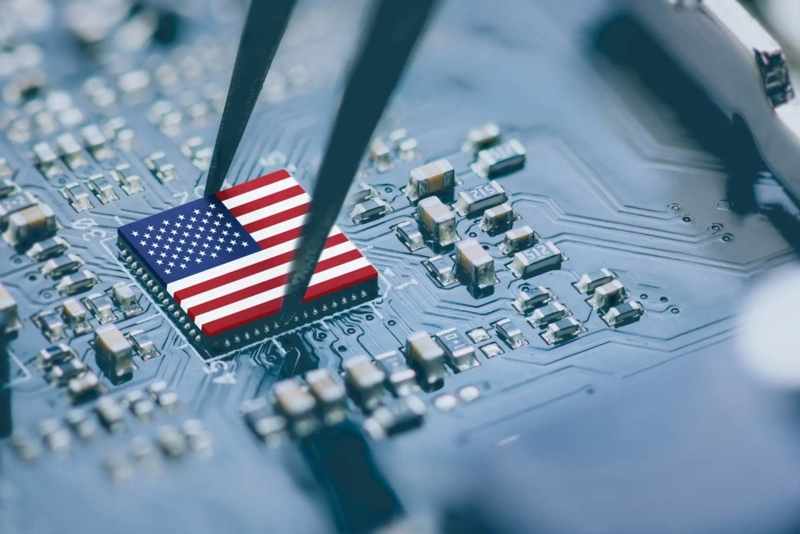
As global big tech companies plan about $1 trillion in AI data center investment over the next five years, the depreciation period of graphics processing units (GPUs), a core component of AI infrastructure, has become the industry's top concern. GPUs account for the largest share of server assets, and if the depreciation period is extended, cost recognition is spread out, which positively affects corporate earnings. Conversely, if lifespan is set short, profits could drop sharply for several years ahead, decisively influencing investors' corporate valuation judgments.
Expanded debate over tech stock bubble
The GPU depreciation debate was ignited in earnest by Michael Burry, one of the models for the film The Big Short. Burry recently disclosed short positions in Nvidia and Palantir and argued that Meta, Oracle, Microsoft, Google, Amazon, and others are assuming AI chips have a longer useful life than they actually do.
Burry criticized that the actual lifespan of AI server equipment is only 2~3 years and that companies are reducing depreciation to overstate profits. Such remarks became a catalyst that further fueled the bubble debate over AI tech stocks.
After Burry raised the issue, short-term volatility around AI-related stocks increased on the New York Stock Exchange. Major AI names like Nvidia and Palantir saw intraday adjustments of 3~6%, and companies highly dependent on AI infrastructure investment such as Oracle, Amazon, and Microsoft also showed weakness. Coupled with recent market concerns about AI infrastructure expansion, some analyses note a sense of fatigue across tech stocks.
AI infrastructure investment ramps up… "How many years can a GPU last?" is the key variable
On the 14th (local time), US CNBC ran an analysis piece titled "How long is the GPU depreciation period?" According to CNBC, global big tech companies assume a useful life for GPUs of up to six years. Google, Oracle, and Microsoft set depreciation cycles of 5–6 years based on the idea that new server equipment can be used for a longer period.
However, if the actual lifespan is shorter, it would significantly affect future financial statements, drawing investor attention.
Estimating the actual life of GPUs is difficult because the AI boom itself started only recently. The current AI industry is only in its third year since the late-2022 launch of ChatGPT. Nvidia's first AI data center chip also came out in 2018, so there is a lack of accumulated long-term usage experience and records of failure rates or performance degradation patterns.
Nvidia's data center revenue has surged from $15 billion to $115 billion recently, but this is not a long enough period to evaluate depreciation cycles.
Haim Zaltsman, vice chairman of global law firm Latham & Watkins, told CNBC, "Whether you look at 3 years, 5 years, or 7 years completely changes the investment model."
Some companies emphasize that GPU residual value is higher than expected. Cloud GPU rental company CoreWeave has applied a six-year depreciation for GPUs since 2023. However, CoreWeave's stock plunged 16% immediately after its earnings release and fell 57% from its June high, reflecting concerns about AI infrastructure overinvestment.
Another factor increasing uncertainty around GPU depreciation periods is Nvidia's fast product cycle. Nvidia shifted from a two-year cadence to a one-year cadence for AI chip releases. AMD is following a similar strategy. When Jensen Huang announced the new 'Blackwell' this year, he said, "Once Blackwell ships in earnest, there will be no takers for Hopper even if you give it away for free," acknowledging the value decline of the previous generation of chips. This added fuel to the debate over GPU residual value.
Microsoft CEO Satya Nadella said, "The generational turnover speed of Nvidia chips is fast, and if you overaccumulate a particular generation of chips, you get trapped in 4–5 years of depreciation risk." He explained, "The biggest competitor of a new chip is the existing-generation chip."
New York = Correspondent Park Shin-young nyusos@hankyung.com

Korea Economic Daily
hankyung@bloomingbit.ioThe Korea Economic Daily Global is a digital media where latest news on Korean companies, industries, and financial markets.