

Bank of Korea 'rate increase' concerns... corporate and bank bond markets freeze up
Summary
- It reported that after Lee Chang-yong, governor of the Bank of Korea, made remarks indicating the possibility of a rate increase, the corporate and bank bond markets have rapidly contracted.
- It said that as issuance yields on corporate and bank bonds have risen, cases of companies' corporate bond issuance being scaled back or postponed are increasing.
- It reported that outflows from domestic bond funds and others are continuing, weakening investor sentiment in the bond market.
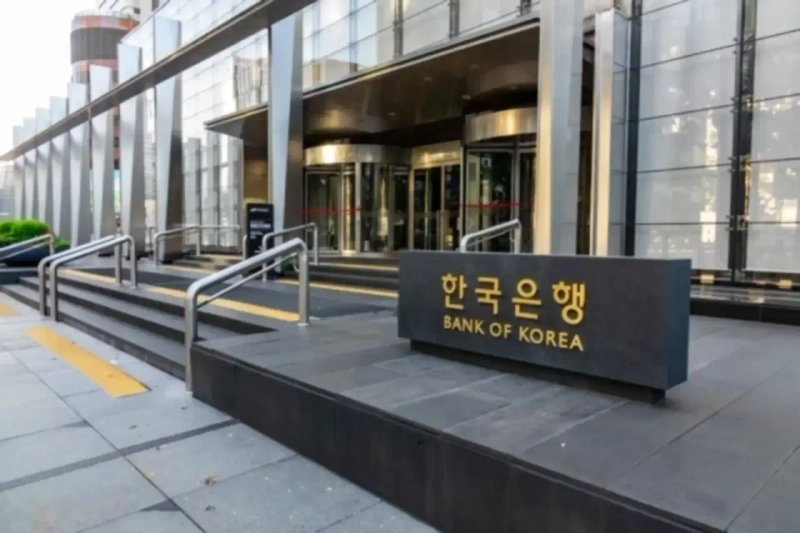
The corporate and bank bond markets are cooling rapidly. This followed remarks by Lee Chang-yong, governor of the Bank of Korea, on the 12th that suggested the possibility of a rate increase. In the capital market there is a mood that the policy rate may be maintained at its current level or could rise further. As a result, some companies are reducing or postponing their corporate bond issuance volumes.
According to the investment banking (IB) industry on the 16th, AAA-rated bank bond yields were being issued on the 14th at levels about 0.2% percentage points (20bp) higher than a month earlier. On the 31st of last month, Hana Financial Group raised its three-year issue at 2.773%, but the three-year yields issued by Woori Bank (150 billion won) and Shinhan Bank (100 billion won) on the 13th of this month were 3.08%, about 0.227% percentage points higher.
Earlier this month, Korea Electric Power Corporation (KEPCO, AAA) fixed the yield on its three-year corporate bond at a level 0.147% percentage points above the market average in its demand forecast, affecting the bond market as a whole.
The rise in issuance yields for bank bonds and KEPCO bonds is also affecting the corporate bond market. KT (AAA) had considered issuing up to 300 billion won in corporate bonds this month but cut it to 200 billion won citing interest rate burdens. A corporate bond manager at a securities firm said, "At this level of yields, it is difficult for companies to proceed with corporate bond issuance," and added, "If market rates rise further, more companies will delay issuance or reduce issuance sizes."
Institutional investors' investment sentiment is also shrinking. The three-year government bond market average yield rose more than 0.3% percentage points in about three weeks.
The retail bond market is also freezing up. According to FnGuide, 1.1237 trillion won was a net outflow from domestic bond funds over the past month. Assets under management fell from 112.2388 trillion won to 111.1151 trillion won, a decrease of more than 1%. A large asset management firm official said, "An active corporate bond ETF that was around 160 billion won last year grew rapidly to surpass 500 billion won in half a year, but recently its rate of increase has noticeably slowed."
The key reason is that the Bank of Korea's room to cut the policy rate has been greatly reduced due to housing market overheating, U.S.-Korea tariff negotiations, a sharp rise in the exchange rate, and upward revisions to growth forecasts.
Governor Lee said in an interview with Bloomberg TV on the 12th, "The Bank of Korea's official monetary policy path is a cut cycle at present," and added, "However, the magnitude or timing of rate cuts, or any reversal in direction, can change depending on new data." A securities firm bond portfolio manager said, "Ultimately, the remarks were interpreted in the market as leaving open the possibility of a rate increase."
Reporter Bae Jeong-cheol bjc@hankyung.com

Son Min
sonmin@bloomingbit.ioHello I’m Son Min, a journalist at BloomingBit