

"We will leave exchange rates to the market" Taiwan-U.S. joint statement announced
Summary
- Reported that Taiwan and the United States issued a joint statement to leave exchange rates to the market, reducing Taiwan's policy space.
- Stated that the use of public funds such as pension funds for overseas investment as an indirect exchange rate policy tool has been codified and thus restricted.
- Reported that the market expects appreciation pressure on the New Taiwan dollar to increase due to this move.
New Taiwan dollar likely to face greater appreciation pressure
Explicit ban on overseas investment by public funds such as pension funds
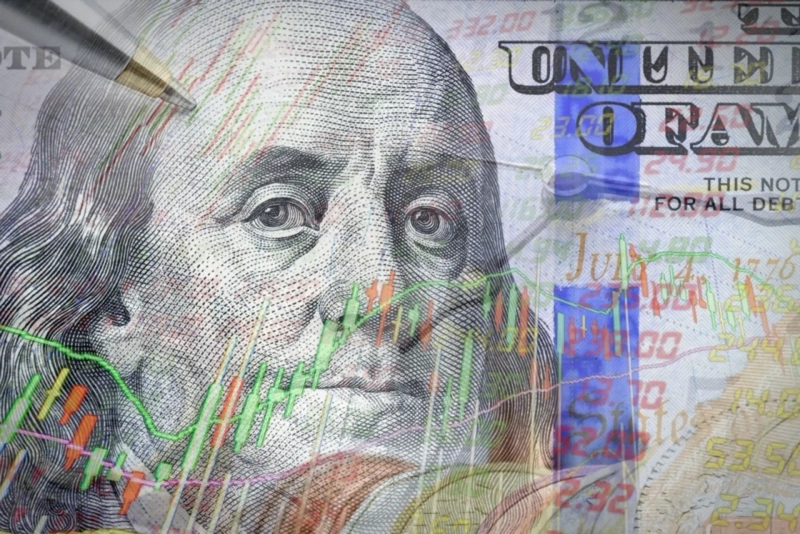
Taiwan and the United States issued a joint statement saying that "exchange rate manipulation is, in principle, not permitted." With the U.S. having designated Taiwan as a currency monitoring country, analysts say the two sides have effectively created a framework that accepts the appreciation of the New Taiwan dollar.
On the 17th, according to Taiwan's China Times, Taiwan's central bank and the U.S. Treasury Department reaffirmed the basic principle of "leaving exchange rates to the market" in a recent joint statement on exchange rate issues. The two sides agreed not to make unilateral or asymmetric interventions in the foreign exchange market, and even if intervention is possible, it will be limited to cases when excessive or disorderly volatility occurs. Taiwan media reported that this is the sixth joint statement after Japan, South Korea, Switzerland, Thailand, and Malaysia, but that the content differs slightly by country.
The statement also codified that public funds, such as pension funds, cannot be used as an indirect exchange rate policy tool through overseas investment to strengthen export competitiveness. This effectively narrows Taiwan's room for exchange rate policy. In addition, Taiwan will increase the frequency of disclosures on foreign exchange market intervention information from the current "once every six months" to "once every quarter" starting next year. In accordance with International Monetary Fund (IMF) standards, it will also additionally disclose foreign exchange-related data including sensitive information such as forward foreign exchange positions.
Markets expect this announcement to increase appreciation pressure on the New Taiwan dollar. Taiwan's opposition party criticized that "it has limited its ability to adjust the exchange rate ahead of the announcement of U.S.-Taiwan trade negotiations," and warned that "Taiwan's price competitiveness will weaken."
In its semiannual report in May, the U.S. Treasury designated nine countries, including Taiwan, as currency monitoring countries, saying it will closely watch for exchange rate manipulation. U.S. President Donald Trump has singled out "exchange rate manipulation" as the top issue among non-tariff barriers, and this move is seen as the U.S. stepping up pressure on Taiwan.
Reporter Hye-in Lee hey@hankyung.com

Korea Economic Daily
hankyung@bloomingbit.ioThe Korea Economic Daily Global is a digital media where latest news on Korean companies, industries, and financial markets.