

Bitcoin falls below $100,000…Why are some tokens rising amid this? [Hankyung Koala]
Summary
- On the 14th, the price of Bitcoin fell below $100,000, while some blockchain projects are supporting token prices based on their performance.
- Major decentralized exchanges (DEX) such as Hyperliquid, Uniswap, and dYdX are driving token value increases through fee revenue buybacks and burns.
- With U.S. regulatory easing and on-chain trends, the linking of real revenue and token value is expanding, making sober assessments of related projects' growth potential important.
Does that blockchain make money?
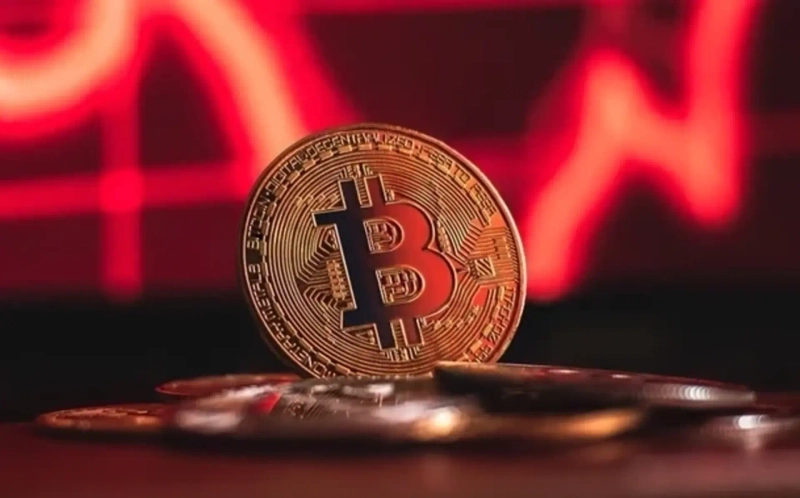
On the 14th, the price of Bitcoin fell below $100,000 for the first time in six months. It was the third sharp correction following mid-September and mid-October. Macroeconomic factors behind this drop included fear of the end of the Bitcoin upcycle, weakened expectations for further rate cuts by the U.S. central bank (Fed), and liquidity shortages due to a U.S. federal government shutdown.
While investors' attention was focused on the price of the 'blue-chip' Bitcoin, a relatively less noticed phenomenon emerged. More blockchain projects are delivering meaningful performance and directly supporting token prices based on that performance.
During the Biden administration, the Securities and Exchange Commission (SEC), led by Chair Gensler, pressured the crypto market through a "regulation by enforcement" approach. The SEC broadly applied the 1946 Howey Test and maintained the position that most tokens qualify as unregistered securities. If a token had a structure tied to profits or provided clear utility, it was interpreted as an "expectation of profit from the efforts of others," exposing projects to significant securities law litigation risk. As a result, many projects removed explicit token rights or functions to avoid litigation risk and remained with half-baked models of 'governance tokens' that only had governance voting functions. This is why the mockery "what do you do buying altcoins" lingered in the market for a long time.
However, many things began to change after President Trump, who declared himself the 'Crypto President,' was inaugurated for a second term. Chair Gensler of the SEC resigned on the day of Trump's inauguration, and the new Chair Atkins officially began pursuing regulatory exemptions for DeFi, rapidly reducing legal uncertainty for blockchain businesses.
These changes immediately led to behavioral shifts in DeFi protocols. A representative case is the success story of Hyperliquid, a decentralized exchange (DEX). Hyperliquid eliminated gas fees (blockchain usage fees) and adopted a competitive fee model based on trading volume (Taker starting at 0.035%, Maker starting at 0.01%). Ninety-seven percent of the trading fees generated here are automatically used by the platform's "Assistance Fund" to repurchase and burn HYPE tokens from the market. With average daily fee revenue exceeding $3 million in the first half of 2025, over $600 million in buybacks were carried out in 2025 alone. This is an overwhelming figure exceeding 45 of this year's total crypto project buyback volume and resulted in the burning of 21,360,000 tokens, equivalent to 2.1% of the total supply. Through this buyback structure, HYPE, which was around $3 in November 2024, rose to over $50 by August 2025, and the token price increase began to function as a flywheel that drove higher trading volume on the Hyperliquid exchange.
Uniswap, which had been the largest DEX prior to Hyperliquid's emergence, also began to change. For years, Uniswap's native asset UNI had faced criticism as a 'useless governance token.' Recently, Uniswap proposed 'UNIfication,' which would activate the long-dormant 'fee switch.' The proposal aims to convert a portion (one-quarter to one-sixth) of the fees generated under Uniswap v2's fixed fee (0.3%) and v3's variable fee (0.05%, 0.3%, 1%) into protocol fees to be used for UNI token buybacks and burns. Considering Uniswap's massive annual fee revenue of $1.8 billion to $1.9 billion, if this proposal passes via UNI governance token holders' votes, it is analyzed that token value could be supported by approximately $38 million per month in buyback effects.
The dYdX community, another existing DEX, has also joined this trend by passing a proposal to allocate 75% of fee revenue to buybacks. DYDX token holders are directly voting to increase the buyback allocation ratio.
Blockchain projects have now moved beyond an era of limiting functions to avoid regulation and entered a period of building products that are actually used, generating revenue, and competing directly over how much of that revenue is reflected in token value. 'On-chain democracy,' in which token holders adjust and decide protocol growth potential and profit distribution through governance, is also being implemented. Currently, projects demonstrating these success cases are limited to decentralized finance (DeFi) and decentralized exchanges (DEX), but these successes could expand into more areas such as allocation of computing resources, artificial intelligence (AI), on-chain marketing, and data oracles.
Beyond the long-standing regulation and uncertainty of the Biden era, global projects are now starting real 'money-making' businesses and reflecting this in token value. The U.S. government's movement toward the 'on-chain-ification' of finance will accelerate this trend. The 'blockchain revolution' talked about during the ICO era is finally beginning to materialize. A macro and sober assessment is needed about where Korean companies and Korean people will stand in the era of a blockchain revolution where finance is on-chain, which tokens they will use, and which services they will adopt.
Kim Min-seung, head of the Korbit Research Center...
He is a founding member of the Korbit Research Center and serves as its director. He explains complex events and concepts occurring in the blockchain and virtual asset ecosystem in simple terms and helps people with different perspectives understand each other. He has experience in blockchain project strategic planning and software development.
▶This article is an external columnist piece introduced to provide various perspectives to subscribers of the cryptocurrency investment newsletter and does not reflect the position of The Korea Economic Daily.

Korea Economic Daily
hankyung@bloomingbit.ioThe Korea Economic Daily Global is a digital media where latest news on Korean companies, industries, and financial markets.