

'$10 Billion' GTA6 Release Delay…Even the Global Semiconductor Market 'Shaken' [Global Money X-File]
Summary
- The delay of GTA6 caused a drop in Take-Two Interactive's stock price and had ripple effects across related industries.
- The delay pushed the supercycle of the console and semiconductor markets and the timing of the surge in consumer memory demand to the second half of next year.
- Korean game companies gained an opportunity from reduced new-release competition, while domestic semiconductor firms will inevitably need to revise business strategies in the short term.


A single console game has recently had a major impact on various industries, including the global gaming market, next-generation computer hardware strategies, and global semiconductor demand. This is due to the postponement of the release date of 'GTA6', the new installment in the popular game series Grand Theft Auto (GTA). Analysts say this is the result of a complex interplay of management risks in the advanced knowledge labor market despite advances in artificial intelligence (AI) technology.
Release Delay of the '$10 Billion' IP
On the 26th, according to the global gaming industry, the US game company Rockstar Games' parent company 'Take-Two Interactive' announced it will officially delay the release date of GTA6 to November 19 next year. This is the second delay following the first delay announced in May last year, which adjusted the original 'fall 2025' target to 'May 2026'. Immediately after the announcement, Take-Two's stock fell more than 7% in after-hours trading, showing the market's immediate reaction.
The GTA series is considered one of the icons symbolizing modern popular culture. It has generated tens of billions of dollars as a single game IP (intellectual property). The previous installment, GTA5, released in 2013, has surpassed cumulative sales of 220 million units over 12 years since its release. Even this year, more than 10 years after release, it has continued to sell about 5 million units per quarter.
According to Take-Two's earnings announcement and IT specialist media 'TweakTown', the GTA franchise recorded at least $10.221 billion in revenue over 12 years since the release of GTAV. That scale is comparable to the combined success of several of Hollywood's most successful movie franchises. Market expectations for GTA6 have reached astronomical levels based on this success. The Financial Times (FT) reported that GTA6 would be the 'largest entertainment launch', generating about $3 billion in revenue in its first year.
However, behind these expectations lies a structural problem in the AAA (big-budget blockbuster games) industry: large development costs and lengthening development periods. Industry analyses suggest that GTA6's development costs alone will exceed $1.5 billion. Adding marketing costs, total costs could reach up to $2 billion. This is comparable to the annual cultural budgets of some countries.
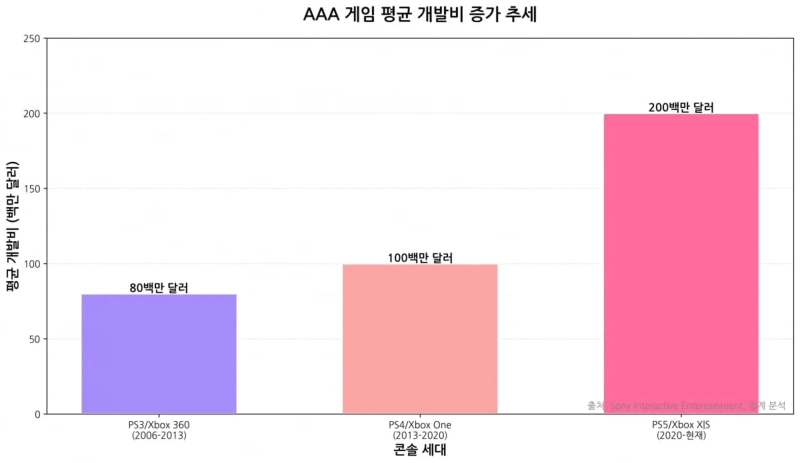
This is the current state of the game industry. According to an April analysis by the game production support firm 'Allcorrect Games', AAA game development costs increased at an average annual rate of 6% from 2017 to 2022 and at an average annual rate of 8% since 2022. This outpaces revenue growth. Development periods have also tended to increase from 3–4 years in the past to 5–7 years recently. As the scale and complexity of games increase and dependence on "hit" titles deepens, game development risks are growing. The delay of GTA6 is analyzed as an inevitable result occurring within this industrial backdrop.
IT Ecosystem 'Direct Hit'
The delay of GTA6 is triggering a chain reaction across the entire game industry ecosystem. GTA6 was expected to act as a powerful 'platform seller' forcing hardware replacement cycles. Historically, releases in the GTA series have been a catalyst that dramatically increased console sales. This delay is seen as postponing a console market supercycle. IT market analysis firm Ampere Analysis lowered its console sales forecast for this year by about 700,000 units due to the delay of GTA6.
Sony has been hit hard. The high-performance model 'PS5 Pro', released at the end of last year, was reportedly planned with this year's expected GTA6 launch in mind. Consumers now have strong incentives to postpone hardware upgrades until the expected GTA6 release in the second half of next year. Microsoft (MS) is also expected to face difficulty maintaining sales momentum for the Xbox Series X|S.
The release schedule for next-generation consoles is also affected. Some analysts say the GTA6 delay will act as a 'life support' extending the lifespan of current-generation devices. Sony and MS are likely to postpone the release of next-generation consoles from 2027 to 2028 or later. This is a significant variable that also affects the medium- to long-term business plans of component suppliers such as AMD, which supplies system-on-chip (SoC) for consoles.
The GTA6 release schedule also greatly affects competitors. Competitors are staking everything to avoid a head-on clash with GTA6. Bloomberg even titled a newsletter after the first GTA6 delay, "GTA6 delay affects every game company." From just after the first delay in May last year, competitors such as EA and Ubisoft moved to seize the release windows left open by GTA6. Andrew Wilson, CEO of EA, said "A less crowded competitive period could be an opportunity for our titles."
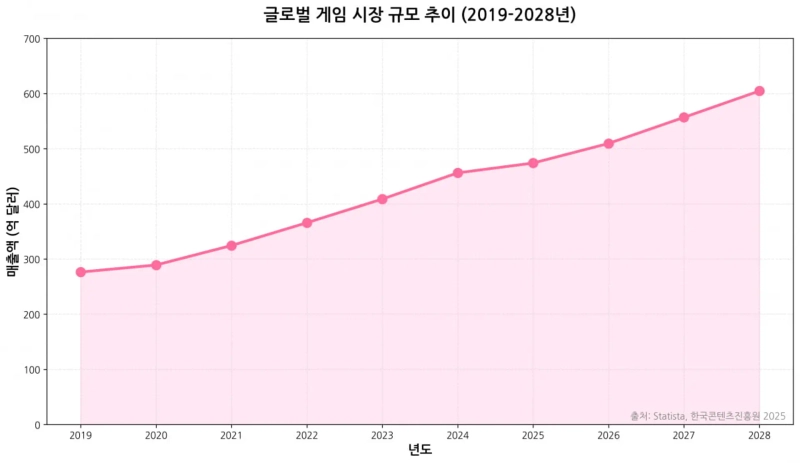
This phenomenon affects not only AAA titles but also small and mid-sized developers. Shams Jorjani, CEO of Arrowhead Game Studios, described GTA6 as "an overwhelmingly dominant presence that could block out the sun." Regarding the second delay, he said, "It's a six-month bonus period where GTA won't be hanging over us."
Delays in Development Because of AI?
The GTA6 delay also raises the question, "If AI is an innovative tool, why hasn't development time shortened?" The investment market expected generative AI to dramatically speed up game development. AI adoption is indeed widespread. According to a survey by Google Cloud and 'Harris Poll' last August, 87% of game developers said they use AI for tasks such as text, code, and audio. 94% responded that it will have long-term cost-saving effects.
However, the GTA6 case highlights the limits of such optimism. Strauss Zelnick, CEO of Take-Two Interactive, recently said in a lecture, "Generative AI is data-driven and lacks 'forward-looking creativity,' and games like GTA6 cannot be made by AI," emphasizing that "the creativity of GTA6 is entirely the product of humans." He called AI "the future of technology" and offered an optimistic view that it will raise productivity and increase employment and GDP in the long term. But he was skeptical about short-term reductions in development time.
Some argue this is similar to the so-called Jevons Paradox. When technological innovation increases efficiency, resource usage does not necessarily decrease; demand may increase, leading to greater total use. In game development, AI tools can improve efficiency in coding and other areas. However, developers may spend the time saved on more complex and creative tasks, raising the overall quality targets for games.
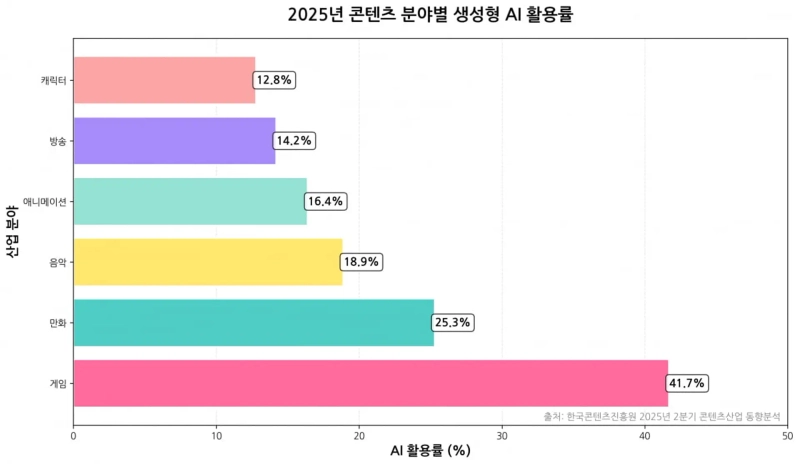
AI adoption is acting to increase the density and complexity of games rather than shorten development times. It is a technical paradox resulting in delayed development.
There is also an analysis that Rockstar Games' perfectionism is a reason for the release delay. Rockstar Games had a reputation for a 'crunch' culture characterized by extreme work intensity. During the development of Red Dead Redemption 2, it was criticized for work intensity reaching 100 hours per week. There have been reports that the company attempted organizational culture improvements in recent years. Some analysts say such changes are part of the background to this delay decision.
Efforts to avoid crunch mode did not lead to improved working conditions. After a large-scale data leak in 2022, Rockstar abolished flexible work arrangements last year, citing strengthened security measures. It implemented a full five-day in-office attendance policy. Employees and the UK's independent union IWGB strongly opposed this, citing worsened work-life balance and increased control.
The related conflict peaked recently when 31 employees were dismissed from Rockstar's Edinburgh studio. The company claimed this was due to "serious misconduct (leak of confidential information)." But the union's explanation differed. Alex Marshall, general secretary of IWGB, condemned it as "the most blatant and ruthless union-busting in the history of the games industry."
Impact on the Korean Economy as Well
The GTA6 delay also affects macroeconomic indicators and investment markets. Ampere Analysis estimates a related revenue decline of $2.7 billion this year, which could be interpreted from a macroeconomic perspective as consumers' "forced savings." Ampere explained in its report, "This is not disappearing revenue but largely deferred revenue." With the release moved to November next year, Rockstar is likely to achieve the largest single-quarter revenue in history in next year's fourth quarter.
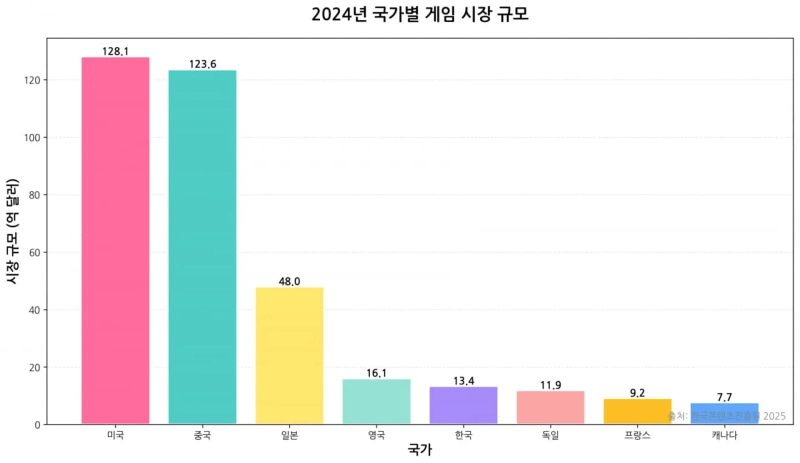
A new opportunity has arisen for major domestic game companies. With GTA6 absent from the market in the first half of next year, Korean AAA console game titles targeting release in that period can avoid a powerful competitor. Some analysts say this creates a 'golden time' for the Korean game industry to secure global IP competitiveness.
On the other hand, domestic semiconductor companies may need to revise business strategies. Historically, GTA releases have triggered worldwide PC upgrades and console purchases, sparking demand for DRAM and NAND flash (SSD). Due to this delay, the expected surge in demand for high-capacity SSDs and next-generation graphics DRAM (GDDR7) that was anticipated for the first half of next year has been pushed back to the second half. This inevitably means downward adjustments to consumer memory sales targets for the first half of next year in the short term.
This could paradoxically become an opportunity. According to domestic securities analysts, to respond to the surge in demand for high-bandwidth memory (HBM) for AI, existing general-purpose DRAM lines are being converted to HBM lines. General-purpose memory supply capacity is insufficient. If GTA6 had launched in the first half of next year, causing a surge in consumer DRAM demand, there could have been a 'supply shock' and sharp price increases while producers focused on HBM production.
Reporter Kim Joo-wan kjwan@hankyung.com

Korea Economic Daily
hankyung@bloomingbit.ioThe Korea Economic Daily Global is a digital media where latest news on Korean companies, industries, and financial markets.