

October: Korean retail investors' overseas investment US$6.8 billion > trade balance US$6.1 billion
Summary
- It reported that last month's overseas stock investment-related domestic dollar outflow was US$700 million more than the trade balance surplus.
- The government said the surge in overseas investment by Korean retail investors is one of the factors behind the recent high won–dollar exchange rate.
- The Ministry of Economy and Finance explained that the increase in domestic residents' overseas investment has affected the rise in the exchange rate.
Ministry of Economy and Finance: "Domestic residents' overseas investment has increased significantly…affecting the rise in the exchange rate"
Last month, the dollars that left the country due to individual investors' investments in overseas stocks were about US$700 million more than the dollars earned through exports. Analysts say that the increase in overseas investment by Korean retail investors is a factor behind the won–dollar high exchange rate surging into the mid-to-high 1,400s.
On the 26th, according to the Korea Securities Depository's securities information portal (SEIBro), last month's foreign securities settlement-based buy amount through the Korea Securities Depository was US$46.81841 billion, and the sell amount was US$40.00541 billion. Net buying amounted to US$6.813 billion. This figure excludes transactions related to asset management companies and exchange-traded funds (ETFs).
The dollars that flowed out domestically to buy overseas stocks exceeded the amount earned from trade in one month. According to the Korea Customs Service, last month's exports amounted to US$59.573 billion and imports to US$53.516 billion. The trade balance recorded a US$6.057 billion surplus. The trade balance refers to net foreign currency inflow through goods exports and imports.
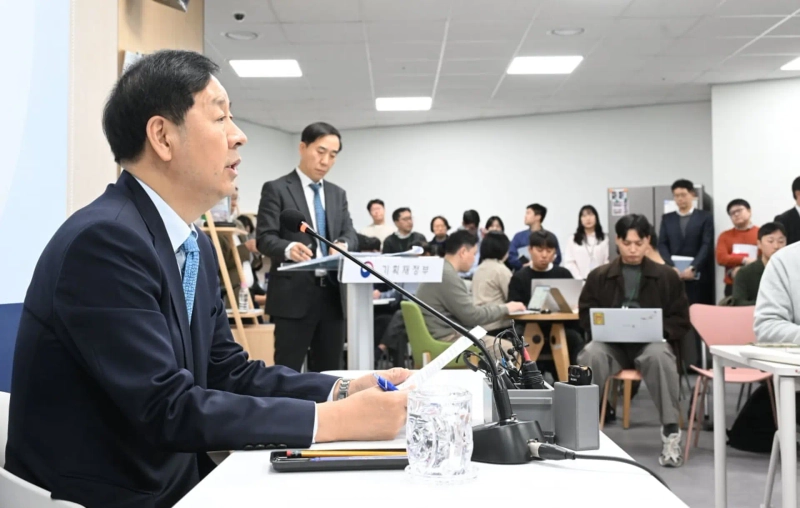
The government views the surge in overseas investment by Korean retail investors as one of the factors behind the recent rise in the won–dollar exchange rate. Deputy Prime Minister and Minister of Economy and Finance Koo Yun-cheol said at a foreign exchange market briefing held at the Government Complex Sejong, "In addition to uncertainty over U.S. interest rate cuts and continued fiscal risks in major countries, structural foreign exchange demand is increasing domestically."
Kim Jae-hwan, head of the International Finance Bureau at the Ministry of Economy and Finance, explained, "Although foreign exchange conditions are favorable — the current account surplus reached US$82.8 billion through the third quarter of this year — it is true that the significant increase in overseas investment by resident domestic investors has also contributed to the exchange rate rise."
Gwang-sik Lee reporter bumeran@hankyung.com

Korea Economic Daily
hankyung@bloomingbit.ioThe Korea Economic Daily Global is a digital media where latest news on Korean companies, industries, and financial markets.