

Summary
- It reported that domestic ICO allowance is expected to resume after eight years.
- The government plans to change the term to digital assets and introduce measures to strengthen responsibility, such as no-fault liability for damages to protect investors.
- Entry barriers for overseas stablecoins will be raised, and the market supervision system and license structure will be extensively reorganized.
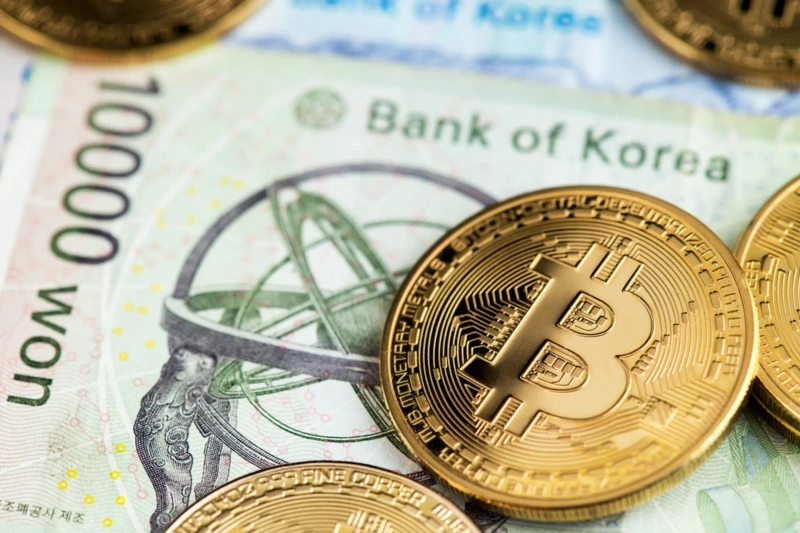
Domestic initial coin offerings (ICOs), which were banned in 2017, are expected to be allowed again after eight years. The legal term will also be changed from the existing 'virtual assets' to 'digital assets' to align with global standards.
According to the National Assembly and financial authorities on the 19th, the Financial Services Commission has prepared a government draft of the "Digital Asset Basic Act (Phase 2 legislation)" containing these measures and plans to report it to the Presidential Office today. The government is aiming to implement the law next year and is in final coordination with related institutions such as the Bank of Korea. The government draft will be finally reviewed at the Democratic Party of Korea's Digital Asset Special Committee (TF) meeting on the 22nd.
Preventing 'opaque listings'... 'no-fault liability for damages' for false statements in whitepapers
The core of this draft is the 'regularization' of the market and 'strengthening of responsibility.' The aim is to allow domestic ICOs on the premise of information disclosure, improving the practice in which domestic companies issued coins overseas and then had them indirectly listed on domestic exchanges.
Investor protection measures will be strengthened in return. If false information is written in a whitepaper or important facts are omitted, not only the issuer but also the technology contractor and market makers (MM) and others involved will be subject to 'no-fault liability for damages.' This is a measure to prevent the proliferation of fraudulent coins.
The security responsibilities of businesses such as exchanges will also be greatly strengthened. In the event of hacking or system failures, businesses will be liable for compensation regardless of negligence. Previously there were exemptions, but if the bill passes, exchanges will have to cover the entire amount of damage unless the user's intent or gross negligence is proven.
Overseas coins like Tether and Circle barred if no 'domestic branch'
Entry barriers for stablecoins will be significantly raised. Overseas stablecoins such as Tether (USDT) and USDC will only be allowed to circulate in Korea if they establish a domestic branch.
In addition, stablecoin issuers must deposit/trust at least 100% of issued balances with management institutions such as banks, and the act of paying interest to users is prohibited. The capital requirement for issuing businesses is likely to be reviewed at around KRW 5 billion, similar to the level for electronic money businesses.
The market supervision system will also be reorganized. The FSC plans to establish a market control tower called the 'Digital Asset Commission' and grant public functions such as listing review to a self-regulatory organization, the 'Digital Asset Industry Association (provisional name).' In particular, large coins that could affect monetary policy (approximately KRW 8 trillion or more by EU standards) will be designated as 'important digital payment tokens,' and it was agreed to grant the Bank of Korea the right to request materials and joint inspection rights.
Last-minute disputes over the '51% bank ownership' rule... aiming for parliamentary passage in February
The license system will shift from the current single license to a function-based (trading · brokerage · custody) segmentation, introducing an 'add-on' approach where only required functions are authorized. To prevent conflicts of interest, exchanges will be fundamentally prohibited from participating in stablecoin issuance.
However, final disputes continue over the requirements for stablecoin issuers. The Bank of Korea argues that, for financial stability reasons, only a consortium in which banks hold 51% or more of the shares should be recognized as issuers, while the FSC and the industry oppose this, saying it could become a barrier to entry for startups.
The Democratic Party TF plans to finalize the government draft within this month after the meeting on the 22nd, submit the bill next month, and aim for passage by the National Assembly plenary session as early as February next year. A Financial Services Commission official said, "The government draft has not been finally confirmed," and a Democratic Party official also said cautiously, "Whether a finalized plan will come out at the meeting on the 22nd remains to be seen."

Doohyun Hwang
cow5361@bloomingbit.ioKEEP CALM AND HODL🍀