

Countdown to the yuan's '7 yuan to the dollar' collapse
Summary
- It reported that the recent value of the yuan reached its highest level in 14 months, with the collapse of 7 yuan to the dollar imminent.
- It said that the U.S. benchmark interest rate cut, the Chinese government's policy to stimulate domestic demand, and the inflow of investment into the Chinese stock market are the background for the yuan's strength.
- Global financial firms expect the yuan exchange rate to further rise to 6.7–6.8 yuan to the dollar by the end of next year.
Highest value against the dollar in 14 months
Up 3.7% this year … strength expected next year as well
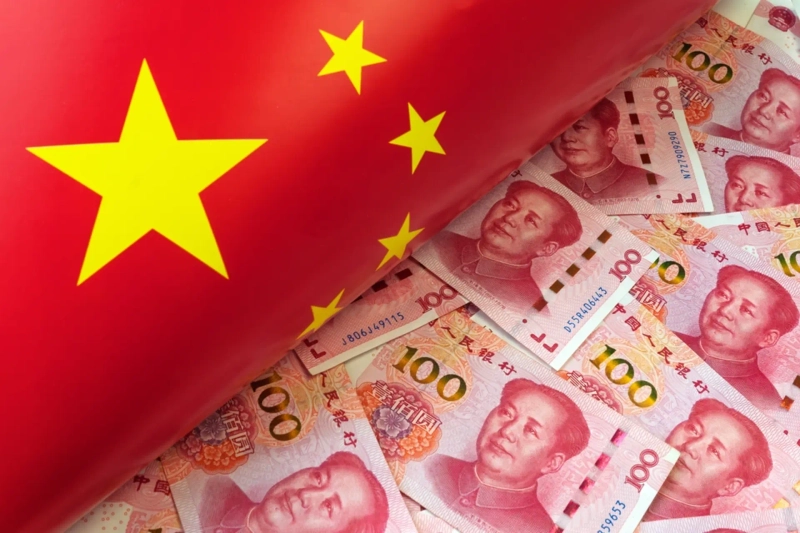
The Chinese yuan exchange rate has recorded its lowest level in 14 months (an appreciation of the yuan), bringing the collapse of 7 yuan to the dollar within sight. With the U.S. central bank (Fed) cutting its policy rate and the Chinese government prioritizing stimulating domestic demand as its top economic policy next year, it is analyzed that authorities are tolerating an appreciation of the yuan.
On the 24th in the Shanghai foreign exchange market, the yuan exchange rate was 7.0263 yuan to the dollar as of 4:30 p.m., down 0.02% from the previous day.
It was the lowest in about 14 months since October 7 last year when it was 7.0185 yuan. The yuan's value fluctuated in the first half of this year, then continued a sharp rise in the second half. The yuan's value against the dollar has risen about 3.71% so far this year.
As the trade conflict with the U.S., the biggest variable for the Chinese economy, has eased and investment inflows into the Chinese stock market have accelerated, forecasts that the yuan will continue to strengthen next year are spreading. Many expect the psychological resistance level of 7 yuan to the dollar to be broken early next year. Bank of America and Goldman Sachs expect the yuan exchange rate to converge to around 6.8 yuan to the dollar by the end of next year, and Deutsche Bank forecasts it will fall to 6.7 yuan.
China urgently seeks to stimulate domestic demand, tolerating yuan appreciation
Bad news for exporters but stimulates consumption … Goldman says the yuan is "about 25% undervalued"
The Chinese yuan is on a high. This is due to a combination of the Fed's rate cuts and the easing of U.S.-China trade tensions. In addition, Chinese authorities appear to be tolerating yuan appreciation as they push for growth led by domestic demand next year. Many expect the psychological 7-yuan-to-the-dollar level to be broken early next year.
According to Beijing's financial sector on the 24th, local and global financial firms such as Goldman Sachs, Bank of America, and Huatai Securities expect the yuan to converge to around 6.8 yuan to the dollar by the end of next year. Deutsche Bank sees it falling to 6.7 yuan. UK Yurizon SLJ Capital predicted that the yuan could sharply appreciate to 6.25 yuan to the dollar by the end of next year. Since last September, the yuan exchange rate has never fallen below 7 yuan to the dollar.

Although non-dollar currencies including the yuan have generally appreciated due to the Fed's policy rate cuts, the yuan's strength is particularly pronounced. Behind the yuan's strength are not only the dollar's weakness but also China's solid export performance, a booming Chinese stock market, and the government's strong commitment to stimulate domestic demand. Additionally, even Chinese exporting firms are preferring yuan settlements, which is lifting the yuan's value.
The Chinese government is also tolerating a certain degree of yuan appreciation. In fact, on that day the People's Bank of China announced the dollar-yuan central parity rate at 7.0471 yuan, down 0.07% from the previous day. Since last month the People's Bank has been setting the central parity lower than market expectations. The Chinese government lists stimulating domestic demand as its top policy goal for next year. While yuan appreciation is bad news for Chinese exporters, it is essential for strengthening the domestic market. Lower raw material and import costs can have a positive effect on expanding domestic demand and stimulating consumption. In addition, there is the aim of promoting the internationalization of the yuan through its appreciation. If the yuan rises stably, its influence in international financial markets will inevitably grow.
Goldman Sachs assessed that the current value of the Chinese yuan is undervalued by about 25% relative to its economic fundamentals. As China's trade surplus is expected to reach an all-time high this year, international criticism over trade imbalances is spreading. The Chinese government's strategy is to ease trade tensions through yuan appreciation while also aiming to stimulate consumption.
The rise in the value of the yuan could alleviate the weakness of the Korean won. This is based on past instances where the won and the yuan showed synchronized movements.
Beijing = Kim Eun-jung, correspondent kej@hankyung.com

Korea Economic Daily
hankyung@bloomingbit.ioThe Korea Economic Daily Global is a digital media where latest news on Korean companies, industries, and financial markets.