

PiCK
U.S.-China leaders to meet up to four times this year… Rare earths and Taiwan are the 'key' [Sang-eun Lee's Washington Now]
Summary
- It reported that this year U.S.-China leaders are scheduled to meet up to four times, drawing attention to economic issues such as trade negotiations, tariffs, and rare earths.
- It stated that if meetings between the two leaders become more frequent, it could have a positive impact on the global economy and South Korea's export conditions.
- However, it predicted that tensions and competition over core industries and strategic resources between the two countries will continue.
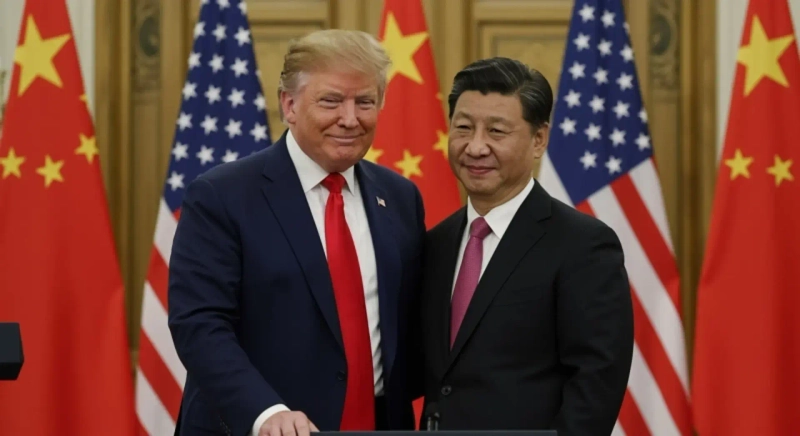
President Donald Trump is scheduled to meet with Chinese President Xi Jinping four times this year. The outcome of these meetings is expected to determine the direction of world politics and the global economy.
Under Trump's second-term administration, U.S.-China conflict escalated sharply and then showed signs of easing. President Trump opened hostilities by applying high tariffs reaching up to 145%, but China countered with prepared measures such as the rare-earths export control card. It was a scene that once again confirmed the importance of 'supply-chain security' identified during the COVID-19 period.
This war entered a truce when the two leaders met in Busan at the end of October for the first time in six years. The United States lowered tariff rates on China, and China postponed rare-earths export controls for one year. Since then, the two countries have been conducting cautious explorations without provoking each other's 'red lines.'
The first touchstone for gauging the relationship between the two countries will be President Trump's visit to China, scheduled for April. While President Trump will focus on economic issues such as getting China to buy more U.S. agricultural products, President Xi is likely to raise sensitive security issues including Taiwan.
If the meeting proceeds smoothly, Xi is expected to make a reciprocal visit to the United States in midyear. It is difficult to predict whether he would go to Washington, D.C. or the Mar-a-Lago resort in Florida. The two leaders could also meet twice more at the APEC summit in Shenzhen in November and the G20 summit in Florida in December. Frequent meetings between the two leaders would indicate a relaxation of tensions. In that case, the global economy is expected to be positively affected. It could also be a favorable sign for South Korea's export conditions, given its deep economic ties with both countries.
However, the two countries are likely to fundamentally continue their tense relationship. Despite last year's truce decision, several unresolved issues remain. U.S. Treasury Secretary Scott Bessent predicted that a U.S.-China trade agreement on rare earths could be concluded by Thanksgiving at the end of November, but no progress has yet been reported on this issue. The prevailing view is that China will never give up control over key industries. The issue of ByteDance's subsidiary TikTok being sold to U.S. investors has also seen a year of reports saying it is 'almost done.' Some tariff adjustments and expanded cooperation may take place, but regulation and competition over core technologies and strategic resources are expected to remain.
On security issues, the confrontational dynamic between the two countries becomes more pronounced. In the National Security Strategy (NSS) released in early December, the United States took the unusually cautious stance of not referring to China as an enemy, but it clearly expressed its willingness to defend Taiwan. It cited economic reasons such as the need to guarantee freedom of navigation. President Trump downplayed China's large-scale encirclement drills around Taiwan at the end of last month as "something they've been doing for 20 years," but the U.S. Department of Defense issued a report at the end of last year stating that "China expects to have the capability to fight and win a war over Taiwan by 2027."
Washington = Sang-eun Lee, correspondent selee@hankyung.com

Korea Economic Daily
hankyung@bloomingbit.ioThe Korea Economic Daily Global is a digital media where latest news on Korean companies, industries, and financial markets.