PiCK
Bitcoin Moves Sideways, Ethereum Holds Up… Crypto Market Faces the ‘Trump Variable’ [Lee Su-hyun’s Coin Radar]
Summary
- Bitcoin is in a phase where it is difficult to take a clear directional view as factors such as the MVRV indicator, short- and long-term holders’ breakeven levels, the Clarity Act, spot ETFs, and a $140,000–$180,000 medium- to long-term outlook intersect.
- Ethereum’s key variables include a rebound above $3,000, rising exchange inflows, the Glamsterdam upgrade, growth in RWA and stablecoins, and support at $2,760 and resistance at $3,470 and $4,770.
- For Binance Coin, factors influencing investor sentiment include easing regulatory risk, the withdrawal of the SEC lawsuit, the Changpeng Zhao pardon issue, the Fermi hard fork, and whether it breaks above $870.
Forecast Trend Report by Period


<Lee Su-hyun’s Coin Radar> is a weekly column that reviews trends in the virtual asset (cryptocurrency) market and explains what’s driving them. Going beyond a simple list of prices, it provides a multidimensional analysis of global economic issues and investor behavior, offering insights to gauge the market’s direction.
Major Coins
1. Bitcoin (BTC)
Even in the new year, Bitcoin continues to trade sideways without finding a clear direction. Over the past two weeks, the price has been trapped in the $87,000–$88,000 range, showing a classic range-bound market. As of the 2nd, based on CoinMarketCap, Bitcoin is trading around $88,000.
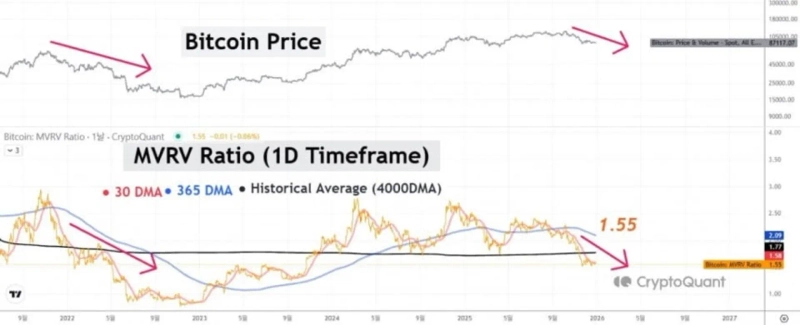
On-chain data suggests the structural backdrop to this stagnation is relatively clear. According to CryptoQuant, the 30-day moving average of the MVRV indicator—which compares market value to realized value—is currently around 1.55, still below 1.77, which has served as a bull-market baseline over the past 10 years. This implies it is still difficult to conclude the market has returned to a full-fledged bullish structure.
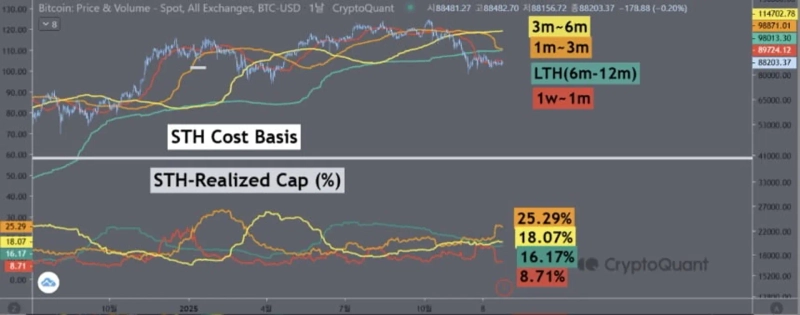
Investors’ profit-and-loss positioning is also weighing on Bitcoin. The average cost basis for short-term holders is about $103,000, leaving many in the red. In addition, the breakeven level for long-term holders who have held Bitcoin for more than six months is formed around $98,000, meaning that even if a rebound emerges, break-even selling can easily come out. There is also analysis that about 60% of the realized capital supply is in loss.
In this environment, the variables the market is watching most closely this year are policy and politics. In particular, whether the U.S. ‘Clarity Act’ ultimately passes is seen as a key issue. If the bill—which clearly distinguishes whether virtual assets are securities or commodities and clarifies regulatory jurisdiction—passes, it could provide a rationale for banks and large institutions that have been on the sidelines to enter the market. Citigroup said that regulatory clarity could act as a catalyst for increased inflows into spot exchange-traded funds (ETFs).
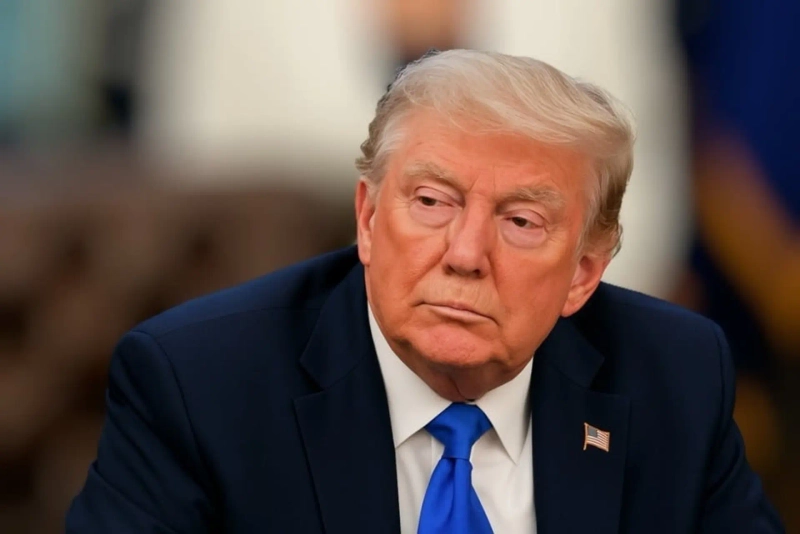
Political variables also matter. Depending on the outcome of the U.S. midterm elections scheduled for November, it could determine whether pro-crypto policies retain momentum. Warnings have also emerged that if Republicans lose control of Congress, the current pro-virtual-asset stance could weaken.
Bitcoin’s outlook for this year is sharply divided. A CryptoQuant contributor at XWIN Japan Research warned that “if a recession takes hold in earnest, Bitcoin could fall below $80,000, and in an extreme case even be pushed down into the $50,000 range.” By contrast, JPMorgan and Citigroup, citing an improving regulatory environment and broader institutional adoption, have pointed to the possibility of a rise to $140,000–$180,000 over the medium to long term. Ultimately, many assess that this is a phase that requires patience rather than a definitive directional call.
2. Ethereum (ETH)
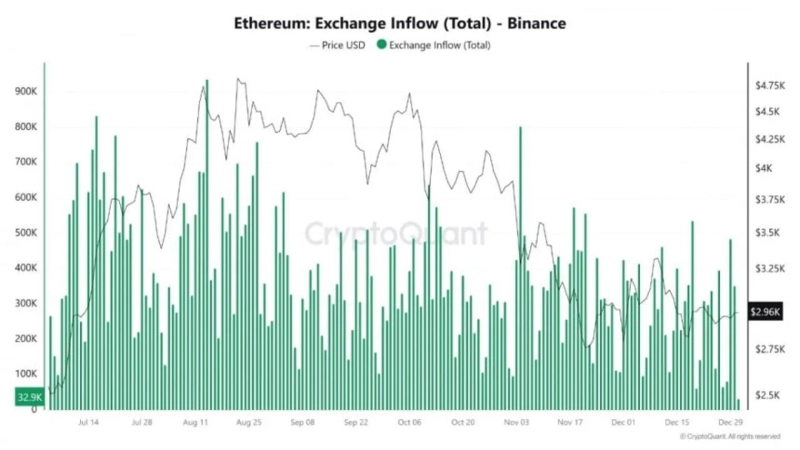
Ethereum has regained $3,000 as of the 2nd based on CoinMarketCap, showing relatively resilient price action among major coins. However, on-chain data is flashing mixed signals at the same time.
First, exchange inflows have surged. Over the month of December last year, the amount of Ethereum flowing into Binance reached about 8.5 million ETH, and exchange balances increased to 4.17 million ETH. Rising exchange inflows are interpreted as a near-term overhang because they can turn into selling at any time. Given Binance’s high share of derivatives trading, the possibility of heightened volatility is also on the table.
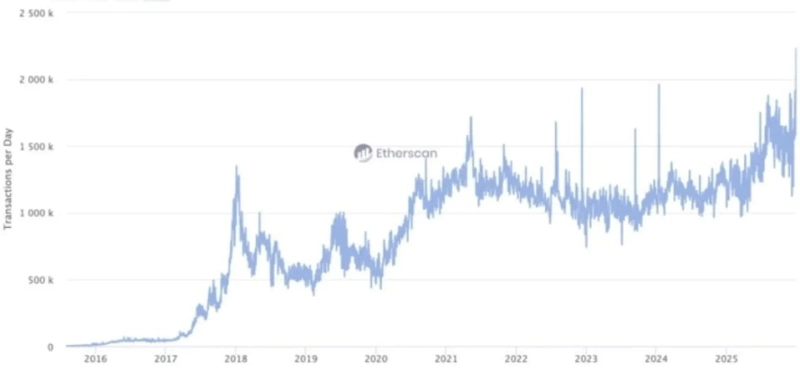
On the other hand, network activity is robust. According to Etherscan, daily transactions on the Ethereum mainnet recently hit an all-time high of 2.12 million, while average fees fell to around 17 cents. Compared with May 2022, when fees per transaction exceeded $200, the structural improvement is clear.
The market is focusing on an Ethereum upgrade scheduled for this year. The ‘Glamsterdam’ upgrade planned for the first half is expected to take scalability and efficiency up a notch through parallel execution and improvements to the fee structure. It is an upgrade aimed more at laying the groundwork for expanding the DeFi and Web3 ecosystem than at providing a short-term price catalyst.
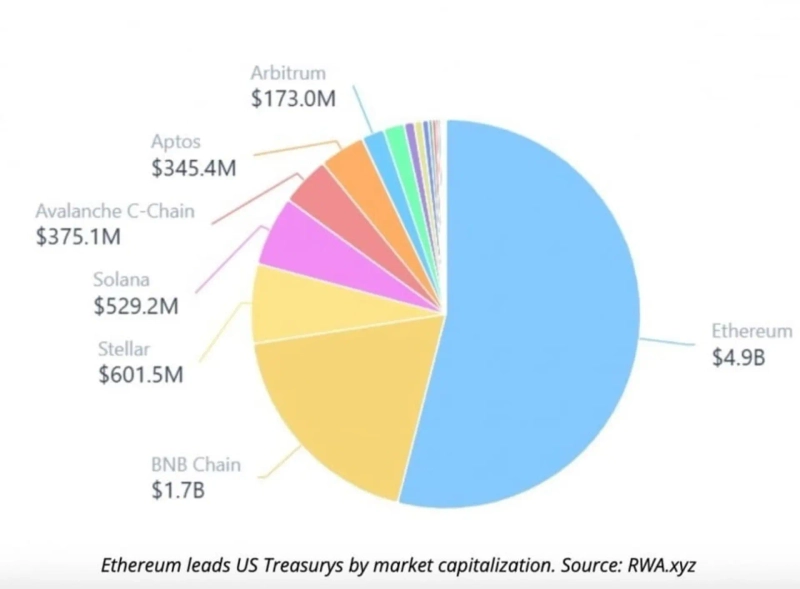
Expectations for the growth of real-world asset tokenization (RWA) and stablecoins are also cited as medium- to long-term strengths. CoinShares, in its ‘2026 Digital Asset Outlook’ report, projected that growth in the RWA market will continue this year as well. In particular, it emphasized that tokenization of large assets such as U.S. Treasuries is being concentrated on the Ethereum network. A representative example is JPMorgan’s launch of an Ethereum-based tokenized money market fund. Stablecoins are also expected to exceed $500 billion in market size by the end of this year, with more than half of that already transacted on the Ethereum network.
In the short term, whether support at $2,760 holds is important. Crypto-focused outlet BeInCrypto suggested that if the price falls below that level, it could drop to $2,650–$2,400, and in the worst case to as low as $1,320. Conversely, it said a break above $3,470 is needed to shift back to an uptrend, and that a strong recovery phase would be expected only above $4,770.
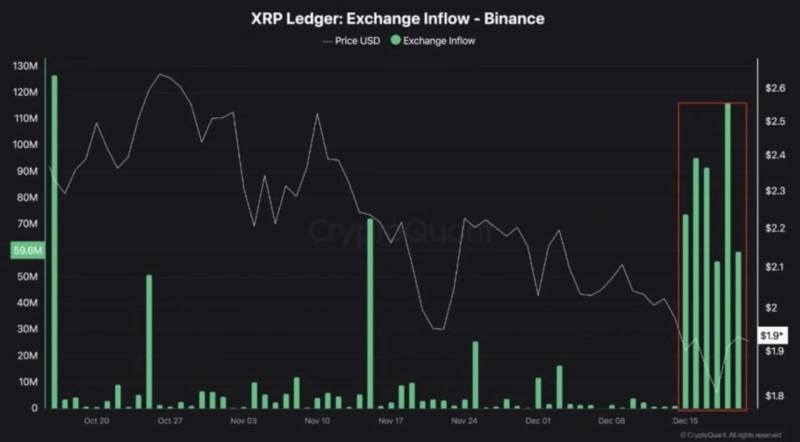
XRP posted the weakest performance among major coins this week. Even as Bitcoin and Ethereum staged a modest rebound, it failed to keep pace, losing the $1.90 level and currently hovering around $1.86–$1.87.
Behind the weakness is an increase in exchange inflows. According to CryptoQuant, inflows of XRP into Binance have surged since mid-December last year. Since the 15th of last month, daily inflows increased from a minimum of 35 million XRP to a maximum of 116 million XRP. A CryptoQuant contributor analyzed that “profit-taking and stop-loss selling may have occurred simultaneously over the past two weeks,” adding that “if exchange inflows remain elevated, a meaningful rebound will not be easy.”
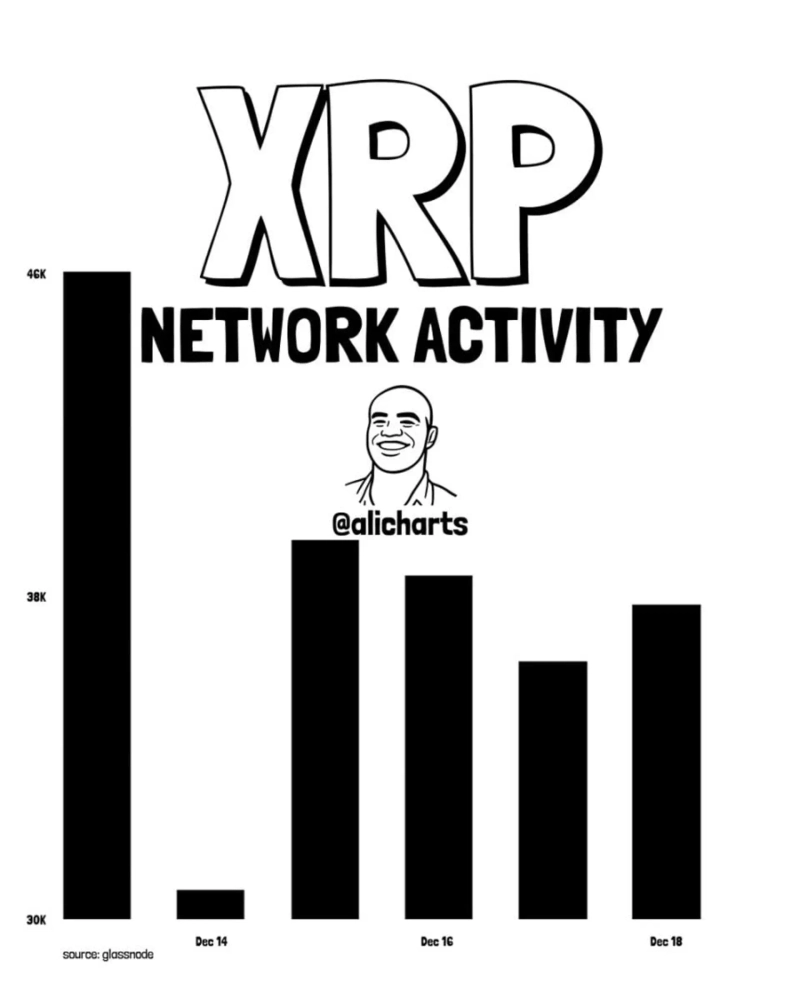
Network activity is also slowing. Analyst Ali Martinez said the number of daily active addresses for XRP fell from 46,000 to around 38,500, judging the bearish trend to be clear. This is interpreted as a signal that actual user participation and interest are declining.
Still, the medium- to long-term narrative remains intact. Centered on the XRP Ledger (XRPL), stablecoins, asset tokenization, and institutional DeFi functionality are expanding, and an institutional lending protocol is also scheduled for launch in the first quarter of this year.
In the short term, defending $1.85 is key. CoinDesk analyzed that if it fails to hold that level, it could decline to $1.77–$1.80. Conversely, if it regains $1.87 and settles above $1.90, it could revisit the $1.95–$2.00 zone.
Long-term forecasts are mixed. Standard Chartered said that “if the regulatory environment is maintained or improves, XRP could rise as high as $8 this year.” However, it also analyzed that “the probability is highest that the 2026 price will remain in the $1.04–$3.40 range,” adding that “the pace of ETF inflows and a recovery in global investment demand will determine the actual path.”
Issue Coins
1. Binance Coin (BNB)
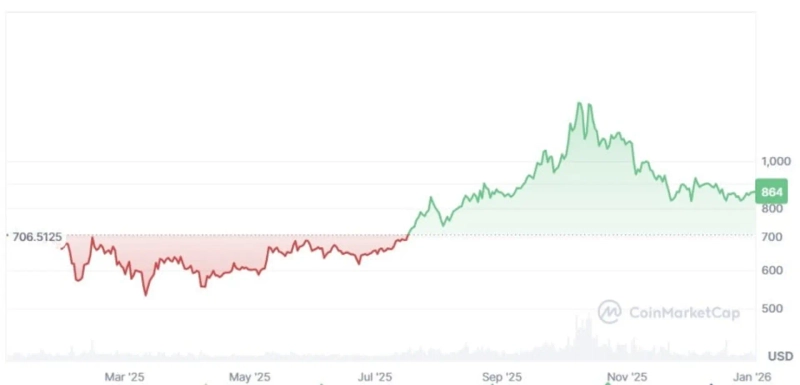
Binance Coin has been relatively resilient even as the broader market undergoes a pullback. It has posted the highest gain among top market-cap coins since the start of the year, and even after the recent correction it has been trading in the $860–$870 range.
The backdrop is easing regulatory risk. After President Trump’s inauguration, the pro-crypto stance in the U.S. strengthened, and uncertainty surrounding Binance was resolved quickly. In particular, the official withdrawal of the lawsuit with the U.S. Securities and Exchange Commission (SEC) in May last year had a decisive impact on investor sentiment. In addition, the issue of a pardon for former Binance CEO Changpeng Zhao in October last year also served as a catalyst for the price rise.
Technically, the ‘Fermi’ hard fork scheduled for the 14th is in focus. Block generation speed will be shortened from 750 milliseconds to 250 milliseconds, and indexing technology that enables rapid querying of only the necessary data will be introduced as well. This is viewed as an infrastructure improvement aimed at high-frequency financial services and institutional demand.
In the short term, whether it breaks above $870 is important. If that zone turns into support, room for additional gains opens up; if it breaks down, assessments say the possibility of a correction also needs to be kept on the table.

Suehyeon Lee
shlee@bloomingbit.ioI'm reporter Suehyeon Lee, your Web3 Moderator.