

Iran hit by financial sanctions accepts crypto and sells weapons
Summary
- The Financial Times reported that Iran has proposed selling advanced weapons in exchange for cryptocurrency.
- Mindex, the export center under Iran's Ministry of Defense, said it would allow digital currency payments in weapons contracts, and FT said this was the first public case of a state saying it could receive export payments for strategic military equipment in cryptocurrency.
- FT pointed out that Iranian authorities appear to be using digital assets such as cryptocurrency as an alternative financial means to evade US and European sanctions.
Channel to circumvent US and European sanctions
Use of cryptocurrency for payments
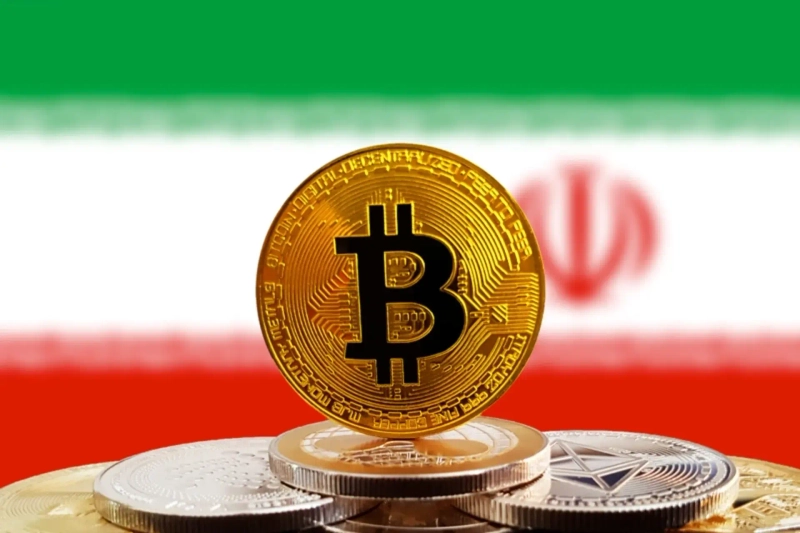
Iran has proposed selling advanced weapons to foreign buyers in exchange for cryptocurrency as a way to circumvent Western financial sanctions.
On the 1st (local time), the Financial Times (FT) reported that Mindex, the export center under Iran's Ministry of Defense, said it could allow digital currency payments, bartering, and payments in Iranian rial in contracts for weapons such as ballistic missiles, drones, and warships. The FT noted, "This proposal began last year," and said it was "the first public case of a state saying it could receive export payments for strategic military equipment in cryptocurrency."
Mindex is a state agency in charge of Iran's defense exports and has customers in 35 countries. It operates its website in four languages: English, Persian as used in Iran, Arabic, and French.
The FT said that after reviewing promotional materials and payment terms posted on Mindex's website, it judged the site to be an official site actually operated by the Iranian government. It found that the site was using a cloud service that the US Treasury has designated as subject to sanctions.
The weapons listed in the promotional materials included the Emad ballistic missile, Shahed drones, Shahid Soleimani-class warships, and short-range air defense systems. Small arms, rockets, and anti-ship cruise missiles were also included. Some of these were the same models used by Middle Eastern armed groups supported by Iran.
The Iranian authorities appear to be attempting transactions using alternative financial means, such as cryptocurrency, to evade US and European sanctions. Iran has previously used digital assets as a sanctions-evading method, including selling oil via cryptocurrency. In September last year, the US Treasury imposed sanctions on individuals linked to the Islamic Revolutionary Guard Corps, saying they operated a 'shadow finance' network using cryptocurrency to process payments on behalf of the Iranian government.
In August last year, the UK, France, and Germany launched a UN procedure to restore international sanctions against Iran. If these sanctions are triggered, Iran's arms exports and imports would be completely banned.
Reporter Han Myeong-hyun wise@hankyung.com

Korea Economic Daily
hankyung@bloomingbit.ioThe Korea Economic Daily Global is a digital media where latest news on Korean companies, industries, and financial markets.