

China launches anti-dumping investigation into semiconductor material following rare earth export ban
Summary
- China announced it has begun an anti-dumping investigation into dichlorosilane, a semiconductor process chemical from Japan.
- This measure, along with the rare earth export ban and strengthened export controls on dual-use items, is viewed as a move to weaponize resources.
- The international community noted potential impacts on the advanced industry materials supply chain and said further measures could follow depending on Japan's response.
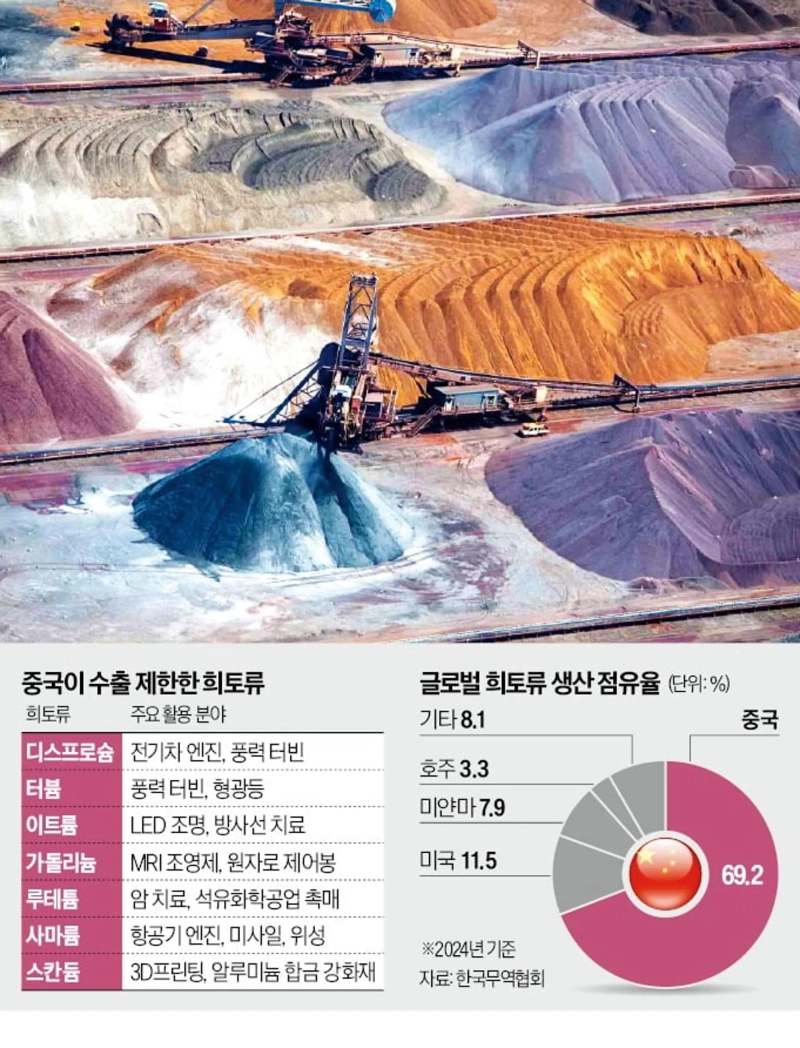
China has launched an anti-dumping investigation into dichlorosilane, a semiconductor process chemical imported from Japan, following its ban on rare earth exports.
The Ministry of Commerce announced on its website on the 7th that it would begin an anti-dumping investigation into dichlorosilane imported from Japan starting that day. Dichlorosilane is a key chemical used in semiconductor chip manufacturing processes.
The ministry explained, "After receiving an anti-dumping petition from Chinese companies and reviewing the product under investigation, similar products in China, the impact of the investigated product on China's industry, and the countries under investigation, we determined that the conditions to initiate an investigation are met."
The dumping investigation period is from July 1, 2024, to June 30, 2025. The damage investigation period is from January 1, 2022, to June 30, 2025.
Earlier, the ministry on the 6th issued the 'Notice on Strengthening Export Control of Dual-use Items to Japan' and announced, "We prohibit the export of all dual-use items to Japan for Japanese military users, military end-uses, and any other end-users that help strengthen Japan's military power."
Dual-use items include many products essential to advanced industries such as rare earths and semiconductor materials, many of which China dominates in the global market.
Moreover, measures targeting third countries that transfer Chinese dual-use items to Japan—effectively a 'secondary boycott' (secondary sanctions)—were even mentioned. The international community has interpreted this as China stepping up a full-fledged 'weaponization of resources' against Japan.
Chinese local media reported, "The scope of these regulatory measures is broad and the intensity is high, and they are among the strongest retaliatory measures against Japan in recent years." They also mentioned the possibility of expanding restrictions to exports of rare earths for civilian use, depending on Japan's future response.
The Chinese military stated that the government's export ban on dual-use items aimed at Japan was a response to Japan's moves to strengthen its military.
They also reiterated the view that Japanese Prime Minister Sanae Takaichi should withdraw her remarks about possible intervention in the event of a Taiwan contingency.
At a briefing on the 7th, Chinese Foreign Ministry spokesman Mao Ning said, "I want to point out that Prime Minister Takaichi's erroneous remarks on Taiwan violated China's sovereignty and territorial integrity, openly interfered in China's internal affairs, and threatened China with force," and "we urge Japan to face up to the root of the problem, reflect and correct, and withdraw the erroneous remarks."
Beijing=Correspondent Eunjeong Kim kej@hankyung.com

Korea Economic Daily
hankyung@bloomingbit.ioThe Korea Economic Daily Global is a digital media where latest news on Korean companies, industries, and financial markets.