

PiCK
"Venezuela crude oil 'indefinitely' controlled... will make them buy U.S. goods" [Lee Sang-eun's Washington Now]
Summary
- Reported that the U.S. government announced it will control sales of Venezuelan crude indefinitely and manage the proceeds, increasing the burden of additional supply on the market.
- Said that news of U.S. management of Venezuelan crude led to mixed refinery stock performances, and WTI futures prices fell 1.5%.
- Stated that in the long term there is a large investment burden amounting to $10 billion annually, but if Venezuelan crude is stably supplied to the United States, there is also a view that the upside could expand for some investors.
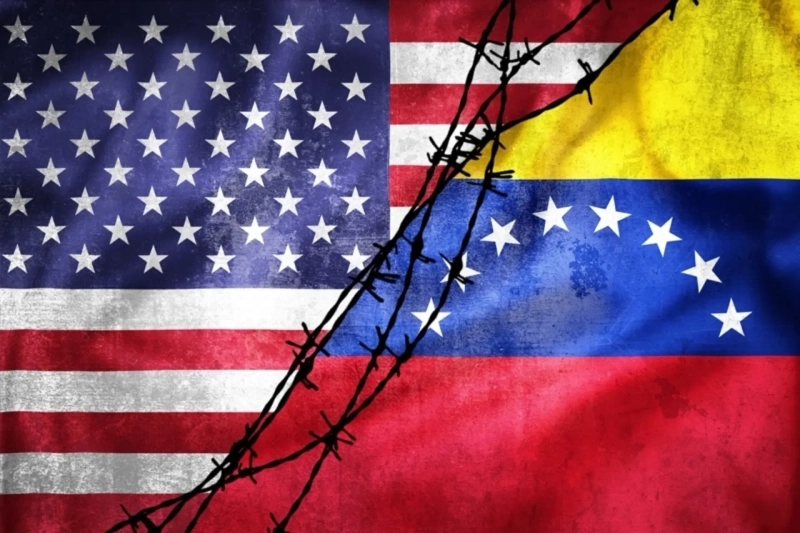
The Donald Trump administration said today it will control sales of Venezuelan crude oil and that the United States will manage the proceeds. Chris Wright, Secretary of Energy, said this officially while speaking at a Goldman Sachs Group conference today. The Trump administration's explanation is that the period during which the United States receives Venezuelan crude is 'unlimited.'
There is criticism that this is seizing another country's oil, but Secretary Wright told CNBC in an interview, "We are not stealing anyone's oil," and explained, "We will resell the Venezuelan crude into the market and deposit the proceeds into an account in the name of Venezuela at the U.S. Treasury."
◆ U.S. government 'indefinitely' controls Venezuelan crude
The U.S. government's stance is that the funds will be returned to the Venezuelan people and the American people. Details about exactly how Venezuela and the United States will divide this are not provided, but President Trump said that the Venezuelan government will use the proceeds from oil sales to buy U.S. goods. The ultimate logic is that the United States will sell more goods, and Venezuela, having been sanctioned and blocked from exports, will be able to sell oil, making it a win-win.
On the day, Venezuela's state oil company (PDVSA) said in a statement distributed via social media such as Telegram and Instagram, "We inform that negotiations with the United States are proceeding according to a system similar to the way applied to global companies including Chevron," and said, "The main objective is to guarantee mutual benefit while upholding the principle that Venezuela is the sole sovereign of its domestic oil." It emphasized that related negotiations are being conducted "strictly" on a commercial level.
News that the United States will manage Venezuelan crude led to a roughly 1.5% decline in West Texas Intermediate (WTI) one-month futures, trading around $56 per barrel. This is interpreted as reflecting increased concern over additional supply of Venezuelan crude to the market.
Refinery companies' stock prices showed mixed patterns. They were up when the market opened today but closed slightly lower in the afternoon.
Chevron fell 0.87%, ExxonMobil 2.05%, and ConocoPhillips 3.02%. These are all companies that hold claims against the Venezuelan government and are owed money. However, investors' expectations appeared to be somewhat reduced after Secretary Wright said today that the proceeds from Venezuelan oil sales would not be used directly to pay off these companies' debts.
◆ "Venezuela crude investment requires $10 billion annually for 10 years"
Energy companies are doing the math. In the short term, it is burdensome because they may be somewhat forced to invest to secure Venezuelan crude.
The key is initial investment costs. It is expected that about $10 billion will be spent each year for 10 years.
In the long term, there is the advantage of securing large volumes of heavy oil at a low price. Companies like Chevron and ExxonMobil are preparing large offshore field investments in nearby Guyana, so they must also consider the burden of pursuing Venezuelan crude investments in parallel.
However, in Chevron's case, having been involved in Venezuelan oil operations for so long and with facilities taken by the Chávez regime still remaining in Venezuela, it is considered the top candidate to participate in reconstruction projects. Continental Resources has also publicly said it is considering participating in reconstruction efforts.
The well-known private equity firm Elliott Management is also drawing attention. At the end of last year, it won an auction for the U.S. gasoline station chain CITGO. CITGO is owned by Venezuela's state oil company. In the 1990s it was once number one in market share in the U.S., but after the Chávez regime it gradually lost share and is now around seventh; Elliott Management acquired it for $5.9 billion. At the end of last year, the value of this gasoline chain was not highly rated, but if Venezuelan crude is actively brought into and used in the United States, the upside for Elliott Management in this deal would grow considerably.
◆ Rubio "will discuss Greenland with Denmark next week"
Regarding Greenland, Marco Rubio, U.S. Secretary of State, told reporters today that he will meet with Denmark and Greenland next week to discuss. This is interpreted to mean he intends to discuss concrete plans for the purchase of Greenland.
The White House has not used an explicit expression about annexing Greenland by force, but through statements in the spokesperson's name and Rubio's remarks, it is sending a message that the use of force is always an option. Rubio's remark today was: "The President always keeps military means as an option," and "He is not talking about Greenland but about the whole world."
Europe is protesting but cannot take an aggressive stance because it has relied on the United States for security and especially needs U.S. help on the Ukraine issue. The foreign ministers of Germany, France, and Poland gathered and said, "Greenland is not something that can be sold. It is not something that can be taken," and "We have passed the era when we could buy and sell Louisiana." They also drew a line, saying that Arctic defense issues should be discussed within NATO.
European markets also reflect the heavier mood. The UK's FTSE index fell 0.7%. The previous rally has come to a halt. In particular, the drop in oil prices led to weakness centered on energy and financial stocks. Defense stocks, however, rose amid increased global instability due to events like the Venezuela situation.
Washington=Correspondent Lee Sang-eun selee@hankyung.com

Korea Economic Daily
hankyung@bloomingbit.ioThe Korea Economic Daily Global is a digital media where latest news on Korean companies, industries, and financial markets.