Trump: "Considering tough options, including deploying troops"…Iran: "Immediate retaliation"
Summary
- The U.S. said it is considering several strong options regarding Iran, including military intervention, cyberattacks, and additional economic sanctions.
- Iran warned that if the U.S. takes military action, it would make all U.S. bases and military facilities in the region, as well as ships, legitimate targets.
- Bloomberg and others said U.S. involvement or a regime collapse could lead to broader Middle East turmoil and an Iranian power vacuum.
Forecast Trend Report by Period


U.S. ramps up pressure on Iran’s government, says “talks are open”
Financial sanctions, support for anti-government forces
Blocking SpaceX internet network, etc.
Trump weighs a range of options
Concerns also raised: “Gives Khamenei a pretext for retaliation”
Netanyahu also mentions possibility of troop deployment
“More than 2,000 protesters may have been killed”
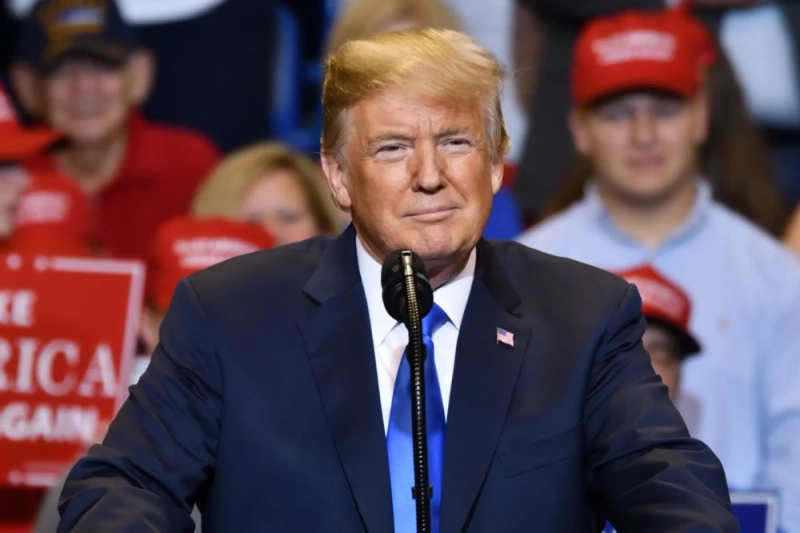
As Iran’s anti-government protests that began on the 28th of last month have spread nationwide and the death toll continues to climb, U.S. President Donald Trump has signaled the possibility of military intervention in Iran. Alongside that, support measures such as financial sanctions, backing anti-government forces, and providing internet access are also being discussed. However, with the Iranian government propagating that “foreign forces are behind the protests,” concerns are mounting that U.S. support could backfire. Iran said it is keeping the door open to talks while warning it will retaliate if the U.S. takes military action.
◇ Protest death toll surpasses 500
Asked by reporters aboard Air Force One on the 11th (local time) about the possibility of military intervention in Iran, President Trump said, “We view this matter very seriously, and the military is also looking at it,” adding that he is “considering several strong options.” He also left the door open to dialogue with Iran, saying, “Iran’s leaders called yesterday and said they want to negotiate.”
Trump: "Considering tough options, including deploying troops"…Iran: "Immediate retaliation"According to foreign media, as deaths in Iran’s anti-government protests have swelled into the hundreds over the past few days, senior U.S. administration officials have reportedly begun reviewing ways to help protesters. The U.S.-based Human Rights Activists News Agency (HRANA) said as of that day it had confirmed 538 deaths (490 civilians and 48 security personnel). That is about five times higher than the previous day’s tally (116).
Because Iran has cut internet and phone lines, the exact number of deaths cannot be verified, but some human rights groups said it is possible that more than 2,000 people have died. The BBC reported that “there have been so many casualties among protesters in recent days that hospitals are struggling to cope,” adding that “young people suffered gunshot wounds to the head or heart, and many died before reaching hospital.”
◇ Concerns over blowback from U.S. involvement
President Trump is reportedly reviewing whether to proceed after receiving briefings from government officials on options for military intervention in Iran. The Wall Street Journal (WSJ) reported that Trump is scheduled to receive briefings on the 13th from senior aides including Secretary of State Marco Rubio, Secretary of War (Defense) Pete Hegseth, and Joint Chiefs of Staff Chairman Dan Caine on response options toward Iran. Discussions are expected to include cyberattacks against Iranian military and civilian facilities, support to amplify online anti-government sentiment, additional economic sanctions, and military strikes.
A proposal was also raised to counter Iran’s communications blackout by deploying Starlink satellite internet terminals, operated by SpaceX, inside Iran to help protesters access the internet.
However, concerns are being raised that U.S. involvement could instead give Iran’s government a pretext. That is because the Iranian government has blamed the U.S. and Israel for the escalation of the protests.
Iranian President Masoud Pezeshkian said that day, “We will not allow a small group of rioters to come and destroy society as a whole,” stressing that “(the U.S. and Israel) are fomenting chaos and disorder.” Mohammad Bagher Ghalibaf, speaker of Iran’s parliament, warned that “any act of attacking Iran would make all U.S. bases and military facilities in the region, as well as ships, legitimate targets.”
As President Trump stepped up pressure on Iran, Supreme Leader Ayatollah Ali Khamenei posted on X (formerly Twitter) on the 12th an illustration depicting Trump as a collapsing sarcophagus, writing, “This figure (Trump), consumed by arrogance and hubris and trying to pass judgment on the world, will fall.”
U.S. Senator Rand Paul (Republican) argued in an interview with ABC News that intervention in Iran could have the opposite effect. He said, “When you bomb a country, people tend to rally around their country.” CNN also noted that military strikes could unintentionally rally the Iranian public behind the government or trigger Iran’s own military retaliation.
◇ Israel: “Will respond if necessary”
Israeli authorities are also watching developments in Iran while leaving room for involvement. Reuters reported that Israeli Prime Minister Benjamin Netanyahu and the Israel Defense Forces signaled the possibility of a military response if necessary. However, Israel is unlikely to attack Iran immediately. A former Israeli intelligence official told The Times of Israel, “The protests have weakened Iran’s leadership, but neither side wants a situation like the war last June.”
Menachem Merhavi, a professor at the Hebrew University, also said, “Israel is more concerned about missiles than about what kind of regime comes to power in Iran,” adding, “Unless something dramatic happens, it is unlikely that Israel will intervene in this issue.”
Bloomberg and other foreign media pointed out that the biggest concern for Gulf countries such as Saudi Arabia, Oman and the United Arab Emirates (UAE) is an “Iranian power vacuum.” That is because U.S. involvement or a regime collapse could lead to civil war and turmoil across the Middle East.
Bloomberg explained, “While the six Gulf Cooperation Council (GCC) countries have viewed Iran as a hostile force, they have recently sought to improve relations to prevent Iran from attacking them in retaliation for Israeli or U.S. military action,” adding, “They have not forgotten the ‘Arab Spring,’ when authoritarian regimes fell in succession but the chaos was just as great.”
By Hankyung / Reporter Han Myung-hyun hankyung@hankyung.com

Korea Economic Daily
hankyung@bloomingbit.ioThe Korea Economic Daily Global is a digital media where latest news on Korean companies, industries, and financial markets.