Won-dollar exchange rate back into the 1,470-won range… foreign investors sell equities
Summary
- The won-dollar exchange rate has risen for nine consecutive sessions, holding above 1,470 won intraday and extending the high exchange-rate trend.
- It said foreign investors’ equity selling and residents’ FX conversion demand for overseas stock investment are continuing, with supply-demand imbalances weighing on the won.
- A survey of bond market experts showed growing expectations for a February rise in the exchange rate and possible entrenchment of a high exchange-rate environment, while expectations of a decline fell.
Forecast Trend Report by Period


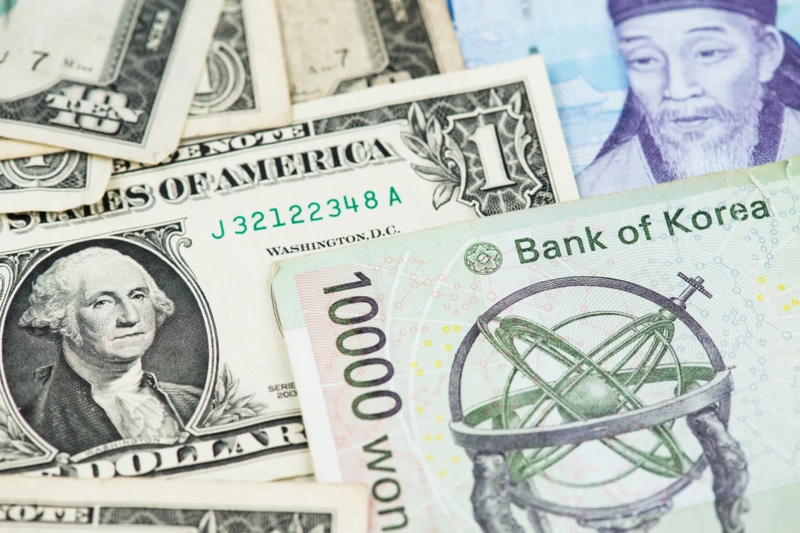
The won-dollar exchange rate is holding above 1,470 won during intraday trading. The rate is seen to have come under upward pressure as foreign investors’ equity selling and FX conversion demand for overseas investment continued.
As of 2:10 p.m. on the 13th, the won-dollar exchange rate stands at 1,473.8 won, up 5.4 won from the previous session’s close (1,468.4 won). After opening at 1,468.5 won, it moved straight above the 1,470-won level. The exchange rate has risen for nine consecutive sessions since late last year.
Recently, reports said the U.S. Department of Justice had placed Jerome Powell, chair of the U.S. central bank (Fed), under investigation over allegations of misusing funds related to renovations of the headquarters building. The dollar index, which tracks the greenback against six major currencies, remains below the 100 mark. The index is currently around 98.94, roughly unchanged from the previous session.
The imbalance in supply and demand is seen to have weighed on the won. As of 2:10 p.m., foreign investors are net sellers of 488.3 billion won in the KOSPI market and 299.5 billion won in the KOSDAQ market.
Min Kyung-won, an economist at Woori Bank, said, “Dollar weakness and caution over authorities’ fine-tuning limit the upside in the exchange rate,” but added, “Payments by importers that hold the upper hand in flows and residents’ FX conversion demand for overseas stock investment are expected to drive the exchange rate higher.”
The yen’s weakness is also cited as one factor behind the rise in the exchange rate. The yen-dollar rate is pointing to 158.78 yen, up 0.42% from the previous day. This follows reports that Japanese Prime Minister Sanae Takaichi will dissolve parliament and hold a snap election to pursue a fiscal expansion policy.
Forecasts that the high exchange-rate environment will become entrenched are also gaining traction. In a survey of 100 bond market experts conducted by the Korea Financial Investment Association from the 2nd to the 7th, the share of respondents expecting the exchange rate to rise in February came in at 28%. That was up 7% points from the previous month. The share expecting the exchange rate to fall dropped 19% points, to 10% from 29%. The share expecting the exchange rate to be unchanged was 62% (50% the previous month).
Jin Young-gi, Hankyung.com reporter young71@hankyung.com

Korea Economic Daily
hankyung@bloomingbit.ioThe Korea Economic Daily Global is a digital media where latest news on Korean companies, industries, and financial markets.