Regime collapse in Iran in mind?…U.S. envoy meets with Pahlavi
Summary
- As anti-government protests spread across Iran, it reported that Reza Pahlavi has emerged as a focal point for unity.
- It reported that the Trump administration’s envoy met with the former crown prince, fueling interpretations that Washington is factoring in the possibility of regime collapse in Iran.
- It said analyses suggest that, amid a lack of an organized opposition inside Iran and a fragmented opposition, pro-Pahlavi slogans should be understood as opposition to the Islamic Republic.
Forecast Trend Report by Period


A rallying point emerges amid a fractured opposition
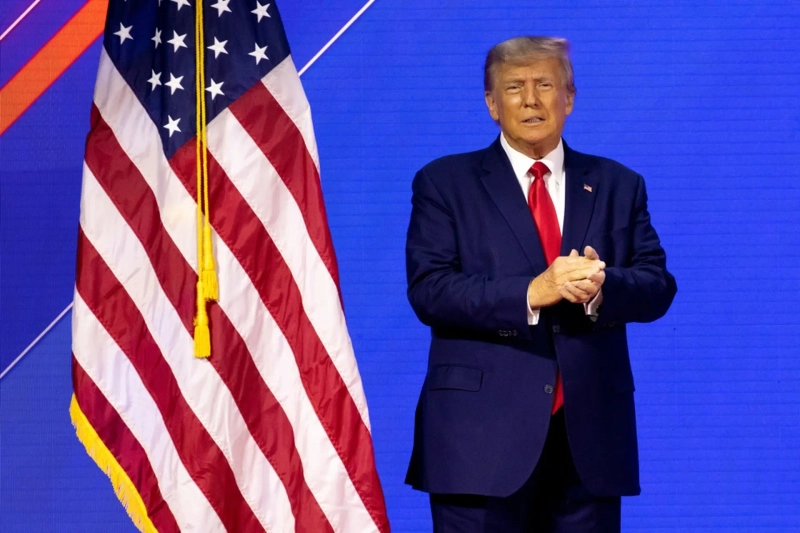
As anti-government protests spread across Iran, Reza Pahlavi, the last crown prince of Iran’s monarchy, has emerged as a focal point for unity. Years of repression and purges of the opposition have left no clear alternative force in the event of a regime collapse. Pahlavi’s long exile has weakened his domestic base, and the widespread public aversion to a monarchical system is also cited as a limitation.
Axios, a U.S. online outlet, reported on the 13th (local time), citing sources, that U.S. envoy Steve Witkoff met with Pahlavi over the weekend to discuss Iran’s anti-government protest crisis.
Pahlavi, the eldest son of Iran’s last shah, fled to the United States after the monarchy fell in the 1979 Islamic Revolution. He has positioned himself as a “transitional leader” who would lead democracy against the theocratic system. In a CBS interview the previous day, Pahlavi urged the United States to intervene to bring about regime change in Iran. That is why some interpret the Trump administration’s outreach to Pahlavi as factoring in the possibility of the Iranian regime’s collapse.
Some Iranian demonstrators have also begun chanting slogans in support of the Pahlavi dynasty. Observers caution, however, against overinterpreting this as a broad desire to restore the monarchy. The Guardian said that “pro-monarchy slogans are not endorsements of the Pahlavi dynasty but anti–Islamic Republic slogans.” Analysts also say the lack of a credible, organized opposition inside Iran has played a role. The New York Times assessed that support for Pahlavi is surfacing because the Iranian government has jailed many potential leaders over a long period, adding that Iranians remember the Pahlavi dynasty’s repressive rule.
The protests have continued for more than two weeks, but no clear leadership has emerged. This is because anti-government forces are split among monarchists, secularists and republicans, and groups rooted in ethnic minorities. Most opposition leaders are either in exile or imprisoned. Former Prime Minister Mir-Hossein Mousavi has been under house arrest for 15 years.
Reporter Han Myung-hyun wise@hankyung.com

Korea Economic Daily
hankyung@bloomingbit.ioThe Korea Economic Daily Global is a digital media where latest news on Korean companies, industries, and financial markets.