Iran protests raise odds oil tops $70… “70% chance the U.S. strikes Iran”
Summary
- WTI recovered to the $60-per-barrel range on intensifying anti-government protests in Iran and the prospect of U.S. involvement, with some forecasting a near-term touch of $70.
- Betting markets put the likelihood of a strike on Iran above 70% by the U.S. or Israel, underscoring heightened geopolitical risk.
- LS Securities said that, given the risk of export disruptions from Iran, oil could rise to $65–$70 per barrel in the near term before pulling back.
Forecast Trend Report by Period


WTI rebounds to the $60 range… some see a “near-term touch of $70”
Geopolitical risk index at highest since June last year
Betting markets: “70%+ chance of a strike by the U.S. or others this month”
LS Securities: “Tightening the screws on China’s oil imports in earnest”
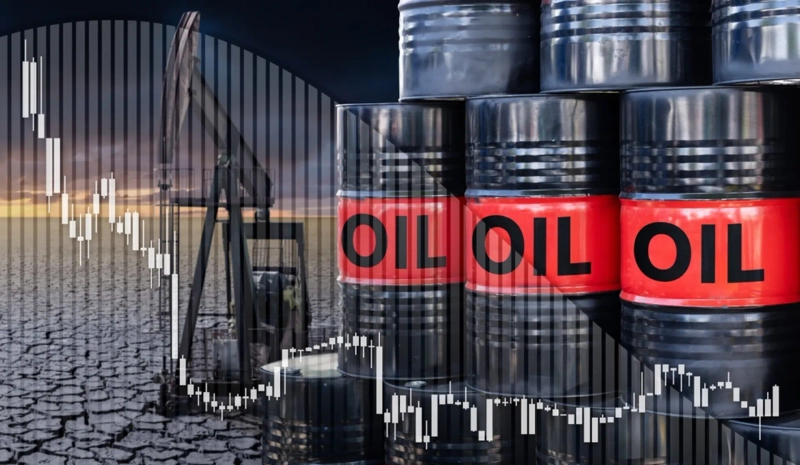
After staying subdued even amid the U.S. operation in Venezuela at the start of the year, global oil prices are now posting a sharp rebound as Iran’s anti-government protests intensify and the prospect of U.S. involvement rises. With West Texas Intermediate (WTI) recovering the $60-per-barrel level, market attention is once again turning to the Middle East tinderbox.
Iran crisis ‘the calm before the storm’
According to LS Securities’ research center on the 15th, the Geopolitical Risk (GPR) Index has surged since mid-January, reaching its highest level since the Iran-Israel conflict last June. Oil has risen roughly around 10% from its lows, with WTI attempting to move into the mid-$60s.
The trigger for this rebound is the intensifying anti-government protests in Iran known as “Zan, Zendegi, Azadi (Women, Life, Freedom).”
Tensions peaked in particular after U.S. President Donald Trump warned of an additional 25% tariff on countries doing business with Iran. The move is interpreted as directly targeting China, which takes 90% of Iran’s crude exports.
Iran is the world’s third-largest country in terms of proven oil reserves, after Venezuela and Saudi Arabia, but years of Western economic sanctions have kept production to about 3.4 million barrels per day.
Most of Iran’s oil fields are located along the Persian Gulf. Of its roughly 1.3 million to 1.5 million barrels per day of crude exports, 90% is shipped to China via the Strait of Hormuz.
“70% chance of a military clash this month”
Moves in “betting markets,” which reflect financial market participants’ expectations, are even more aggressive. Major prediction markets such as Polymarket have seen the likelihood of a U.S. strike on Iran above 50% since Jan. 18, while the probability of a U.S. or Israeli attack on Iran by the end of January is above 70%.
A medium- to long-term regime-collapse scenario is also being discussed. Betting markets put the probability of Supreme Leader Ayatollah Khamenei stepping down by the end of June at 54%, and the probability of the Iranian regime collapsing at 39%.
LS Securities said, “The market is assigning a somewhat elevated probability to potential changes in the Iranian regime following military intervention in the latter half of this month.”
Oil could break above $70 if exports are disrupted
Going forward, oil’s direction is expected to be determined by the level of U.S. involvement. If the U.S. or Israel limits its actions to airstrikes on Iran’s nuclear facilities, prices could spike briefly before stabilizing quickly. But if events evolve into a regime-change scenario, oil could face sustained upward pressure for a considerable period.
Hong Sung-gi, an analyst at LS Securities, said, “Given the potential for disruptions to Iran’s exports (about 1.0 million to 1.4 million barrels per day), oil is likely to rise to $65–$70 per barrel in the near term before pulling back.”
However, the possibility that a prolonged geopolitical risk premium could lift the downside support level for crude was cited as a factor to watch.

Korea Economic Daily
hankyung@bloomingbit.ioThe Korea Economic Daily Global is a digital media where latest news on Korean companies, industries, and financial markets.