Coinbase vs. France’s central bank… War of words in Davos over stablecoin interest and Bitcoin
Summary
- CEO Brian Armstrong defended stablecoin interest payments and Bitcoin’s role, saying yield-bearing stablecoins are needed for global competitiveness.
- Governor François Villeroy de Galhau said interest-bearing private tokens could pose structural risks to financial stability, and that a digital euro will not pay interest.
- Panelists sparred over U.S. crypto legislation and the CLARITY Act, but said they agreed that innovation and regulation must coexist.
Forecast Trend Report by Period


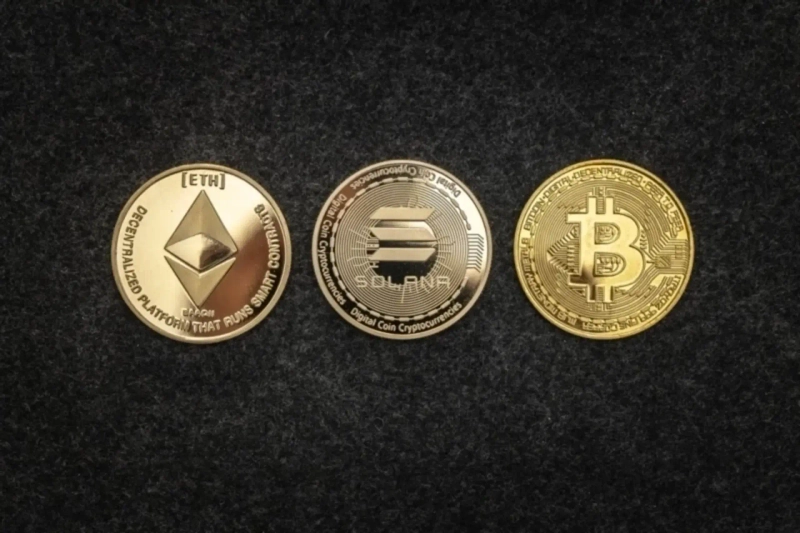
At the World Economic Forum (WEF) Annual Meeting in Davos, Switzerland, Coinbase—seen as a leading voice for the U.S. crypto industry—clashed head-on with the European central banking camp. Differences over whether stablecoins should pay interest and Bitcoin’s monetary status were laid bare in public.
According to CoinDesk on the 21st (local time), at a panel titled “Is Tokenization the Future?” held the previous day, Coinbase CEO Brian Armstrong defended interest-bearing stablecoins and Bitcoin’s role, while Banque de France Governor François Villeroy de Galhau pushed back strongly, citing financial stability and monetary sovereignty.
At the center of the dispute was whether fiat-pegged stablecoins should be allowed to pay interest. Armstrong argued that yield-bearing stablecoins are necessary for consumer benefit and global competitiveness. “People have the right to earn more on their money,” he said, adding, “China has said it will pay interest on its central bank digital currency (CBDC), and offshore stablecoins already exist.” He warned that “if only U.S.-regulated stablecoins are barred from paying rewards, competitiveness will shift overseas.”
Villeroy, however, warned that privately issued tokens that pay interest could pose structural risks to the traditional financial system. Asked whether a digital euro could pay interest, he drew a firm line: “The answer is clearly no,” he said, stressing that “the public objective is to safeguard the stability of the financial system.”
Also on the panel were Ripple CEO Brad Garlinghouse, Standard Chartered CEO Bill Winters, and Euroclear CEO Valérie Urbain. Garlinghouse said “competition is positive, and fair rules are important for both banks and crypto companies,” while Winters lent support to Armstrong, saying, “Tokens without yield are less attractive as a store of value.”
The debate also extended to crypto legislation in the U.S. Armstrong addressed Coinbase’s recent withdrawal of support for the digital asset market structure bill, the CLARITY Act, saying that “legislation hasn’t stopped—it’s in a negotiation phase.” He argued that “U.S. crypto legislation must not move in a direction that bans competition,” and sharply criticized traditional finance lobbying in Washington.
The sharpest exchange centered on Bitcoin. Armstrong raised the possibility of a “Bitcoin standard” as an alternative amid depreciation in fiat currency value. Villeroy responded that “currency and monetary policy are part of democratic sovereignty,” underscoring the role of central banks. Armstrong immediately countered that “Bitcoin is a decentralized protocol with no issuer,” adding that “because no country or company controls it, it is more independent than a central bank.”
Despite the heated back-and-forth, there was some common ground. In a post on social media after the session, Garlinghouse described the exchange as a “spirited debate,” noting that all panelists agreed innovation and regulation ultimately need to coexist.

YM Lee
20min@bloomingbit.ioCrypto Chatterbox_ tlg@Bloomingbit_YMLEE