Now Canada… “Sign a deal with China and it’s a 100% tariff”
Summary
- US President Donald Trump said he would impose a 100% tariff on all Canadian goods if Canada signs an agreement with China.
- Canada said it has declared a strategic partnership with China and agreed on various trade policies, including easing tariffs on Chinese-made EVs and cutting tariffs on Canadian canola.
- If Trump’s tariff threat becomes reality, it is expected to deal a major blow to Canada’s energy, automotive and aluminum industries—highly dependent on exports to the US—and to the broader North American economy.
Forecast Trend Report by Period


Trump moves to check an anti-US alignment
Pressures Canada’s growing closeness with China with the tariff card
Trump mocks “Governor Carney’s mistake”
Warns against China’s indirect exports via Canada
Carney: “We must secure strategic autonomy”
Opens the door to imports of Chinese-made EVs
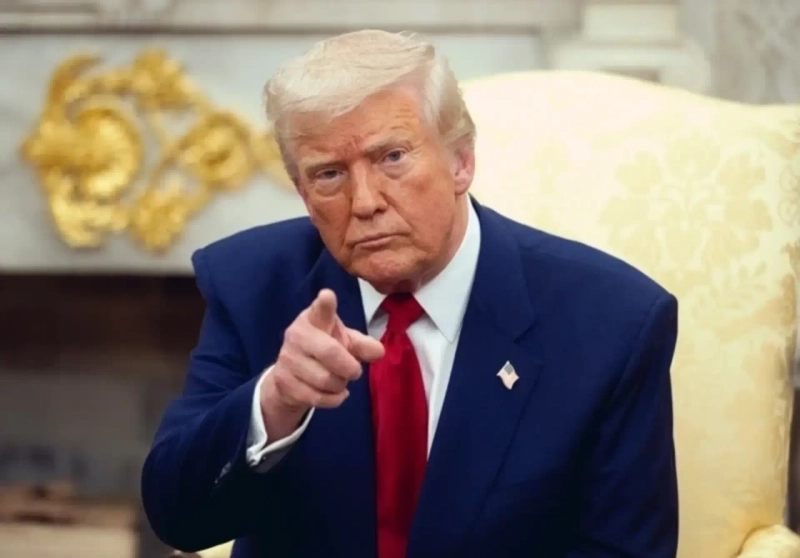
US President Donald Trump said he would “immediately impose a 100% tariff on all Canadian goods and products entering the United States” if Canada signs an agreement with China, taking aim at Canada as it moves to improve trade ties with Beijing.
◇ “China is trying to swallow Canada”
In a post on Truth Social on the 24th (local time), Trump warned, “If ‘Governor Carney’ thinks he can turn Canada into a ‘port of unloading’ for China to send goods and products into the United States, he is making a big mistake.” “Governor Carney” refers to Canadian Prime Minister Mark Carney. Trump has recently spoken of ambitions to absorb Canada, calling its prime minister a “governor” in the sense of Canada being “America’s 51st state.”
Trump stressed that “China will completely swallow Canada—its businesses, social structure and overall way of life—and devour Canada alive.” In another social-media post, he added, “What the world wants least is for China to take control of Canada,” saying, “It will not happen, and there is not even a chance it will happen.”
Trump’s warning to Canada comes as Ottawa draws attention for moving closer to China in response to US tariff policy and threats to annex the Western Hemisphere. Carney visited China from the 14th to 17th—the first trip by a Canadian prime minister in nine years—and held a summit with Chinese President Xi Jinping. At the meeting, the two leaders said they would “begin a new strategic partnership,” declared a normalization of relations after years of friction, and agreed on a range of trade policies.
At the core of the deal is Canada partially opening its auto market in exchange for securing export channels for agricultural products. The Canadian government decided to ease the 100% punitive tariff it had imposed on Chinese-made EVs in step with the United States in 2024. Canada plans to apply a most-favored-nation (MFN) tariff rate of 6.1% to 49,000 Chinese-made EVs annually. Sales of Chinese vehicles in North America’s entry-level EV market are expected to rise.
◇ Why China and Canada are joining hands
China is being credited with resolving a long-standing priority for Canadian farmers. The two sides agreed to cut the combined tariff on Canadian canola seed to 15% from about 84% starting March 1. Some analysts say exports to China could increase to as much as C$4 billion a year (about 4.2488 trillion won).
The agreement is interpreted as the product of meticulously calculated pragmatism and survival. In recent years, Canada’s economy has been isolated amid high interest rates, low growth and strong US protectionist pressure rooted in “America First.” More than 70% of Canada’s exports go to the United States.
At the World Economic Forum (WEF·Davos), Carney recently stressed that “the rules-based international order is disappearing,” adding that “we must secure strategic autonomy in an era when the public goods provided by US hegemony are no longer there.”
From China’s perspective, the deal is also seen as urgent. With domestic demand weakening, a property crisis and Western technology sanctions choking off economic lifelines, Beijing has targeted resource-rich Canada as both a detour into the US market and a source of resources.
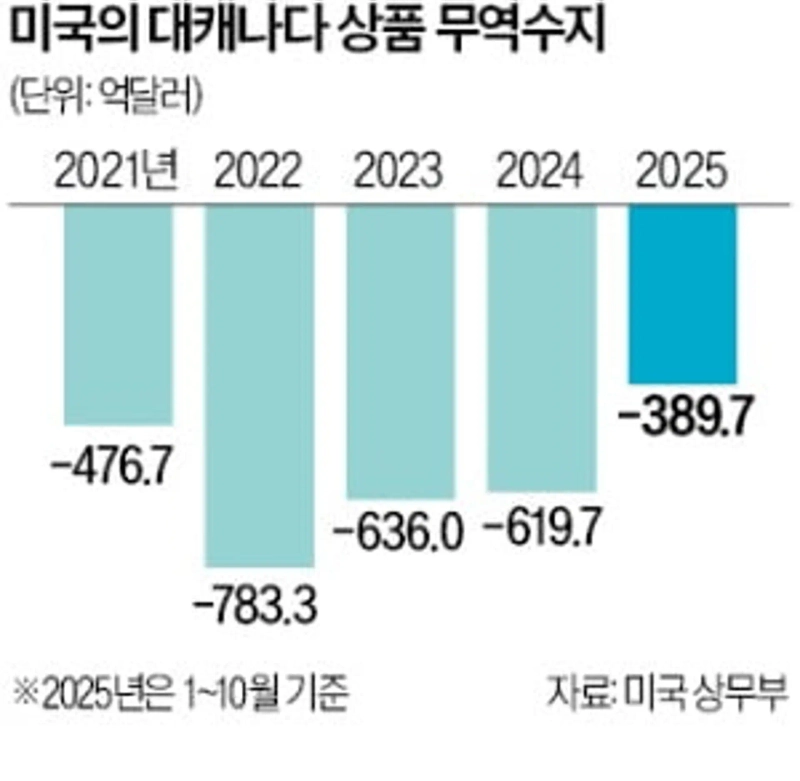
If Trump’s tariff threat materializes, the entire North American economy is expected to take a major hit. Canada, highly dependent on exports to the United States, would be struck directly in trade. That is because key Canadian export industries—energy, automobiles and aluminum—would be affected. Blocking Canadian products could easily translate into higher costs for US manufacturing.
Reporter Kim Ju-wan kjwan@hankyung.com

Korea Economic Daily
hankyung@bloomingbit.ioThe Korea Economic Daily Global is a digital media where latest news on Korean companies, industries, and financial markets.