Trump cites ‘reason’ for raising reciprocal tariffs… Delays to special law on investment in the U.S.?
Summary
- President Donald Trump said he would raise tariffs on Korean products from 15% to 25%.
- Trump cited delays in National Assembly procedures for the special law on investment in the U.S., saying implementation of the existing trade agreement is not being carried out.
- The U.S. has also voiced dissatisfaction over South Korea’s amendments to the Information and Communications Network Act, online platform regulation, and issues related to Coupang.
Forecast Trend Report by Period


On Truth Social, Trump says “Korea’s National Assembly isn’t honoring the agreement”
Seen as taking issue with delays to a special law on investment in the U.S.
Unclear whether legislative delays are the sole reason
Possible that complaints over Coupang and digital regulation also played a role
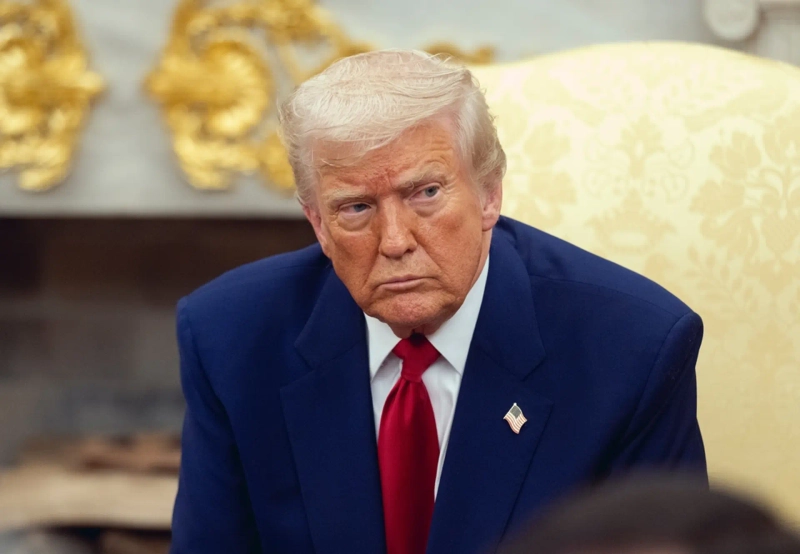
U.S. President Donald Trump said he would raise tariffs on Korean products back to pre-agreement levels, claiming that South Korea’s National Assembly has not carried out the legal procedures needed to implement the bilateral trade agreement.
In a post on the social media platform Truth Social on the 26th (local time), Trump said that “Korea’s legislature is not honoring the agreement with Korea and the United States,” adding, “Accordingly, I am raising all reciprocal tariffs (country-by-country tariffs)—including on automobiles, timber, pharmaceuticals and everything else—from 15% to 25%.”
Trump said, “President Lee Jae-myung and I made a great agreement for both countries on July 30, 2025, and I reaffirmed those terms when I was in Korea on Oct. 29, 2025. Why hasn’t Korea’s legislature approved the agreement?” Trump’s reference to parliamentary approval is widely interpreted as referring to the “Special Bill for the Strategic Management of Korea–U.S. Investment” (the special law on investment in the U.S.).
Following the Korea–U.S. summit held in Gyeongju on Oct. 29 last year, the two countries released a joint fact sheet on Nov. 13 summarizing the leaders’ agreements in the security and trade areas. The fact sheet said the U.S. would cut tariffs on Korean automobiles and other products in exchange for South Korea making $350 billion in investments in the United States, and would support or approve South Korea’s uranium enrichment, reprocessing of spent nuclear fuel, and the introduction of nuclear-powered submarines.
In a “Korea–U.S. Memorandum of Understanding (MOU) on Strategic Investment,” signed on Nov. 14 last year, the two sides agreed to apply the tariff reductions retroactively from the first day of the month in which legislation to implement the MOU is submitted to South Korea’s National Assembly. The ruling Democratic Party of Korea then introduced the special law on investment in the U.S. in the Assembly on Nov. 26 last year. The U.S. also retroactively cut its tariff on Korean automobiles to 15% on Dec. 4 last year, alongside publication in the Federal Register.
It remains unclear whether legislative delays are the only reason behind the tariff hike. Since the trade agreement, the U.S. has voiced complaints about amendments to South Korea’s Information and Communications Network Act passed by the National Assembly, as well as proposed online platform regulations. On the 23rd, Vice President J.D. Vance also asked Prime Minister Kim Min-seok—who was visiting the United States—about Coupang’s personal data leak incident.
Park Subin, Hankyung.com reporter waterbean@hankyung.com

Korea Economic Daily
hankyung@bloomingbit.ioThe Korea Economic Daily Global is a digital media where latest news on Korean companies, industries, and financial markets.