Trump to raise Korea’s reciprocal tariffs… Industry minister to visit U.S. soon for talks
Summary
- President Trump said he will raise tariffs on South Korean automobiles, lumber, and pharmaceuticals from 15% to 25%.
- The report said speculation has emerged that delays in implementing South Korea’s $350 billion U.S.-bound investment and the failure to pass the special act on U.S.-bound investment are behind the tariff restoration move.
- The report said concerns that investment could be delayed—linked to a weaker won and the burden of $20 billion a year in U.S.-bound investment—prompted an emergency response by the South Korean government.
Forecast Trend Report by Period


"Because South Korea’s National Assembly didn’t legislate the trade deal"
Slower-than-expected pace of investment in the U.S.
Concerns investment delays could be driven by a weaker won
Possible grievances over digital regulation as well
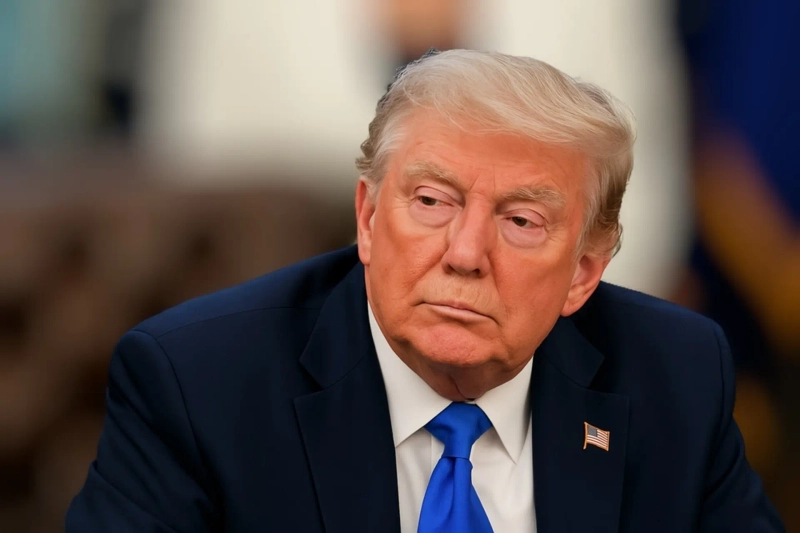
U.S. President Donald Trump said he will raise tariffs on South Korean products back to pre-deal levels, claiming that South Korea’s National Assembly has failed to proceed with the legal steps needed to implement the bilateral trade agreement.
As South Korea’s promised investment in the United States—offered as a condition for U.S. tariff cuts—has not moved as quickly as expected, speculation is growing that Trump is using a “tariff restoration” card to pressure Seoul. The South Korean government decided to promptly send Trade, Industry and Energy Minister Kim Jung-kwan to the United States to gauge the Trump administration’s intentions and prepare countermeasures.
In a post on the social media platform Truth Social on the 26th (local time), Trump said, "South Korea’s legislature is not honoring the agreement with the United States," adding, "Accordingly, I am raising tariffs on South Korea on automobiles, lumber, pharmaceuticals, and all other reciprocal tariffs (country-specific tariffs) from 15% to 25%." He did not specify when the increase would take effect.
Trump added, "President Lee Jae-myung and I made a great deal for both countries on July 30, 2025, and I reaffirmed those terms when I was in South Korea on October 29, 2025. Why didn’t South Korea’s legislature approve the agreement?"
The National Assembly approval referenced by Trump appears to refer to legislation of the “Special Act on Strategic Investment Management between Korea and the United States” (the special act on U.S.-bound investment). The bill includes measures needed to carry out investment in the U.S., such as establishing a Korea-U.S. Strategic Investment Fund and setting up a Korea-U.S. Strategic Investment Corporation.
Earlier, South Korea and the United States decided that the U.S. would cut tariffs on South Korean automobiles and other products on the condition that South Korea make $350 billion (about 505 trillion won) in investment in the United States. The U.S. agreed that once the special act was submitted to the National Assembly, it would retroactively cut tariffs effective from the first day of that month.
Afterward, the ruling Democratic Party of Korea introduced the special act on U.S.-bound investment in the National Assembly on November 26 last year, and the U.S., upon publication in the Federal Register on December 4 last year, retroactively lowered tariffs on South Korean automobiles to 15%. The bill, however, has not passed the National Assembly.
Trump appears to believe South Korea’s U.S. investment under the deal is being delayed beyond initial expectations. Trump said, "We have acted quickly to reduce our tariffs in line with the agreed deal. We naturally expect our trading partners to do the same," he said, raising his voice.
While the trade agreement did not specify a deadline for enacting the special act on U.S.-bound investment, South Korea, under the deal, must make U.S.-bound investment capped at $20 billion a year within this year.
One factor behind Washington’s push may be the view that, amid the recent weakness of the won, South Korea could struggle to invest $20 billion. Analysts have suggested that this concern underpinned U.S. Treasury Secretary Scott Bessent’s verbal-intervention-like message on the 14th, when he said the won’s sharp weakness did not align with South Korea’s economic fundamentals.
On the 20th, Bloomberg reported that the South Korean government had decided to delay this year’s promised $20 billion U.S.-bound investment due to the exchange rate. Finance and Economy Minister Koo Yun-cheol later told Bloomberg in an interview that the investment was not being delayed, but he also said it would be difficult to execute investment in the first half of the year because selecting projects takes a long time.
By contrast, Japan appears to be moving smoothly in selecting its first U.S.-bound projects. Japan’s Minister of Economy, Trade and Industry Ryosei Akazawa held online talks on the 9th with U.S. Commerce Secretary Howard Lutnick and Energy Secretary Chris Wright on Japan’s U.S.-bound investment. He said they confirmed progress in preparations to announce the first U.S.-bound investment project.
The European Parliament’s decision to withhold approval of the trade deal the European Union (EU) struck with the United States last year—backlash against Trump’s Greenland ambitions and threats of additional tariffs—may also have contributed to a perception that there is a need to pressure South Korea to implement its agreement promptly.
In addition, it cannot be ruled out that the move also carries the character of a warning shot regarding certain legislative moves in South Korea that the U.S. tech industry argues would become “non-tariff barriers.” After the trade deal, the United States voiced complaints about revisions to South Korea’s Information and Communications Network Act passed by the National Assembly and proposed regulation of online platforms. On the 23rd, Vice President J.D. Vance also asked Prime Minister Kim Min-seok—who was visiting the United States—about Coupang’s personal data leak incident.
The South Korean government is scrambling to prepare a response as it analyzes the backdrop to Trump’s abrupt tariff hike. The presidential office plans to hold a countermeasure meeting later this morning chaired by Kim Yong-bum, head of the Policy Office, with relevant ministries participating.
The presidential office said, "There has not yet been any official notification from the U.S. government or an explanation of details." Minister Kim Jung-kwan, currently visiting Canada to discuss strengthening cooperation in defense industry, will travel to the United States soon and hold talks with Commerce Secretary Lutnick on the matter.
Park Subin, Hankyung.com reporter waterbean@hankyung.com

Korea Economic Daily
hankyung@bloomingbit.ioThe Korea Economic Daily Global is a digital media where latest news on Korean companies, industries, and financial markets.