USTR Chief Greer: “Korea hasn’t kept its commitments…digital law also an issue”
Summary
- Jamieson Greer said Korea’s failure to follow through on commitments—under the trade agreement and on legislation for investment—was behind President Trump’s threat to restore tariffs on Korea to 25%.
- Greer pointed to a new law on digital services and agricultural non-tariff barriers, arguing Korea has not kept promises affecting U.S. digital companies and U.S. agricultural products.
- Greer cited Korea’s planned investment of $350 billion in the U.S., saying commitments on more American cars, agriculture and fair treatment for digital companies have not been honored.
Forecast Trend Report by Period


“Korea is an ally; there is no animus” — warns against overinterpretation
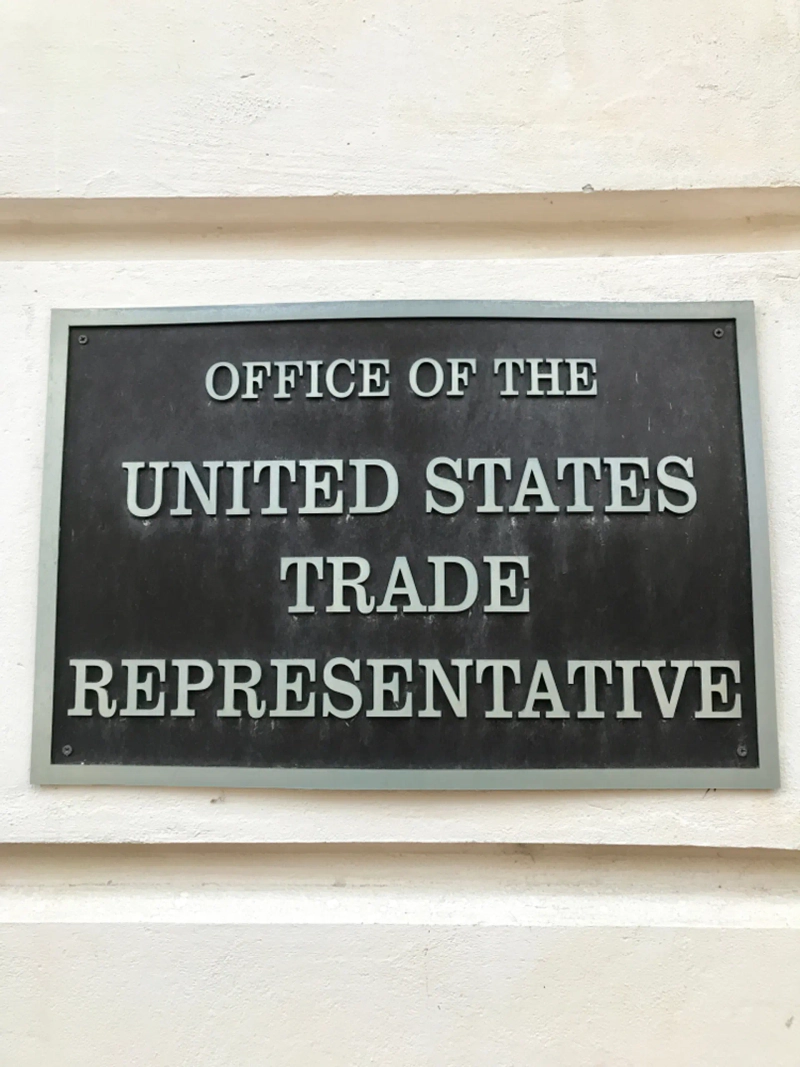
Jamieson Greer, head of the Office of the U.S. Trade Representative (USTR), argued that President Donald Trump’s threat to restore tariffs on South Korea from 15% to around 25% was “because Korea has not done its part.” He also took issue with Korea’s introduction of a new bill related to digital services.
Greer said in an appearance on Fox Business on the 27th (local time), “We and Korea concluded a trade agreement, but Korea has not lived up to its commitments,” adding, “They have failed to pass the relevant legislation and have only introduced a new bill on digital services.”
He nevertheless sought not to portray the U.S.-Korea relationship as deteriorating. “I think they’re getting the message again,” Greer said, adding, “In fact, we spoke early this morning.” He continued, “When Korea’s trade officials visit here later this week, we’ll hear directly from them.” Industry and Trade Minister Kim Jung-kwan and Trade Minister Yeo Han-koo are expected to travel to the U.S. to meet with Commerce Secretary Howard Lutnick and USTR chief Greer, among others.
“Korea is an ally, and there is no animus,” Greer said. He noted, however, that “during former President Biden’s four-year term, the U.S. trade deficit with Korea surged from $25 billion to $65 billion,” adding that “this is not sustainable.” Greer’s remarks, however, do not reflect the context that one factor behind the deficit is a sharp increase in U.S.-bound exports as Korean investment in the U.S. rose and machinery, equipment and various parts were brought in for plant construction.
Greer referenced the $350 billion investment in the U.S., saying Korea “decided to invest in the United States over the next three years.” He also said Korea “promised to allow more American cars to be sold in Korea, remove some non-tariff barriers in agriculture, and treat our digital companies fairly.” He claimed, however, that “they failed to pass the legislation for investment, introduced a new law on digital services, and didn’t do what they needed to do on agriculture.”
The digital-services legislation Greer referred to is interpreted as pointing to amendments to the Act on Promotion of Information and Communications Network Utilization and Information Protection that recently passed the National Assembly. The Online Platform Act that the Trump administration is watching warily has not yet been passed by the National Assembly. While the final amendments did not include provisions to impose penalty surcharges on Big Tech firms (large-scale information and communications service providers), the bill takes issue with the distribution of false and manipulated information, potentially strengthening Big Tech’s responsibility for content moderation. Earlier, Sarah Rogers, Under Secretary of State for Public Diplomacy, publicly criticized the amendments, saying, “While it may appear on its face to focus on correcting defamatory deepfakes, it actually reaches far more broadly and is jeopardizing technology cooperation.”
Greer’s mention of non-tariff barriers in agriculture also drew attention. This is the first time the United States has expressed dissatisfaction with progress on agricultural issues since the negotiations. In a joint fact sheet in November last year, the two countries said, “Korea will work with the United States to discuss non-tariff barriers affecting trade in food and agricultural products.” To that end, they said Korea would “streamline the regulatory approval process for agricultural biotechnology products (GMOs), establish a ‘U.S. Desk’ dedicated to handling requests related to U.S. horticultural crops, and maintain market access for U.S. meat and cheese that use certain names.” The Korean government has broadly agreed to most of the requests and has been preparing improvement measures since consultations in July–August last year. However, it is interpreted that the U.S. side judged the pace of improvement to be slow.
Washington=Lee Sang-eun, correspondent selee@hankyung.com

Korea Economic Daily
hankyung@bloomingbit.ioThe Korea Economic Daily Global is a digital media where latest news on Korean companies, industries, and financial markets.