Trump warns of military action against Iran… “Time is running out”
Summary
- The report said geopolitical tensions are escalating as the U.S. pressures Iran by deploying a massive fleet and additional troops to the Middle East.
- It said Iran vowed a strong response to any U.S. attack while remaining open to nuclear talks and demanding guarantees of its right to peaceful nuclear technology.
- Energy Aspects was cited as saying it is not a simple decision because, if the U.S. attacks Iran, Tehran could move to disrupt oil shipments through the Strait of Hormuz.
Forecast Trend Report by Period


U.S. deploys its largest force since last June
But a Maduro-style operation seen as unlikely
Iran vows a strong response to any attack, yet
signals it remains open to nuclear talks
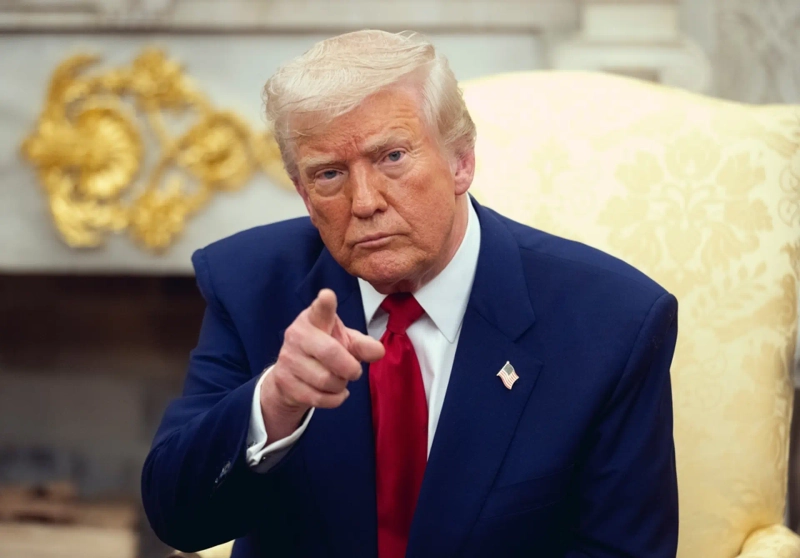
With U.S. President Donald Trump continuing his hard-line rhetoric toward Iran, geopolitical tensions in the Middle East are rising. Iran said it is ready to respond to a U.S. strike, while also indicating it remains open to nuclear negotiations.
On the 28th (local time), Trump wrote on Truth Social that “a massive fleet is heading toward Iran,” adding that “this fleet is moving swiftly with tremendous power and a firm purpose.” He went on to warn, “I hope Iran quickly comes to the negotiating table and delivers a fair and equal ‘abandonment of nuclear weapons.’ Time is running out.”
Earlier, the U.S. military deployed substantial U.S. Navy assets to the Middle East centered on the nuclear-powered aircraft carrier USS Abraham Lincoln. Trump’s remarks are widely interpreted as signaling an intent to further strengthen naval forces around Iran.
According to the U.S. military, three guided-missile destroyers sailed on the 26th alongside the Lincoln. About 5,000 additional troops were also deployed. The Financial Times (FT) noted that this marks “the largest U.S. military buildup deployed around Iran since last June, when B-2 bombers dropped 15t of bombs on three Iranian nuclear facilities.”
The U.S. military already has 30,000 to 40,000 troops deployed in the region. These include five air wings dispersed across multiple countries, five warships including two destroyers, air-defense systems and other assets. Dana Stroul, former deputy assistant secretary of defense for the Middle East, said, “This additional tranche of assets gives President Trump a range of options and is more offensive in nature than defensive.”
Trump also sought to pressure Iran by referring to the Venezuela operation. “As in the case of Venezuela, (this fleet) has the readiness, will and capability to carry out the mission swiftly and violently if necessary,” he said. He also stressed that any strike would be more powerful than the U.S. airstrikes that hit three Iranian nuclear sites last June.
Some observers, however, argue that the odds of the U.S. carrying out an operation akin to the capture of former Venezuelan President Nicolás Maduro are slim. The reasoning is that even if Iran’s supreme leader were removed, the nature of the regime would be unlikely to change easily. A former Pentagon official told the FT, “The U.S. has not positioned the right forces and has not had enough time to plan,” adding, “The geographic conditions are far more challenging (than in Venezuela).”
The possibility of a closure of the Strait of Hormuz is another variable. Energy Aspects said, “It is not a simple decision because if the U.S. attacks, Iran could disrupt oil shipments through the Strait of Hormuz.”
According to the FT, U.S. Secretary of State Marco Rubio said that day, “It is highly likely that Iran’s regime may be weaker than ever.” Rubio said Iranian authorities have no way to resolve the economic collapse, a core grievance of protesters.
He was cautious, however, about the prospects for regime change in Iran. “No one will be able to give a simple answer as to what will happen next in Iran,” he said. He added, “If the supreme leader and the regime were to fall, beyond the hope that there would be figures within that system who could cooperate toward a similar transition, we would expect a situation even more complex than what we are discussing now.”
Iran responded immediately to the U.S. threats. Iranian Foreign Minister Abbas Araghchi wrote on X the same day, “Iran will respond far more powerfully, swiftly and in greater depth than during the war last June.” At the same time, Araghchi said, “We remain open to mutually beneficial and fair nuclear negotiations,” adding that “such talks must take place on an equal footing without coercion, threats or intimidation, and must guarantee Iran’s right to peaceful nuclear technology.”
Reporter Myunghyun Han wise@hankyung.com

Korea Economic Daily
hankyung@bloomingbit.ioThe Korea Economic Daily Global is a digital media where latest news on Korean companies, industries, and financial markets.