Trump favors a weak dollar; Bessent sticks with a strong dollar—policy whiplash
Summary
- President Trump called dollar weakness “great,” saying he has favored a weak dollar to drive a manufacturing revival and increase exports.
- Treasury Secretary Bessent denied the possibility of FX intervention and said the US has always maintained a strong-dollar policy, but markets see the weak-dollar trend as unlikely to change materially.
- Citing former Morgan Stanley currency strategist Stephen Jen, the WSJ reported a forecast that the dollar’s value could fall another 20%.
Forecast Trend Report by Period


A day after Trump’s remarks… Bessent: “The US maintains a strong-dollar policy”
Bessent denies possibility of FX intervention
Trump aims to revive US manufacturing
“A weak dollar is great”… out of sync with the Treasury
“The dollar could fall another 20%”
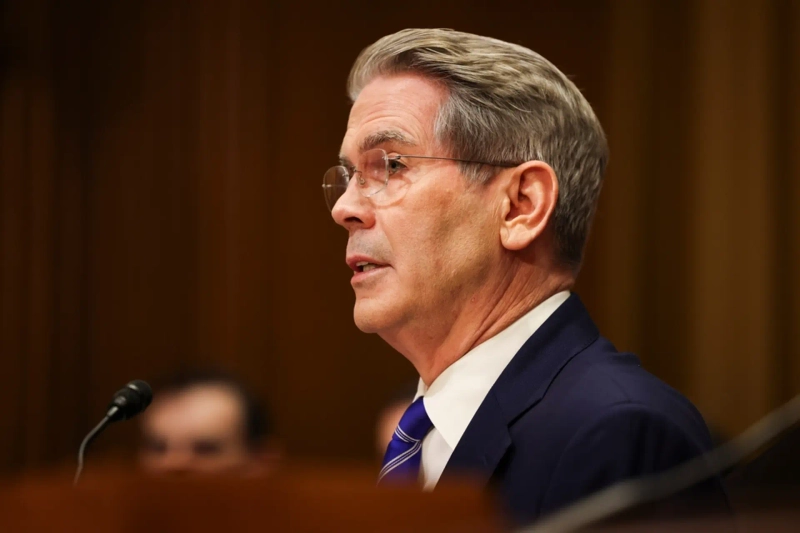
Just a day after US President Donald Trump said a weaker dollar was “great,” Treasury Secretary Scott Bessent said “the United States has always maintained a strong-dollar policy.” After Trump’s comments pushed the dollar to its lowest level in four years, the Treasury chief—who is responsible for the currency—moved quickly to calm markets. With the president and the Treasury secretary sending mixed signals, questions have emerged over whether the Trump administration’s dollar stance is ultimately geared toward a weaker or stronger greenback.
“No intervention in the yen market”
In an interview with CNBC on the 28th (local time), Bessent was asked whether the US was intervening in FX markets or trying to strengthen the yen. “Absolutely not,” he said, adding that “the United States has always maintained a strong-dollar policy.” He also said that “with sound policies, capital flows into the United States, the trade deficit narrows, and over the long term that will lead to a stronger dollar.”
Since the 23rd, speculation had spread that the US and Japan might jointly intervene to curb yen weakness, but Bessent dismissed the idea.
After Bessent’s remarks, the dollar index—which measures the greenback against six major currencies—rose 0.4%, offsetting part of the previous day’s decline (-1.2%). The yen-dollar rate climbed to the low 154-yen-per-dollar range (a weaker yen), while the euro fell 1% against the dollar. Erika Marilieri, senior global macro analyst at Manulife Investment Management, told Bloomberg that “Bessent’s comments eased market concerns” and “helped restore confidence in the Trump administration’s dollar policy.”
A day earlier, Trump told reporters asking whether he was concerned about dollar weakness, “No,” calling the current situation “great.” Markets interpreted the remark as a signal that the president welcomed a weaker dollar, and the currency slid sharply. Trump has previously made comments indicating a preference for a weaker dollar to revive manufacturing and boost exports. The so-called “Miron Report” by Stephen Miran, a Fed governor, which is said to underpin the Trump administration’s tariff policy, also proposed a weaker dollar as a way to address the United States’ massive trade deficit.
Some analysts also say that ahead of the November midterm elections, Trump may need to maintain a weak-dollar stance to lift support among his core base—manufacturing workers in the “Rust Belt.”
Weak-dollar trend likely to persist
Bessent’s pledge to stick with a strong-dollar policy amounts to a reaffirmation of the United States’ traditional stance. If dollar weakness persists, foreign capital inflows to the US could diminish, because countries and institutional investors holding US Treasuries would have less incentive to increase their dollar assets. That is the backdrop to the Treasury’s support for a stronger dollar.
However, some argue it is difficult to read Bessent’s remarks as a policy objective. Given that he is a key Trump adviser, it is unlikely he would push a strong-dollar policy against the president’s wishes. Nikkei said that “Treasury secretaries have historically used the phrase ‘strong dollar’ in the sense of safeguarding the reserve currency,” adding that “it does not mean they want a sharp dollar decline, but it also does not necessarily mean they are aiming for dollar strength.”
Bessent has repeatedly stressed that he will monitor whether any country or region is artificially depressing its currency. Pat Lok, an FX strategist at JPMorgan, also told Bloomberg that “Bessent’s remarks do not rule out the possibility of further verbal intervention or even actual intervention.”
The dollar index rose to end higher on the 28th immediately after Bessent’s remarks, but slid again into the 29th. Markets see little chance that the broader weak-dollar trend will reverse meaningfully. Investor confidence has been weighed down by US-Europe tensions over Greenland, controversy over potential encroachment on the Fed’s independence, tariff uncertainty, and a widening fiscal deficit. The dollar index fell 9.4% last year and is down about 2% so far this year.
According to The Wall Street Journal (WSJ), Stephen Jen, a former Morgan Stanley currency strategist, forecast that the dollar could drop another 20%.
Reporter Han Kyung hankyung@hankyung.com

Korea Economic Daily
hankyung@bloomingbit.ioThe Korea Economic Daily Global is a digital media where latest news on Korean companies, industries, and financial markets.