Lee Chang-yong: "It's a relief the won-dollar rate has come down to the 1,430-won range…NPS new framework to be decided within 3–6 months"
Summary
- Governor Lee Chang-yong said it was a relief that the won-dollar exchange rate fell from the 1,480-won range to the 1,430-won range.
- He noted that the National Pension Service’s continued overseas investment boosted expectations of won depreciation, stimulating individuals’ preference for overseas investment.
- He stressed that Korea’s FX market structure will change as the NPS implements strategic currency hedging, reduces the scale of overseas investment, and prepares a new framework.
Forecast Trend Report by Period


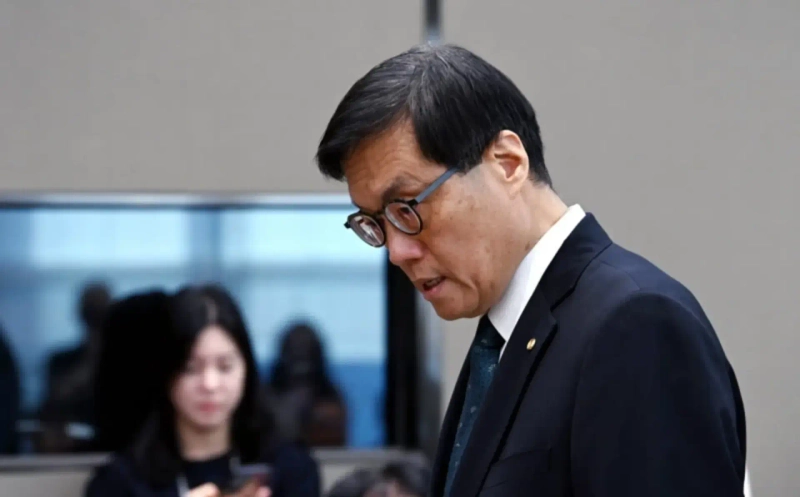
Lee Chang-yong, governor of the Bank of Korea, said it was "a relief" that the won-dollar exchange rate has fallen back to the 1,430-won range. "Since November, the currency has depreciated far more than what I thought was appropriate," he said, adding that "an exchange rate in the 1,480-won range is hard to justify given Korea’s historically large current account surplus."
The BOK released on YouTube on the 30th a conversation between Governor Lee and Jan Hatzius, an economist at Goldman Sachs. The talk took place in Hong Kong on the 28th. Asked about the won-dollar exchange rate, Lee said he was reluctant as a central bank governor to comment on a specific level, but still described it as "a relief" that the rate, after rising to 1,480 won, fell to below the 1,430-won range.
Lee assessed last year’s rise in the exchange rate as "driven by global factors, but domestic factors were also important." He noted that while there was an assessment that it moved in tandem with the Japanese yen, "decoupling from the dollar index began after October," and said "among domestic investors, there was a stronger belief that the won would weaken further."
Lee said he viewed the impact of the National Pension Service (NPS) as the largest. "The NPS continued to invest overseas, and the scale of those investments was large relative to the size of the FX market," he said, adding that "expectations of won depreciation were continuously created, which in turn made retail investors prefer overseas investment again."
He also gave a positive assessment of the NPS’s recent shift in strategy. "The NPS recently made an important announcement," Lee said, introducing it as a plan to "begin strategic currency hedging and cut this year’s overseas investment by more than $20 billion."
Lee further pointed out that the NPS should raise its FX-hedging target ratio, which is currently 0%. "Given the size of Korea’s derivatives market, we shouldn’t rely solely on swaps with the central bank and need to secure other sources of dollar funding," he said. "Issuing U.S. dollar-denominated bonds could serve as a natural hedge from an asset-liability management perspective."
"The NPS understands that because its scale is so large, it cannot be ignored from a macroeconomic standpoint," Lee said, stressing that "a new framework that takes this into account will be put in place within 3–6 months, and it will change the structure of Korea’s FX market."
Reporter Kang Jin-kyu josep@hankyung.com

Korea Economic Daily
hankyung@bloomingbit.ioThe Korea Economic Daily Global is a digital media where latest news on Korean companies, industries, and financial markets.