Trump Wants the 'World’s Lowest Rates'…but Markets Aren’t Sold Even on Rate Cuts [Fed Watch]
Summary
- Markets, via CME’s FedWatch, see the highest likelihood of a 0.25 percentage-point rate cut in June this year and a total 0.5 percentage-point cut by year-end.
- While Warsh is viewed as positive on rate cuts, pairing them with balance-sheet reduction (QT) could make the market reaction unavoidably mixed.
- WSJ said a resumption of QT could lift long-term bond yields and mortgage rates, potentially triggering market volatility and renewed debate over Fed independence.
Forecast Trend Report by Period


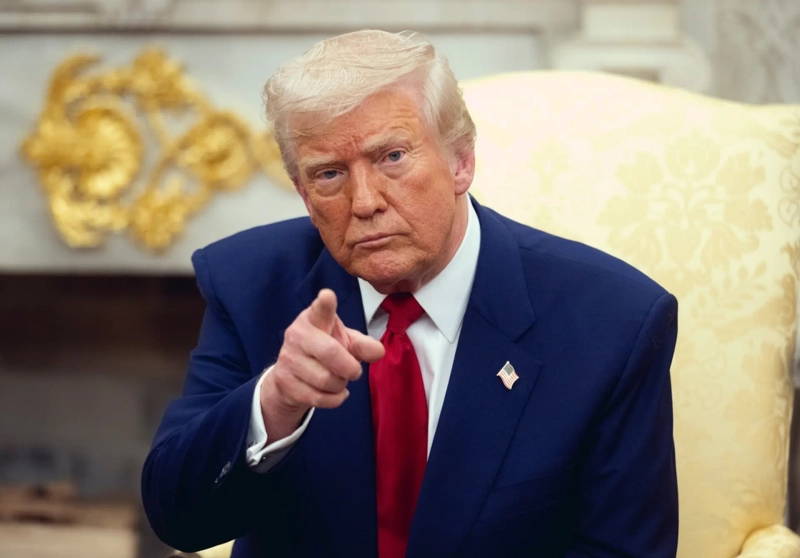
US President Donald Trump has repeatedly urged the US central bank (the Fed) to cut interest rates. After the Federal Open Market Committee (FOMC) held rates steady at its policy meeting on the 29th of last month, he even wrote that “the United States should be the country with the lowest interest rates in the world.” He has also argued more specifically that rates should fall to around 1% per year.
It is still difficult to say how closely Kevin Warsh, a former Fed governor whom he has named as a candidate for the next chair, would meet Trump’s expectations. According to CME’s FedWatch, markets see the most likely path as beginning a 0.25%-point rate cut in June this year (46.9%) and delivering a total 0.5%-point reduction by year-end (32.8%).
That is little changed from previous expectations. While Warsh is seen as relatively supportive of rate cuts given Trump’s backing, he also holds the view that the Fed should shrink its balance sheet (quantitative tightening, QT). If rate cuts and balance-sheet runoff proceed at the same time, the market reaction is likely to be mixed.
During his tenure as a Fed governor from 2006 to 2011, Warsh was critical of then-Chair Ben Bernanke’s quantitative easing (QE) policy. He supported the first round of QE, but from the second round he said “the risky policy needs to be boxed in,” arguing it was not a “free lunch.” As the Fed repeatedly used money-printing measures in response to the global financial crisis and the Covid crisis, its assets surged from about $1 trillion in 2008 to $9 trillion in 2022. They have since fallen to around $6.6 trillion, but remain bloated compared with the past.
His logic is that QE—buying bonds to inject money into the system—ultimately narrows the gap between short- and long-term interest rates too much, distorting markets. In a Hoover Institution discussion in May last year, Warsh said “inflation is a choice of the central bank,” adding that “if you stop excessive money printing, there is room to lower interest rates further.” Pointing to an outsized role for central banks, he stressed that they should normalize through balance-sheet reduction and return to the core of monetary policy.
However, Wall Street Journal (WSJ) columnist Greg Ip projected that if Warsh were to pursue QT, it would be hard to avoid jolting markets. The Fed had been absorbing liquidity by selling bonds it holds or by not reinvesting proceeds when bonds matured, but it halted balance-sheet reduction late last year as funding markets grew unstable, he said. “If balance-sheet reduction resumes, long-term Treasury yields could rise, which would lead to higher mortgage rates,” he noted, adding that such a policy could anger Trump.
Another dilemma is that if Warsh tries not to run against Trump’s “mood,” the Fed’s independence would again come under suspicion—potentially fueling another vicious cycle of market anxiety.
Washington=Lee Sang-eun, correspondent selee@hankyung.com

Korea Economic Daily
hankyung@bloomingbit.ioThe Korea Economic Daily Global is a digital media where latest news on Korean companies, industries, and financial markets.