Gold plunges by the most in 12 years… “Triggered by Chinese speculative money”
Summary
- International gold prices closed at $4,894.23 per troy ounce on the 30th of last month, plunging 9% from the previous session to log the biggest drop since 2013.
- It said the backdrop to this gold rally and subsequent selloff included central-bank buying, ETF inflows, the U.S. Fed’s rate cuts, and large-scale buying and profit-taking by Chinese speculative money.
- On the same day, spot silver prices plunged 27.7%, and turnover in the silver ETF 'iShares Silver Trust' exceeded $40 billion, underscoring even greater volatility in the silver market.
Forecast Trend Report by Period


Gold falls 9% on the 30th
Biggest drop since 9.1% in April 2013
“Silver is even more dramatically volatile”
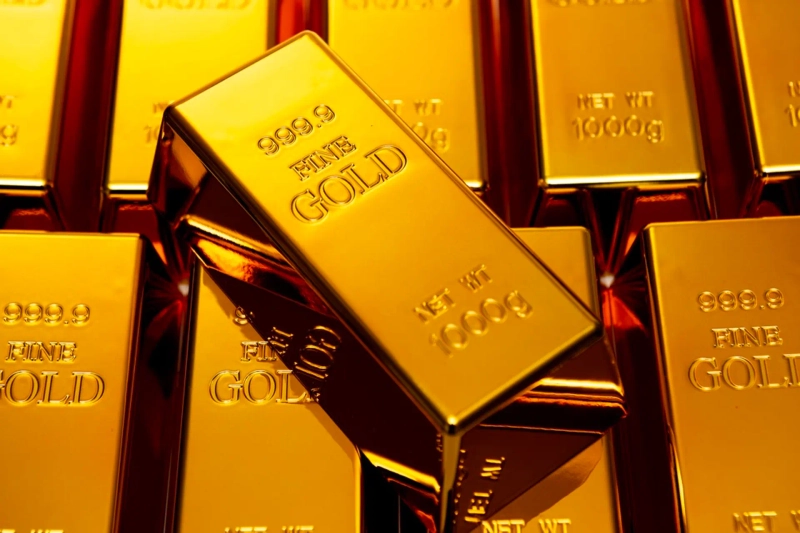
The collapse in international gold prices recorded on the 30th of last month was the largest one-day drop in 12 and a half years.
According to Bloomberg, the spot gold closing price on the 30th of last month was $4,894.23 per troy ounce, down 9% from the previous session. It was the biggest daily decline since April 15, 2013 (-9.1%).
Gold traced a gradual upward curve from 2002 ($280) to its all-time high in September 2011 ($1,920.3). A year and six months after peaking, it plunged 9.1% and sank to $1,348.
In 2013, demand for gold as a safe-haven asset strengthened amid Europe’s fiscal crisis, and rumors even spread that China would wage a currency war with the dollar over the international reserve currency, pushing gold prices to lofty levels.
However, on April 15 that year, when China’s first-quarter economic growth was announced at 7.7%—well below the market forecast (8%)—gold began to tumble.
After falling to $1,348 in April 2013, gold continued to set lower lows: end-2013 ($1,201), end-2014 ($1,184), and end-2015 ($1,061). It then resumed an upward trend from 2016, reaching $2,000 in 2023.
It then surged explosively in 2024 (up 27%) and 2025 (64%). This year, too, it had jumped 25% right up until just before the plunge. Intraday, it spiked as high as $5,595.
Since last year, the gold rally has been supported by large-scale purchases by central banks, inflows into exchange-traded funds (ETFs), three consecutive rate cuts by the U.S. Federal Reserve (Fed), and a series of geopolitical tensions.
Last year, investors also piled into the so-called “debasement trade,” accelerating the gold rally.
Bloomberg analyzed that a massive wave of buying by Chinese speculative money—from individuals to large equity funds that ventured into commodity markets—drove the sharp pace.
It said the selloff was triggered as Chinese investors moved to take profits following news that President Trump had nominated Kevin Warsh, seen as “less dovish,” as the next chair of the U.S. central bank (Fed).
Alexander Campbell, a former head of commodities at the world’s largest hedge fund Bridgewater Associates, said, “China sold, and now we’re feeling the aftershock.”
The most dramatic moves were seen in the silver market.
The silver market is only about $98 billion. It is much smaller than the $787 billion gold market, making it correspondingly more volatile. Spot silver prices plunged 27.7% on the 30th of last month.
That day, trading value in the largest ETF backed by silver, the iShares Silver Trust, exceeded $40 billion.
Shin Min-kyung, Hankyung.com reporter radio@hankyung.com

Korea Economic Daily
hankyung@bloomingbit.ioThe Korea Economic Daily Global is a digital media where latest news on Korean companies, industries, and financial markets.