Won–dollar jumps 24 won, back to the 1,460-won range in 10 days
Summary
- The won–dollar exchange rate jumped to 1,464.30 won, returning to the 1,460-won range for the first time in 10 days.
- It attributed the rise in the exchange rate to former Governor Warsh’s hawkish signal, dollar strength, and global risk-off sentiment.
- It said foreign investors posted net selling of 2.5150 trillion won in the KOSPI market, adding to won weakness and upward pressure on the exchange rate.
Forecast Trend Report by Period


FX market also hit by wash-trade effect
Dollar strengthens on expectations of liquidity shrinkage
Volatility widens with daily swings of 10–20 won
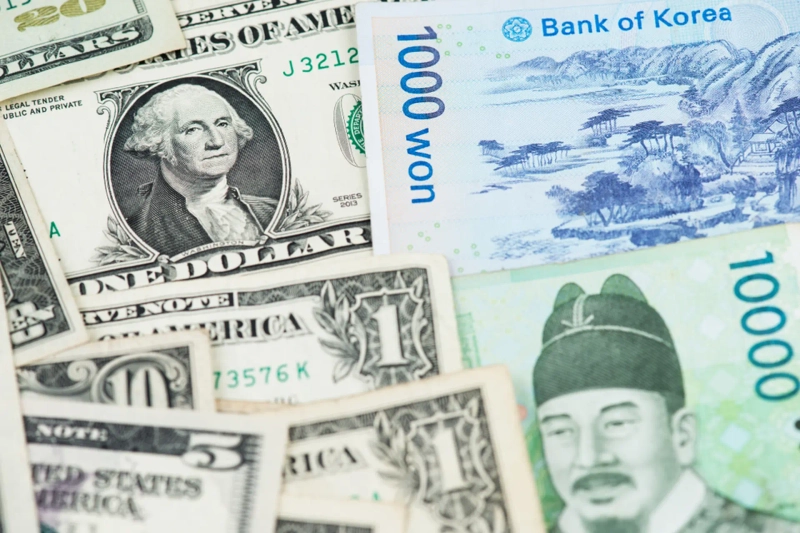
The won–dollar exchange rate surged by more than 20 won, returning to the 1,460-won range for the first time in 10 days. With global risk-off sentiment re-emerging, markets are also assessing the spillover from expectations that Kevin Warsh, former Federal Reserve (Fed) governor, could be named the next Fed chair.
On the Seoul FX market on the 2nd, the won–dollar rate (as of 3:30 p.m.) finished daytime trading at 1,464.30 won, up 24.80 won from the previous session. It marked the highest level in about 10 days since last month’s 23rd (1,465.80 won). The rate opened at 1,451.00 won, up 11.50 won, and extended gains into the afternoon.
Recently, the exchange rate has been extremely volatile, repeatedly swinging 10–20 won in a single day on external factors. Over the past week, the average daily range reached 16.5 won.
On the day, the impact of a sharp dollar rally—after Warsh’s hawkish leanings were highlighted last week—fed through to the won. The dollar index, which measures the dollar’s value against six major currencies, rose 0.08% from the prior day to 97.202. The yen–dollar rate, which fell to the 152-yen-per-dollar range last week, is currently trading around 154–155.
An FX authority official said, “We are also seeing a flow in which talk of possible joint intervention by the US and Japan was highlighted and then reversed.”
Global risk-off demand, fueled by concerns over Microsoft’s artificial intelligence (AI) earnings, was also cited as a driver of the rise in the exchange rate. In the FX market, demand increased for the dollar as a safe-haven asset over the won, a risk asset. Foreign investors stepped up upward pressure on the exchange rate after posting net selling of 2.5150 trillion won in the KOSPI market on the day.
Lee Yoo-jung, a researcher at Hana Bank, said, “The balance-sheet reduction stance that Warsh has argued for has been interpreted by the market as a hawkish signal, and that is immediately translating into dollar strength.”
Reporter Kang Jin-gyu josep@hankyung.com

Korea Economic Daily
hankyung@bloomingbit.ioThe Korea Economic Daily Global is a digital media where latest news on Korean companies, industries, and financial markets.