PiCK
[New York Stock Market Briefing] Rebound on bargain hunting in blue chips…Apple jumps 4%
Summary
- Wall Street rebounded as bargain buying in blue chips and a “surprise” January manufacturing PMI of 52.6 lifted major indexes, the report said.
- Nvidia fell nearly 3% amid doubts over its $100 billion investment in OpenAI and growing skepticism about the AI industry, the report said.
- By contrast, Apple and Walmart rose in the 4% range on the view that their cash flows are solid, while Robinhood tumbled 10% on a sharp drop in cryptocurrency values, the report said.
Forecast Trend Report by Period


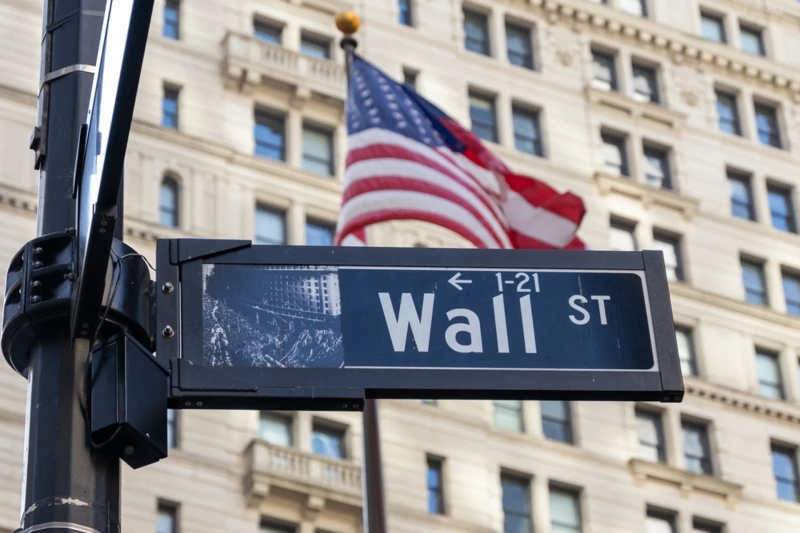
Wall Street, which had been shaken by the “Warsh shock,” rebounded as bargain buying flowed into high-quality stocks.
On the 2nd (local time), at the New York Stock Exchange (NYSE), the Dow Jones Industrial Average closed at 49,407.66, up 515.19 points (1.05%) from the previous session. The Standard & Poor’s (S&P) 500 rose 37.41 points (0.54%) to 6,976.44, while the tech-heavy Nasdaq Composite added 130.29 points (0.56%) to finish at 23,592.11.
Investors continued to feel out the policy direction of Warsh, nominated as the next Federal Reserve (Fed) chair. Market sentiment suggests it is still too early to judge which way he will lean, given that Warsh previously showed dovish (pro-easing) tendencies publicly during Donald Trump’s first term.
Tim Holland, chief investment officer (CIO) at Orion, said, “Most of the positive major trends still appear to be intact,” adding that “corporate earnings, the fiscal-policy environment, and seasonal factors remain important.”
Nvidia fell nearly 3% as skepticism over investment in artificial intelligence (AI) infrastructure persisted and its plan to invest $100 billion in OpenAI ran into difficulties. Jensen Huang, Nvidia’s CEO, said there were no issues at all with OpenAI, but foreign media reported that Nvidia’s management is skeptical about the deal. This is being interpreted as a sign that skepticism is emerging at the forefront of the AI industry regarding OpenAI’s business strategy and long-term growth prospects.
Disney plunged more than 7% despite reporting strong fourth-quarter results, as adjusted earnings per share (EPS) declined. Reports that CEO Bob Iger wants to step down earlier than his term, along with a growth stall in its sports and entertainment segments, weighed on investor sentiment.
Online brokerage Robinhood dropped 10%. A sharp decline in the value of cryptocurrencies, including Bitcoin, stoked concerns about reduced trading.
By contrast, Apple and Walmart both gained in the 4% range. As skepticism about the AI industry grows, Apple and Walmart—with solid cash flows—appear to be drawing investor attention.
Airline stocks were broadly higher, with United Airlines rising 4.92%. Expectations for an earnings rebound this year supported share prices.
By sector, industrials, financials, and consumer staples rose more than 1%, while energy, utilities, and real estate fell more than 1%.
U.S. manufacturing activity in January returned to expansion for the first time in a year, delivering a “surprise.” The Institute for Supply Management (ISM) said the January manufacturing purchasing managers’ index (PMI) came in at 52.6. That marks a 4.7-point jump from December’s seasonally adjusted 47.9 and topped the market forecast of 48.5. The new orders index surged to 57.1 from December’s 47.4, a 9.7-point jump, returning to expansion. It was the highest level since February 2022.
According to the CME FedWatch Tool, federal funds futures priced in a 91.1% probability that rates will be left unchanged next month.
The Cboe Volatility Index (VIX) fell 1.10 points (6.31%) from the previous session to 16.34.
Ko Jeongsam, Hankyung.com reporter jsk@hankyung.com

Korea Economic Daily
hankyung@bloomingbit.ioThe Korea Economic Daily Global is a digital media where latest news on Korean companies, industries, and financial markets.