A casual remark about being "all smiles"… Japan jolted as the yen tumbles and FX rates surge
Summary
- It reported that after Japan’s Prime Minister Sanae Takaichi referred to the benefits of a weak yen and described the FX special account as being in an “all smiles state,” the yen–dollar exchange rate surged.
- It said that the yen’s gains, which had taken the rate to ¥152.1 per dollar on a U.S. rate check, reversed after the remarks, returning to the upper end of the ¥155 range.
- It reported that the Nikkei pointed out that if the yen–dollar exchange rate heads toward ¥160 per dollar, the risk will increase of FX intervention using FX reserves.
Forecast Trend Report by Period


"All smiles" over the weak yen… Takaichi erases half the stronger-yen effect
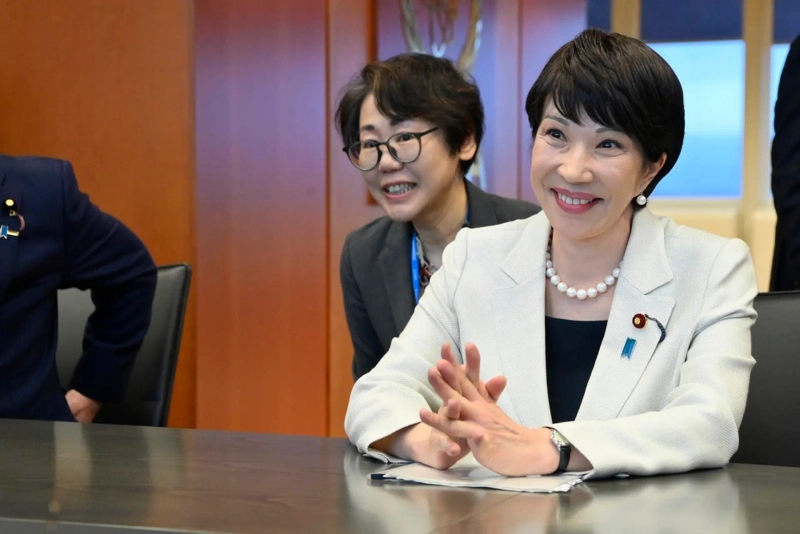
Japan’s Prime Minister Sanae Takaichi emphasized the benefits of a weaker yen while campaigning for the House of Representatives (lower house), sending the yen–dollar exchange rate sharply higher (and the yen’s value sharply lower). She described the management of the Foreign Exchange Fund Special Account—set up for FX intervention—as being in an “all smiles” state. The remark wiped out about half of the stronger-yen effect that had been achieved through a “rate check” by U.S. authorities, a preliminary step toward FX intervention.
On the 3rd in Tokyo’s FX market, the yen–dollar rate rose to the upper end of the ¥155-per-dollar range, meaning the yen weakened. The rate had climbed to ¥159.23 per dollar on the 23rd of last month, then fell as low as ¥152.1 on the 27th on expectations of a U.S. rate check. But in about a week, it gave back roughly half of the yen’s gains.
Similar to South Korea’s Foreign Exchange Stabilization Fund, the Foreign Exchange Fund Special Account manages FX reserves for intervention. When intervening during a strong-yen phase, the government sells yen raised by issuing short-term government securities and buys dollars. The foreign currency obtained through intervention is held in assets such as U.S. Treasuries. In a weak-yen phase, the government sells U.S. Treasuries and other assets and uses the dollars raised to buy yen. The yen obtained is used to redeem short-term government securities.
According to the Ministry of Finance, FX reserves stood at $1.3697 trillion as of end-2025. Reserves swelled during past episodes of yen-selling, dollar-buying intervention and have hovered around $1.3 trillion since about 2012.
Within the special account, interest earned on foreign-currency assets is recorded as revenue, while interest payments on short-term government securities are recorded as expenditure. As Japan’s interest rates have remained lower than overseas levels, profits arise from the interest-rate differential. When the yen weakens, interest income received from abroad increases in yen terms—why Prime Minister Takaichi was “all smiles.”
On the 1st, Takaichi explained on X that her intent behind the FX comments was that “it’s not that either a stronger yen or a weaker yen is good or bad, but that I want to create an economic structure that is resilient to exchange-rate fluctuations.” She said she was not emphasizing the benefits of a weaker yen, but did not address her remarks about the special account.
Through the unusual step of a U.S. rate check, Japan’s government halted the yen’s slide without spending a single yen. However, the impact has already faded by more than half amid Takaichi’s comments tolerating yen weakness. The Nikkei said that “if the yen–dollar rate again moves toward ¥160 per dollar, the risk will rise that authorities are forced into FX intervention using reserves.”
Tokyo=Kim Il-gyu, Correspondent black0419@hankyung.com

Korea Economic Daily
hankyung@bloomingbit.ioThe Korea Economic Daily Global is a digital media where latest news on Korean companies, industries, and financial markets.