Summary
- It said the partial shutdown ended after President Trump signed a stopgap spending bill to reopen federal government operations.
- It noted that Department of Homeland Security (DHS) funding was provided only through February 13, raising another shutdown risk.
- It said assessments are emerging that repeated shutdowns are highlighting the instability of U.S. fiscal management.
Forecast Trend Report by Period


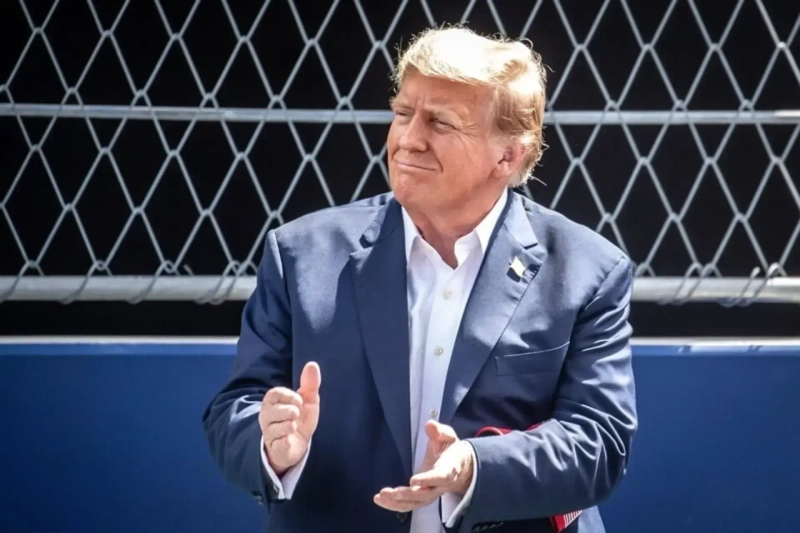
U.S. President Donald Trump signed legislation to restart federal government operations that had been partially suspended, bringing the shutdown to a close for now. However, political clashes over the Department of Homeland Security (DHS) budget are expected to flare up again.
According to Fox News on the 3rd (local time), President Trump signed a stopgap spending bill to end the partial shutdown that began at midnight on the 1st. The bill provides funding for key federal agencies—including the Department of Defense, the Department of State and the Treasury Department—through the end of the fiscal year in late September.
Funding for the Department of Homeland Security (DHS), however, is included only on a temporary basis through February 13. As a result, Republicans and Democrats now face pressure to reach a medium- to long-term budget agreement for DHS within a short deadline. In Washington, there is speculation that the issue could become another shutdown risk.
The measure faced turbulence in both the House and the Senate. The House had previously passed a bill to keep the federal government funded through late September, but Democrats refused to cooperate, taking issue with the Trump administration’s tougher immigration enforcement. That delayed Senate deliberations and ultimately failed to avert the shutdown.
At the center of the standoff is the DHS budget. In December 2025, DHS deployed a large number of Immigration and Customs Enforcement personnel to Minneapolis, Minnesota under “Operation Metro Surge.” Democrats have pushed back, arguing the crackdown was excessive.
Democrats’ opposition intensified further after a January incident in Minneapolis in which Alex Pretti, a Veterans Affairs intensive care unit nurse who was filming a federal immigration operation, was killed by a U.S. Border Patrol agent. Democratic senators cited the case as a reason to oppose a deal that included DHS funding.
Ultimately, the Senate passed a compromise on Friday that included funding for major agencies, but with the House in recess the measure was not cleared before the deadline. The House later passed the bill by a narrow 217-214 margin, and Trump’s signature brought the shutdown to an end.
The latest shutdown is also drawing attention because it came immediately after the longest shutdown in U.S. history, which lasted more than 40 days in the fall of 2025. At the time, Trump had signed a stopgap spending bill in November 2025 to facilitate negotiations over the fiscal 2026 budget. Political circles say the back-to-back shutdowns are once again underscoring the instability of U.S. fiscal management.

YM Lee
20min@bloomingbit.ioCrypto Chatterbox_ tlg@Bloomingbit_YMLEE