PiCK
Trump: “How about buying oil from the U.S.?”… Xi Jinping: “Don’t sell weapons to Taiwan”
Summary
- Trump said his call with China discussed China’s purchases of U.S. oil and gas and consideration of additional agricultural purchases, adding that everything was very positive.
- Trump said that, regarding China’s purchases of U.S. soybeans, China promised to buy 20 million t this season and 25 million t next season.
- Trump said relations with China are very friendly and stressed that he can achieve many positive outcomes with China over the remaining three years of his term.
Forecast Trend Report by Period


First call in two months; discussion covers Taiwan, U.S.-China ties and global issues
Trump: “Talks on China buying U.S. oil and gas”
Xi: “No tolerance for Taiwan separatism… U.S. must be prudent on arms sales to Taiwan”
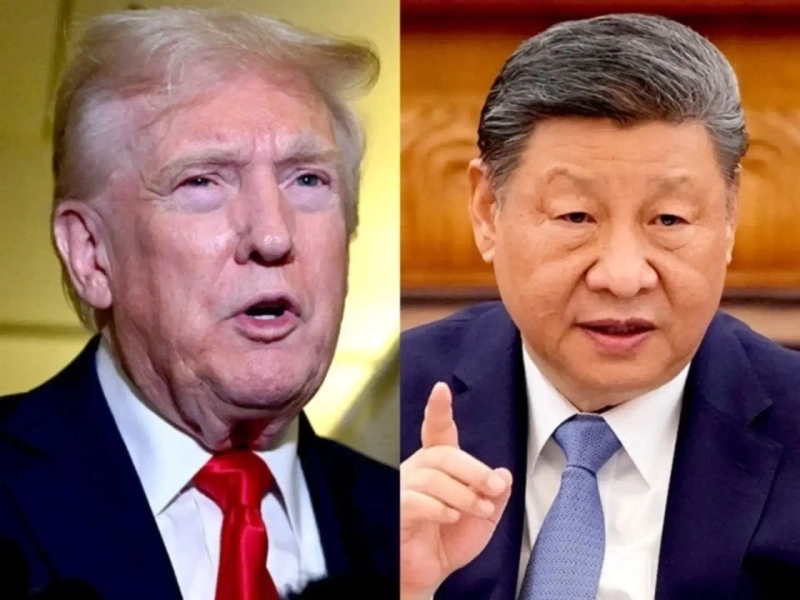
U.S. President Donald Trump and Chinese President Xi Jinping held a phone call to discuss bilateral relations, the Taiwan issue and other global matters. The call between the two leaders came roughly two months after their last conversation on Nov. 24.
On the 4th (local time), Trump wrote on social media (SNS) that he had “just concluded an excellent phone call with President Xi,” adding that it was “a long and detailed call.”
He continued: “Important topics were discussed—trade, the military, an April trip in connection with my much-anticipated visit to China, Taiwan, the Russia-Ukraine war, the current situation in Iran, China’s purchases of U.S. oil and gas, consideration of additional agricultural purchases by China, aircraft engine supplies and many other subjects,” saying “everything was very positive.”
China’s state-run Xinhua News Agency also reported on the call, quoting Xi as saying of the Taiwan issue that it is “the most important issue in China-U.S. relations.” Xi said Taiwan is Chinese territory, that China will “resolutely safeguard national sovereignty and territorial integrity,” and that it will “never tolerate Taiwan’s separation.”
He stressed that “the United States must handle the issue of selling weapons to Taiwan with caution.” In response, Trump said he “takes seriously China’s concerns regarding the Taiwan issue,” and that he hopes to maintain communication with China and keep U.S.-China relations “better and more stable” during his term, Xinhua reported.
On China’s purchases of U.S. soybeans, Trump said China had promised to increase purchases this season to 20 million t (tons) and to buy 25 million t next season.
That the call included China’s potential purchases of U.S. oil and gas is closely tied to the current global backdrop. If Trump’s account is accurate, it suggests discussions took place about replacing part of China’s oil and gas imports—long sourced mainly from Russia, Iran and Venezuela—with U.S. supplies.
Attention is also drawn to this in conjunction with the situation in which the United States is controlling Venezuela’s oil exports—Venezuela having been one of China’s oil sources—after ousting Venezuelan President Nicolás Maduro.
The leaders’ call came about two months after their Nov. 24 phone conversation. That call took place one month after a bilateral summit held on the sidelines of the Asia-Pacific Economic Cooperation (APEC) leaders’ meeting in Gyeongju.
Both leaders placed particular emphasis on the importance of U.S.-China relations. In his SNS post, Trump said: “Our relationship with China, and my personal relationship with President Xi, is very friendly, and we both recognize how important it is to maintain it.”
He added: “I believe I can achieve many positive results with President Xi and China over the remaining three years of my term.”
Xi likewise said, “I attach great importance to China-U.S. relations,” adding that he hopes in the new year to “steer the great ship of China-U.S. relations together with you, ride out the storm and move forward steadily to accomplish more major and good things,” Xinhua reported.
He went on to propose that “both sides should strengthen dialogue and communication in line with the agreements already reached, appropriately manage differences, and expand practical cooperation,” and suggested: “Let us proceed step by step, build trust, and make 2026 a year in which the United States and China move toward mutual respect, peaceful coexistence and win-win cooperation.”
Park Soo-rim, Hankyung.com reporter paksr365@hankyung.com

Korea Economic Daily
hankyung@bloomingbit.ioThe Korea Economic Daily Global is a digital media where latest news on Korean companies, industries, and financial markets.