"We’ll push past DeFi’s limits"… SynFutures declares shift to a 'derivatives layer' [Cointerview]
Summary
- SynFutures said it is a decentralized perpetual futures exchange preparing for a shift to an infrastructure layer and derivatives layer, alongside an upcoming mainnet launch.
- It said a dedicated chain will deliver centralized-exchange-level speed, a predictable cost structure, and high efficiency, securing competitiveness even on-chain.
- SynFutures said it will expand supported assets across RWA, crypto assets, and on-chain derivatives, while strengthening user-friendly design for a Web2-level UX and mass adoption.
Forecast Trend Report by Period


Interview with SynFutures co-founder Mark Lee
Mainnet launch teased as it accelerates pivot to derivatives infrastructure
"Centralized-exchange-level speed and predictable costs"
"Mass adoption hinges on UX and trust design, not just technology"
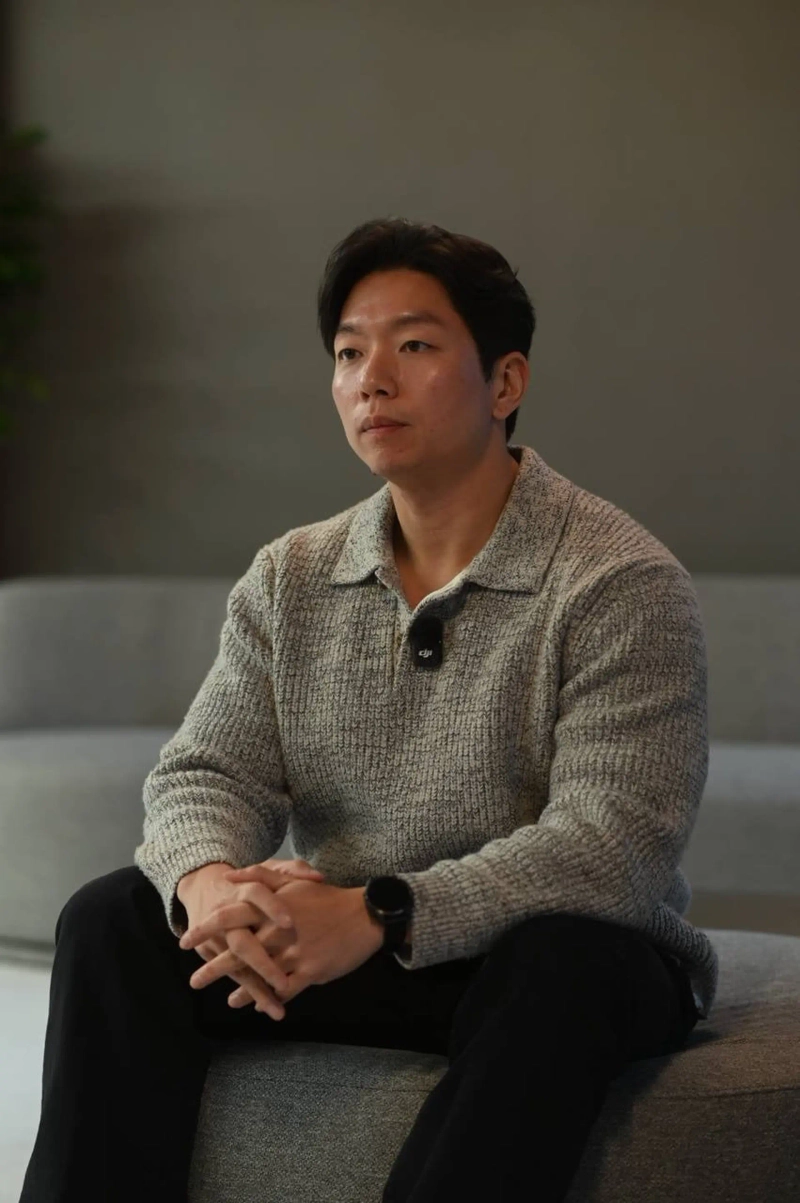
SynFutures, a decentralized perpetual futures exchange (Perp DEX), has declared a shift toward becoming an “infrastructure layer” for the DeFi derivatives market. The idea is to move beyond a simple DeFi application and expand into a platform equipped with technology that can support a wide range of derivatives and trading experiences.
In an interview with Bloomingbit on the 10th, SynFutures co-founder Mark Lee said, “SynFutures’ next step is scaling infrastructure for the DeFi derivatives market,” adding, “Our goal is to build a ‘derivatives layer’ that builders can leverage without having to build everything from scratch.”
SynFutures is a decentralized perpetual futures exchange that lets users take leveraged long (buy) or short (sell) positions on tokenized assets. The entire process is designed as a permissionless structure, with all trading executed on-chain. A permissionless structure means anyone can access financial services—such as deposits, lending, and trading—on-chain with just an internet connection and a crypto wallet, without approval from a central institution or identity verification.
Lee said, “SynFutures is currently ahead of its mainnet launch,” explaining that “this mainnet launch will be a turning point as SynFutures transitions from a simple Perp DEX to derivatives infrastructure.”
He added, “With a purpose-built dedicated chain, we can offer faster execution than existing Perp DEXs, a predictable cost structure, and high efficiency,” noting that “from a user’s perspective, even on-chain trading should deliver speeds comparable to centralized exchanges.”
He also discussed the DeFi market’s stage of maturity. “DeFi is maturing, and what’s needed now is trust delivered through design,” he said, citing the need for “a clear regulatory environment, a better user experience (UX), and broader mainstream diffusion in mobile environments.” He emphasized, “For DeFi to break out of its niche, it must drop the attitude of justifying a complex UX.”
Lee also forecast that the DeFi tech stack will become more modular and specialized. “Every function will be separated into distinct layers, and systems that combine them efficiently will emerge,” he said, adding, “Only platforms that move beyond chasing short-term profits and deliver tangible benefits to users will survive.”
As factors for mass adoption, SynFutures pointed to three: ▲infrastructure expansion to support more markets and activity ▲delivering a Web2-level user experience ▲positioning on-chain derivatives as foundational building blocks of finance. He said, “For mass adoption, SynFutures will expand supported assets from crypto to RWA,” adding, “We’re also focused on raising UX to a Web2 standard and building designs that users can use easily and comfortably.”
On RWA in particular, he said it is “a practical upgrade lever for the DeFi market,” adding that it can “offer retail investors access to investment opportunities in assets that were previously hard to reach,” while “improving trade transparency, liquidity, and price discovery across the market.”
He expressed disappointment about Korea’s DeFi market. “Korea’s retail crypto adoption rate is high, but it isn’t translating into on-chain usage,” he said, adding that “users accustomed to centralized exchanges are struggling with wallet usage, exploring DeFi, and understanding on-chain risks.” He added, “To address this, education and user-friendly DeFi products are both needed.”
Lee emphasized, “The market has begun paying for technology and utility, not hype,” adding, “DeFi’s next phase will be defined by infrastructure that can withstand headwinds and products that are simple and easy enough for mainstream users to adopt.”
Hwang Doo-hyun, Bloomingbit reporter cow5361@bloomingbit.io

Doohyun Hwang
cow5361@bloomingbit.ioKEEP CALM AND HODL🍀