PiCK
Fed moves to classify crypto as a separate asset class…tightening derivatives margin rules
Summary
- The US Federal Reserve said it has proposed classifying cryptoassets as a separate asset class, subject to derivatives margin regulation, distinct from equities or FX.
- Researchers noted that the Standard Initial Margin Model (SIMM) may underestimate cryptoassets’ high price volatility and counterparty risks in the OTC derivatives market.
- The Fed was said to have proposed assigning separate risk weights to cryptoassets and developing a benchmark cryptoasset index to calibrate margin requirements more precisely, reflecting a push toward integration into the financial system.
Forecast Trend Report by Period


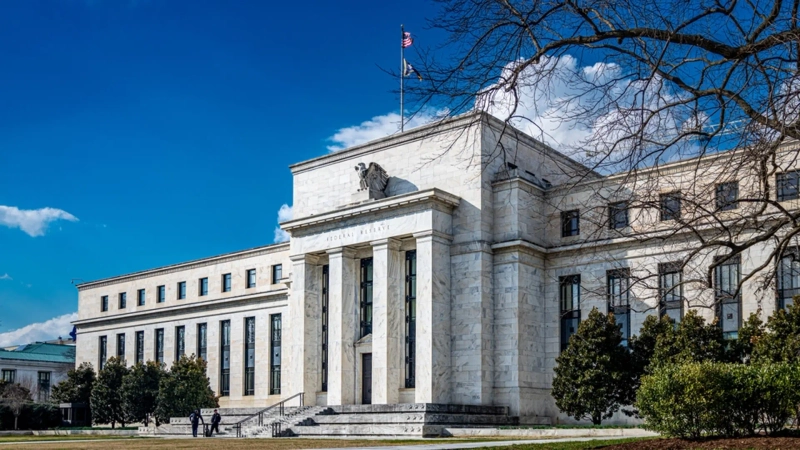
The US Federal Reserve (Fed) has proposed classifying virtual assets (cryptoassets) as a distinct asset class—separate from equities or foreign exchange—and applying derivatives margin regulations accordingly. The move is seen as aimed at managing risks in the highly volatile crypto market and creating a safer trading environment within the regulated financial system.
On the 12th (local time), Fed researchers Anna Amirzhanova, David Lynch and Annie Zhang published a working paper outlining the proposal. The authors argued that the Standard Initial Margin Model (SIMM), currently used in derivatives markets, does not adequately capture the idiosyncratic risks of cryptoassets.
Existing models estimate risk by grouping assets into categories such as interest rates, equities, FX and commodities. But because cryptoassets exhibit extreme price swings and are priced based on drivers different from those of traditional assets, the current classification framework could underestimate risk, the researchers said. This is particularly relevant for over-the-counter (OTC) derivatives that do not go through a central counterparty (CCP), where precise margin calculation is essential to mitigate counterparty risk.
The researchers proposed assigning a separate risk weight to cryptoassets. Specifically, they recommended distinguishing between “floating” cryptoassets whose prices move freely—such as Bitcoin and Ethereum—and “pegged” cryptoassets (stablecoins) designed to maintain price stability.
They also suggested developing a “benchmark cryptoasset index” that combines floating and pegged assets to measure volatility across the broader market. This, they said, would enable regulators and financial institutions to fine-tune margin requirements to reflect real market conditions and prepare for shocks stemming from sharp price moves.
The proposal reflects a shift in the Fed’s stance toward integrating cryptoassets into the financial system rather than treating them solely as a regulatory target. In December, the Fed withdrew its 2023 guidance that had restricted banks’ crypto-related activities, lowering the bar for banks seeking to enter the crypto business. The Fed is also reportedly discussing the issuance of “skinny” master accounts that would grant crypto firms direct access to the central bank payment system while limiting their functionality.

Doohyun Hwang
cow5361@bloomingbit.ioKEEP CALM AND HODL🍀