PiCK
US SEC significantly eases stablecoin regulation…opens the door for broker-dealers
Summary
- The US SEC said it has significantly eased capital regulations related to broker-dealers’ holdings of payment stablecoins.
- It said the haircut on eligible stablecoins was lowered from 100% to 2%, allowing them to be treated as safe assets on par with money market funds (MMFs).
- Analysts said the move will enable broker-dealers to accelerate entry into the market for integrated digital-asset services such as tokenized securities and spot exchange-traded products (ETPs).
Forecast Trend Report by Period


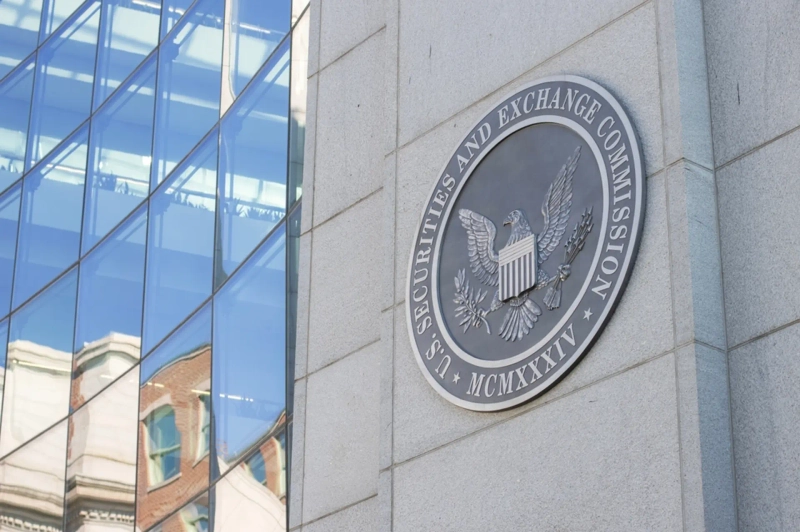
The US Securities and Exchange Commission (SEC) has significantly eased capital rules related to broker-dealers’ holdings of payment stablecoins. The move is being seen as a key catalyst for bringing digital assets (cryptoassets) into the mainstream financial system.
On the 19th (local time), the SEC’s Division of Trading and Markets issued new guidance clarifying the accounting treatment of payment stablecoins when applying broker-dealers’ net capital rules.
The crux is a reduction in the “haircut,” the percentage by which asset values are discounted. In a statement that day, Commissioner Hester Peirce, who leads the SEC’s Crypto Task Force, said, “The staff will not object if a broker-dealer applies only a 2% haircut to its holdings of eligible stablecoins when calculating net capital.”
Under current rules, broker-dealers must maintain net capital above a certain level to protect customers in times of stress. In that calculation, riskier assets—such as those with higher volatility—are subject to larger haircuts. Until now, broker-dealers had taken a conservative approach by applying a 100% haircut to stablecoins. Because the assets were effectively treated as worth “0 won” on the books, holding stablecoins itself imposed a massive financial burden on regulated financial institutions.
That dynamic changes completely with the haircut plunging to 2%. Payment stablecoins will now be treated as safe assets on par with money market funds (MMFs) that hold US Treasuries and similar instruments. Peirce also noted that “reserve requirements for eligible stablecoin issuers are in fact stricter than those for government MMFs,” arguing that the previous 100% deduction was excessive.
Stablecoins are core infrastructure underpinning the blockchain ecosystem, including digital-asset trading and remittances. The industry expects this step to go beyond a mere accounting adjustment and become a decisive turning point for the real integration of digital assets into mainstream finance.
That’s because broker-dealers, now relieved of net-capital erosion concerns, will be able to more actively expand into a range of institution-facing digital-asset integrated services, including entering the tokenized securities market and managing spot exchange-traded products (ETPs).
Forbes said, “Banks and brokerages that had hesitated to enter the market due to the heavy net-capital erosion burden can now move to reassess their businesses from the ground up,” adding that “custodians or alternative trading systems (ATS) exploring tokenized securities settlement will also stop treating stablecoins—the settlement instrument—as a regulatory ‘white elephant.’”

Doohyun Hwang
cow5361@bloomingbit.ioKEEP CALM AND HODL🍀