Japan’s yen real value plunges to one-third of its level 30 years ago
Summary
- The yen’s real effective exchange rate fell to 67.73—its lowest level since Japan introduced a floating exchange-rate regime in 1973—leaving it at roughly one-third of the April 1995 level.
- It said Japan’s overseas purchasing power has weakened sharply as the yen’s depreciation has progressed amid a prolonged economic slump, low interest rates, and ultra-low inflation.
- With markets increasingly expecting the Bank of Japan’s policy rate to rise from 0.75% to around 1.5–1.75%, the report said a key challenge is the heavier burden on businesses—particularly small firms with high debt dependence.
Forecast Trend Report by Period


BIS real effective exchange rate at 67.73 in January
Lowest since the shift to a floating exchange-rate regime in 1973
Only 35% of the April 1995 level
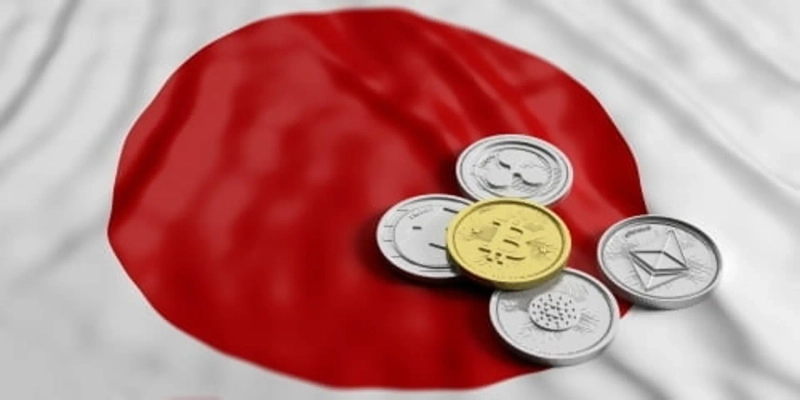
Japan’s overseas purchasing power continues to erode. The yen’s real effective exchange rate—often seen as a gauge of the currency’s underlying strength—has fallen to about one-third of its peak 31 years ago. A long slump dubbed the “lost 30 years,” coupled with low interest rates, has been a key backdrop. Analysts say restoring the yen’s value will hinge on reviving Japan’s growth potential.
According to The Nikkei and the Bank for International Settlements (BIS) on the 21st, the yen’s real effective exchange rate (2020=100) stood at 67.73 as of January this year. That is the lowest level since Japan adopted a floating exchange-rate system in 1973. Compared with April 1995, when the index hit its highest level at 193.95, it has shrunk to roughly one-third.
The real effective exchange rate is an indicator of the yen’s real value against a basket of currencies. It reflects Japanese consumers’ and companies’ ability to purchase goods and services overseas. The yen has weakened not only against the dollar and the euro but also against a broad range of currencies including the Chinese yuan. While it has supported exports, it has increased the burden of buying goods and services abroad.
One major factor is the prolonged stagnation of Japan’s economy after the collapse of the asset bubble in the 1990s. According to the Bank of Japan, potential growth, which was around 1% in 1995, fell to the low 0% range in the latter half of the 2010s. Diminishing growth momentum led to ultra-low inflation and ultra-low rates, driving a long-term decline in the real effective exchange rate.
More recently, with prices rising alongside wage gains, the Bank of Japan has moved toward policy normalization. In markets, forecasts are increasingly pointing to the BOJ raising the policy rate from the current 0.75% per year to around 1.5–1.75%.
A key challenge for rate hikes is their impact on companies and others. Naoki Hattori, chief economist at Mizuho Research & Technologies, told The Nikkei that “the smaller the company, the more it tends to be affected, especially those with high dependence on debt.”
Prime Minister Sanae Takaichi, who won a historic landslide in this month’s general election, is placing emphasis on domestic investment. But many say that despite the weaker yen, “moves by companies to return production and investment to Japan remain sluggish, partly due to doubts about growth prospects.”
Tokyo = Il-gyu Kim, Correspondent black0419@hankyung.com

Korea Economic Daily
hankyung@bloomingbit.ioThe Korea Economic Daily Global is a digital media where latest news on Korean companies, industries, and financial markets.