Even Conservative Supreme Court Justices Appointed by Trump: 'Reciprocal Tariffs Are Illegal'
Summary
- The U.S. Supreme Court said it found the Trump administration’s reciprocal tariffs illegal, invalidating the reciprocal tariffs.
- The Court said the taxing power, including tariffs, is an exclusive power of Congress, and that the president can exercise it only when Congress has clearly delegated authority.
- The Court said the International Emergency Economic Powers Act (IEEPA) does not specify broad authority to impose tariffs, and that “regulate” does not include taxation, leaving the Trump administration with an insufficient basis for the reciprocal tariffs.
Forecast Trend Report by Period


Logic behind the U.S. Supreme Court’s ‘illegal ruling’
“Imposing taxes and tariffs is Congress’s power
The executive branch violated the separation of powers”
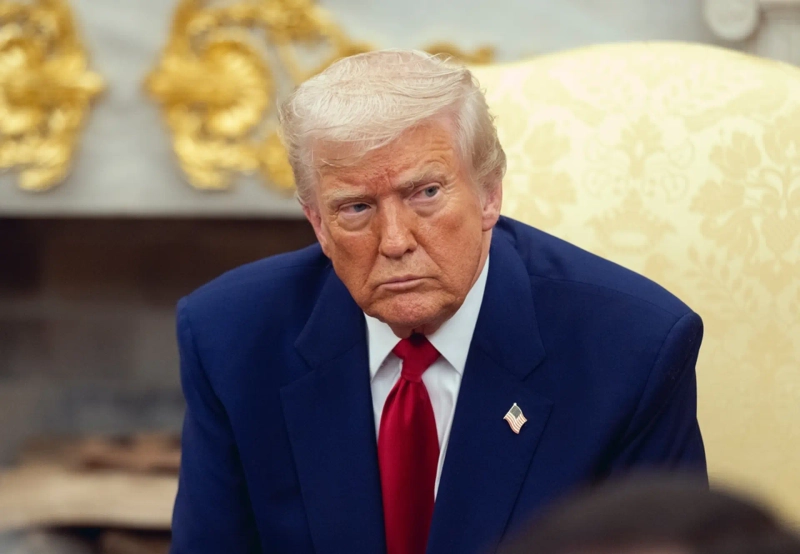
The U.S. Supreme Court has a ‘conservative majority.’ Of its nine justices, six lean conservative and three liberal. But with all six joining the view that it was illegal, the reciprocal tariffs were invalidated.
Three conservatives—including Chief Justice John Roberts as well as Justices Neil Gorsuch and Amy Coney Barrett, both appointed during Donald Trump’s first term—found the reciprocal tariffs unlawful. In other words, two justices appointed by President Trump concluded that the reciprocal tariffs exceeded presidential authority.
The Supreme Court’s main rationale for deeming the reciprocal tariffs illegal was the ‘separation of powers.’ The power to tax, including tariffs, is an exclusive prerogative of Congress, and any exercise of that power by the president must be limited to cases in which Congress has clearly delegated authority.
Chief Justice Roberts said, “Article I, Section 8 of the U.S. Constitution states that ‘Congress shall have power to lay and collect taxes, duties, imposts and excises,’” adding, “The Founders recognized the importance of this taxing power, which plainly includes the authority to impose tariffs.” The Wall Street Journal (WSJ) assessed this as “an affirmation of judicial independence that transcends ideology,” and said “debate will continue over executive authority.”
Another key basis for the ruling was that the International Emergency Economic Powers Act (IEEPA), which the Trump administration cited as the legal foundation for the reciprocal tariffs, does not explicitly provide broad authority to impose tariffs. The majority opinion stated that “the law grants the president authority to investigate, block, regulate, nullify, or prohibit imports or exports, but it did not include tariffs.” It added that “in ordinary usage, the word ‘regulate’ does not include ‘taxation.’”
The majority also cited as grounds for its decision that the president’s act of invoking the IEEPA—an outdated law—as a basis for imposing tariffs was “unprecedented.”
Choi Man-su bebop@hankyung.com

Korea Economic Daily
hankyung@bloomingbit.ioThe Korea Economic Daily Global is a digital media where latest news on Korean companies, industries, and financial markets.