PiCK
Trump steps up pressure on Iran to abandon nuclear ambitions…limited airstrikes possible if talks fail
Summary
- It reported that President Trump is considering limited airstrikes if diplomacy fails over Iran’s nuclear program.
- The United States and Iran are heading into Geneva talks, and are said to be discussing a last-minute compromise between zero enrichment of nuclear material and a limited-enrichment allowance.
- As the U.S. military buildup near the Middle East has reached its largest scale since the Iraq War, it reported that caution within the U.S. and European concerns are mounting over the effectiveness of airstrikes and the burdens of a prolonged conflict.
Forecast Trend Report by Period


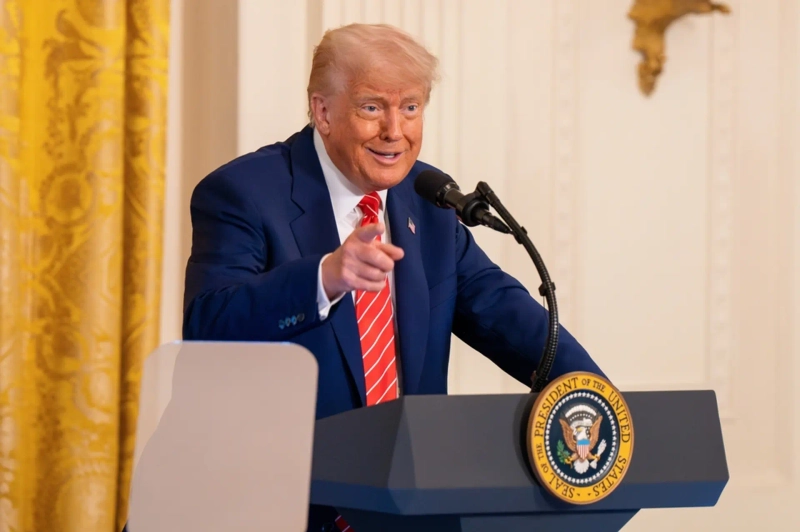
U.S. President Donald Trump is reportedly weighing limited airstrikes if diplomatic efforts fail to produce results over Iran’s nuclear program.
According to The New York Times (NYT) on the 22nd (local time), as the United States and Iran are set to hold talks in Geneva on the 26th, discussions inside the White House are said to be increasingly focused on an option to deliver a strong message to Iran’s leadership through an initial strike should negotiations collapse. Reported targets include the headquarters of the Islamic Revolutionary Guard Corps (IRGC), nuclear facilities, and sites linked to the ballistic missile program.
President Trump is presenting “zero enrichment” of nuclear material as the only acceptable condition for a deal. Iran, meanwhile, maintains it cannot relinquish its right to produce nuclear fuel for peaceful purposes under the Nuclear Non-Proliferation Treaty (NPT). Still, a last-minute compromise is being discussed around a proposal by International Atomic Energy Agency (IAEA) Director General Rafael Grossi to allow limited enrichment for the production of medical isotopes.
Two U.S. carrier strike groups, along with fighters, bombers and aerial refueling aircraft, have now converged near the Middle East. This is being described as the largest U.S. military buildup since preparations for the Iraq War. However, concerns have also been raised within the U.S. that a prolonged conflict could strain naval forces, Patriot air-defense batteries, and transport and reconnaissance assets. A scenario involving the deployment of special operations forces on the ground has reportedly been put on hold for now due to the risks.
At a National Security Council (NSC) meeting at the White House, Vice President JD Vance also voiced caution, pressing questions about the risks and complexity of the operation. The military leadership, too, reportedly has not been able to offer a definitive answer on whether airstrikes alone could realistically weaken Iran’s regime.
European diplomatic circles warn that military pressure could instead trigger a nationalist rally-around-the-flag effect inside Iran. The outlook is that whether a deal is reached will hinge on whether the two sides can craft a “face-saving compromise” over uranium enrichment. With diplomatic and military options being discussed in parallel, the Middle East is approaching a pivotal turning point.

Suehyeon Lee
shlee@bloomingbit.ioI'm reporter Suehyeon Lee, your Web3 Moderator.