"Trump tariff ruling unconstitutional; use any temporary volatility to raise equity exposure"
Summary
- Daishin Securities said that despite the U.S. Supreme Court’s unconstitutional ruling on reciprocal tariffs, the policy stance will be maintained as the Trump administration imposes a 15% global tariff.
- Researcher Moon Nam-jung said liquidity-driven markets, the AI revolution, and an upcycle in semiconductors—risk-on factors—will underpin strength in global equities.
- Moon said the phase of expanding temporary volatility from the Supreme Court’s unconstitutional ruling should be used as an opportunity to increase equity exposure.
Forecast Trend Report by Period


Daishin Securities report
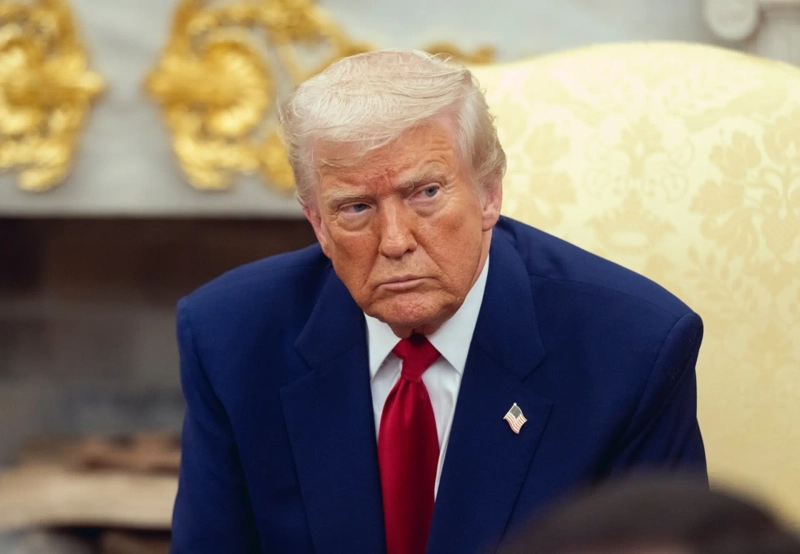
As U.S. President Donald Trump’s reciprocal tariffs were stripped of legal legitimacy by the Supreme Court, Trump instead moved to push through head-on by raising the baseline tariff rate applied worldwide. Brokerage analysts said the Trump-driven liquidity rally is likely to persist until the Trump administration ends, adding that the ruling’s impact on global equities should be limited.
Moon Nam-jung, a researcher at Daishin Securities, said in a report on the 23rd, “Following the U.S. Supreme Court’s ruling on the 20th that reciprocal tariffs are unconstitutional, the Trump administration halted collection of reciprocal tariffs and, at the same time, imposed a 15% global tariff under Section 122 of the Trade Act—up from the previous 10%,” adding, “Within 150 days, the maximum period these tariffs can be applied, new (permanent) tariffs are expected as the legal basis for existing item-specific tariffs is revised.”
He also noted that in President Trump’s address to Congress on the 24th, Trump could lay out the future direction of tariff policy, or depending on circumstances, announce sweeping tariff measures.
After the Supreme Court’s unconstitutional ruling, no major shift in stance has been detected among key countries. That is because President Trump is expected to keep pressing ahead with reciprocal tariffs—his signature policy—by finding other legal grounds.
Moon said, “The Trump administration is likely to pursue a strategy of buying time under Section 112 of the Trade Act while revising existing tariff justifications to introduce permanent tariffs,” adding, “While the Supreme Court invalidated tariffs based on the International Emergency Economic Powers Act (IEEPA), it did not include provisions on refunds (up to $175 billion). Lawsuits between countries and companies seeking refunds are inevitable, but the outcomes may only be known after the Trump administration, or the administration could neutralize refunds themselves by introducing new tariffs.”
Perhaps for that reason, major countries appear inclined to follow through on tariff agreements previously reached with the U.S., despite the Supreme Court ruling.
Moon said, “The South Korean government said it will proceed with $350 billion in investment in the U.S. as originally planned, and the Japanese government, which is pursuing $550 billion in investment, has not announced an official response,” adding, “The EU plans to discuss whether to delay ratification of a trade agreement with the U.S., but given security conditions such as the Russia–Ukraine war, it is unlikely to expand into a full-scale review.”
In the end, the view is that Trump’s tariff impositions will not change going forward. That is based on analysis that ‘risk-on’ factors—such as a liquidity-driven rally, the artificial intelligence (AI) revolution, and an upcycle in semiconductors—will underpin strength in global equities.
He said, “As major countries move to minimize damage from the Trump administration’s trade (imposition of high tariffs) and foreign policy (renegotiation of trade agreements) through monetary easing and stronger fiscal policy, liquidity has flowed into equities,” adding, “So long as the Trump administration remains, tariff impositions will continue, and this investment environment will drive the liquidity rally.”
He added, “AI is reshaping the industrial landscape, boosting national productivity and pulling forward semiconductor demand, which is supporting risk appetite,” and said, “If the Supreme Court’s ruling temporarily increases volatility, it should be used as an opportunity to further raise equity exposure.”
Shin Min-kyung, Hankyung.com reporter radio@hankyung.com

Korea Economic Daily
hankyung@bloomingbit.ioThe Korea Economic Daily Global is a digital media where latest news on Korean companies, industries, and financial markets.