Bessent: "Using Sections 301 and 232… We will keep tariffs at the same level as before"
Summary
- U.S. Treasury Secretary Scott Bessent said the administration could keep tariffs at the same level as before by using Section 232 of the Trade Expansion Act and Section 301 of the Trade Act.
- He said President Donald Trump’s global 15% tariff serves as a bridge applied for up to 150 days until tariff investigations under Section 232 and Section 301 are completed.
- USTR Jamieson Greer said existing trade agreements will remain in place and the president’s tariff policy will continue, adding that the U.S. has opened Section 301 investigations targeting Asian countries including Brazil and China.
Forecast Trend Report by Period


U.S. activates ‘Plan B’ to restore tariffs
Buys time with a ‘15% tariff’ for 150 days
Deploys Trade Act Section 301 and product-specific tariffs
Probes ‘overproduction’ in Asia, including China
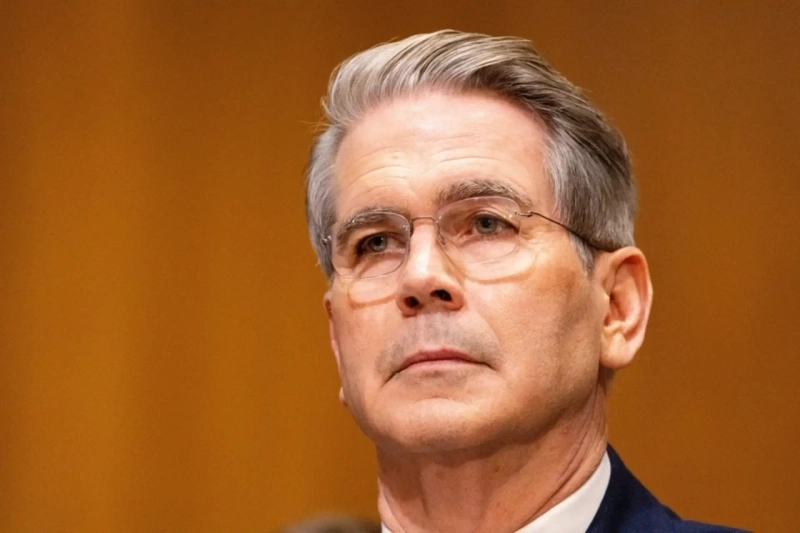
Despite the U.S. Supreme Court’s ruling that the reciprocal tariffs were illegal, U.S. Treasury Secretary Scott Bessent (pictured) said the government would be able to “maintain tariff levels identical to those already in place.” Specifically, he pointed to using Section 232 of the Trade Expansion Act, which provides the legal basis for product-specific tariffs, and Section 301 of the Trade Act, which allows tariffs to be imposed on countries engaging in unfair trade practices.
In a CNN interview on the 22nd (local time), Bessent said, “We have remained in ongoing contact with our foreign trade partners, and all of them want to keep the trade agreements that have been concluded.” He added, “The Supreme Court ruled that the president cannot use the International Emergency Economic Powers Act (IEEPA) to impose tariffs, but the president has other legal authorities.”
On the ‘global 15% tariff’ announced by President Donald Trump under Section 122 of the Trade Act, Bessent said it is “a bridge rather than a permanent measure,” adding that “once the Section 232 and Section 301 tariff investigations are completed, five months from now Section 122 may no longer be necessary.” Section 122 of the Trade Act grants the president authority to impose tariffs of up to 15% for up to 150 days to address balance-of-payments issues.
Jamieson Greer, the U.S. Trade Representative (USTR), also said in a CBS interview the same day, “We will adhere to the (existing trade) agreements, and we expect our counterparts to do the same,” adding, “No one has said they intend to void any trade agreement.” Asked what position trade deals with South Korea, the European Union (EU) and others were in after the Supreme Court ruling, Greer said, “There’s no need to worry.” He continued, “For the past year we’ve said, ‘Whether we win or lose this lawsuit, the president’s tariff policy will continue,’ and that is why they signed the agreements even while the litigation was ongoing.”
Appearing on ABC, Greer said regarding the Section 301 investigations, “We have launched investigations into Brazil and China,” adding, “a number of Asian countries with excess production capacity will be subject to investigation.”
Countries around the world are closely watching the fallout from the ruling that the reciprocal tariffs were illegal. The European Commission issued a statement that day saying it “requests a full explanation of the measures the United States will take following the recent U.S. Supreme Court ruling on the IEEPA.” It added, “An agreement is an agreement,” and said it “expects the United States to respect the commitments set out in the joint statement (at the time the trade agreement was reached), just as the EU honors its promises.”
India is reported to have postponed trade talks that had been planned to be held in the United States this week. A senior Indian official told Bloomberg, “Since the U.S. Supreme Court ruled that Trump’s tariffs are illegal, it is not too late to enter negotiations after watching how the situation develops.” The United States and India have already agreed to cut tariffs on Indian goods exported to the U.S. from 25% to 18%.
Reporter Kim Dong-hyun 3code@hankyung.com

Korea Economic Daily
hankyung@bloomingbit.ioThe Korea Economic Daily Global is a digital media where latest news on Korean companies, industries, and financial markets.