Summary
- Prime Minister Takaichi was said to be reluctant about the BOJ’s additional rate hikes, potentially increasing constraints on monetary normalization and efforts to address yen weakness.
- The BOJ signaled it would continue hiking even after raising the policy rate to 0.75% per year, but it said coordination with the government could face difficulties.
- After the U.S. Treasury’s rate check, upward momentum in the yen-dollar exchange rate and bond yields was curbed, and it was said that coordinated U.S.-Japan FX intervention could have been considered if Japan had requested it.
Forecast Trend Report by Period


January yen-dollar 'rate check' led by Bessent
"If Japan had requested it, coordinated intervention by both countries would have been considered"
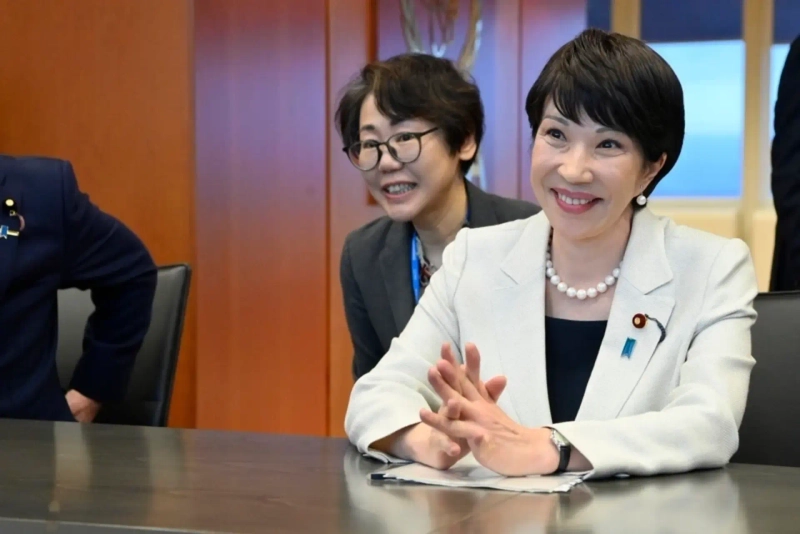
Japan’s Prime Minister Sanae Takaichi is reported to have expressed reluctance over additional policy rate hikes in talks with Bank of Japan Governor Kazuo Ueda.
The Mainichi Shimbun, citing multiple sources, reported on the 24th that when Prime Minister Takaichi met Governor Ueda on the 16th, she showed a negative stance toward further rate increases. Mainichi said, "The Bank of Japan believes additional rate hikes are necessary for 'monetary normalization' and to address yen weakness, but it is likely to be forced into a difficult response given its relationship with Prime Minister Takaichi, who has solidified her political base after a landslide victory in the House of Representatives election."
Prime Minister Takaichi and Governor Ueda held talks for about 15 minutes at the Prime Minister’s Office on the 16th. At a press conference on the 18th, Takaichi avoided comment, saying, "This was a regular exchange of views on economic and financial conditions, and I will refrain from making any more specific comments." She added, "I expect the Bank of Japan to implement appropriate monetary policy to achieve the 2% price stability target accompanied by wage growth."
After the meeting on the 16th, Governor Ueda told reporters that there were "no particular" requests from Prime Minister Takaichi regarding monetary policy. However, according to several sources, Takaichi expressed reluctance toward additional rate hikes. The specific remarks are unclear, but one source said she took a "more stringent stance than at the previous meeting (in November 2025)."
Prime Minister Takaichi has long been widely viewed as holding negative views toward tightening such as rate hikes. She has been described as part of a "reflationist" camp that favors monetary easing and fiscal expansion. At a press conference upon taking office as LDP president in October last year, she suggested the government intended to be involved in the BOJ’s monetary policy decisions, saying, "Whether fiscal policy or monetary policy, it is the government that must take responsibility."
The BOJ raised the policy rate to 0.75% per year in December last year, the first increase in 11 months. While the current policy rate is the highest in 30 years, the BOJ has indicated it intends to continue raising rates under the view that it remains "in a state of monetary easing." Markets are even speculating that an increase could come as early as March to curb excessive yen weakness, but Mainichi’s analysis is that coordination with the government could prove difficult.
Meanwhile, the Nikkei reported the same day that the U.S. authorities’ "rate check," cited as a factor behind last month’s sharp drop in the yen-dollar exchange rate (a surge in the yen’s value), was not requested by Japan but was led by Treasury Secretary Scott Bessent.
At the time, Bessent was wary that instability in Japan’s financial markets, stemming from a political vacuum ahead of the general election, could spill over into rising interest rates in the U.S. and Europe, and through the Federal Reserve Bank of New York carried out the unusual rate check. A rate check refers to authorities asking major banks and others about trading conditions ahead of market intervention.
Following the rate check, the upward momentum in the yen-dollar exchange rate and bond yields was curbed. A source close to Bessent told Nikkei, "The rate check at the time was in fact a step ahead of actual FX intervention, and if there had been a request from Japan, coordinated U.S.-Japan intervention—buying yen and selling dollars—would also have been considered."
Tokyo=Correspondent Kim Il-gyu black0419@hankyung.com

Korea Economic Daily
hankyung@bloomingbit.ioThe Korea Economic Daily Global is a digital media where latest news on Korean companies, industries, and financial markets.