Summary
- It said Brent at one point jumped more than 13% to break above $80 a barrel after the Islamic Revolutionary Guard Corps blocked the Strait of Hormuz and attacked oil tankers.
- It noted that amid rising tensions in the Middle East, oil prices are already up 20% this year, and experts see prices rising as high as $120 a barrel if the situation is prolonged.
- It said Asian stocks fell, with Japan’s Nikkei 225 and Hong Kong’s Hang Seng Index declining in tandem on concerns over an “oil shock.”
Forecast Trend Report by Period


Iran crisis blocks air and sea routes… global economy ‘shaken’
Hormuz closure hits supply chains… Brent tops $80 a barrel
Asian stocks fall… war clouds spread across the region as Hezbollah joins in
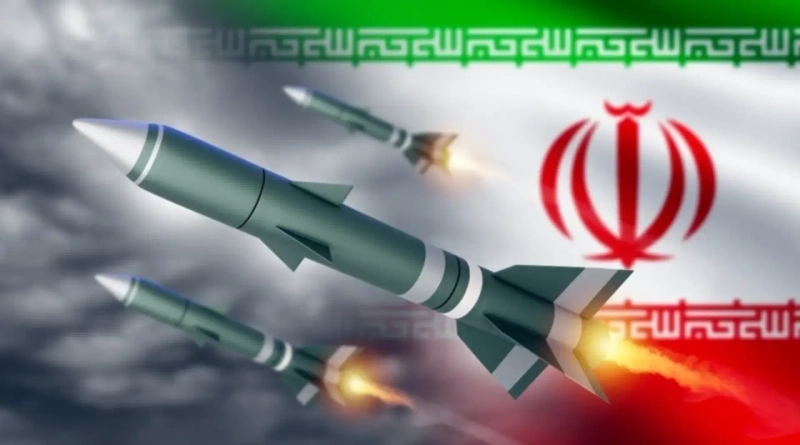
Air and maritime transport across the Middle East is being paralyzed as U.S. and Israeli attacks on Iran are met with Iran’s indiscriminate retaliation. Global oil prices at one point surged more than 13%.
Brent, the international benchmark, rose more than 13% at one point on the morning of the 2nd, breaking above $80 a barrel. The gain later narrowed, but it was still up more than 10% around 5 p.m. West Texas Intermediate (WTI) moved in a similar pattern. The move was driven largely by the Islamic Revolutionary Guard Corps’ announcement that it had blocked the Strait of Hormuz— the world’s largest crude shipping lane— and fired missiles at three oil tankers from the U.S. and the U.K.
The International Maritime Organization (IMO) advised vessels to avoid sailing through the Strait of Hormuz. Reuters, citing a ship-tracking firm, reported that at least five VLCCs that had been scheduled to pass in early March turned back. The Strait of Hormuz is a key energy chokepoint through which about 15 million barrels a day— roughly 30% of global seaborne crude volumes— pass. Of the crude that transits the strait, 80% heads to East Asia, including South Korea, China and Japan. With tensions in the Middle East escalating, oil prices have already risen about 20% this year. Experts say prices could climb to $120 a barrel if the situation drags on.
On fears of an “oil shock,” Asian equities fell across the board. Japan’s Nikkei 225 slid 1.35%, having been down as much as 2.7% intraday. Hong Kong’s Hang Seng Index also dropped more than 2%.
Not only sea routes but also air freight markets have been thrown into paralysis. Iran struck major international airports in Gulf states including the United Arab Emirates (UAE), Kuwait and Bahrain with drones and missiles. Analysts say the aim is a “drag-them-in” strategy— paralyzing neighboring countries to pressure the U.S. and Israel to stop the war. In the Middle East alone, more than 3,400 flights were canceled across seven airports in a single day the previous day. The front has widened as Iran-backed Hezbollah joined the retaliatory campaign.
U.S. President Donald Trump cited three U.S. service members killed in Iran’s counterattack and said he intends to continue strikes on Iran for at least several days.
Choi Man-soo / Han Myung-hyun, reporters bebop@hankyung.com

Korea Economic Daily
hankyung@bloomingbit.ioThe Korea Economic Daily Global is a digital media where latest news on Korean companies, industries, and financial markets.