Seven Korean Oil Tankers Stranded in the Strait of Hormuz… "Concerns Over Crude Supply Disruptions"
Summary
- It said that, with the Strait of Hormuz sealed off, seven oil tankers supplying crude to South Korea are stranded, potentially causing disruptions to the nation’s crude supply.
- It said that, given South Korea’s heavy dependence on Middle Eastern crude, a prolonged blockade would inevitably amplify the blow to the petrochemicals and refining industries.
- It said industry concerns were raised that higher oil prices could lead to higher electricity rates and rising semiconductor unit costs, as well as disruptions to supplies of helium and LNG.
Forecast Trend Report by Period


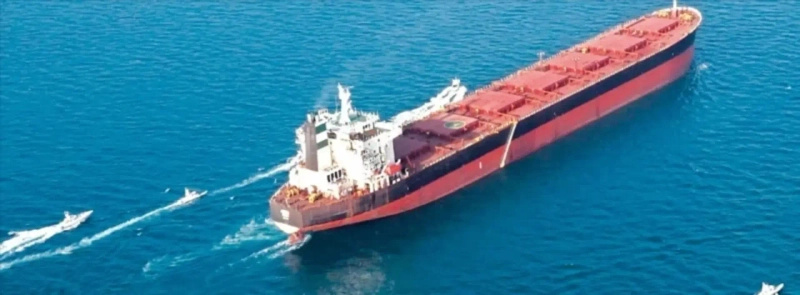
It was confirmed on the 5th that seven oil tankers supplying crude to South Korean refiners have been unable to leave after the Strait of Hormuz was sealed off in the wake of a military clash involving the United States, Israel and Iran. Each vessel is reported to be carrying 2 million barrels—equivalent to South Korea’s daily oil consumption. The business community urged the National Assembly and the government to come up with countermeasures.
Rep. Kim Young-bae, floor spokesperson for the Democratic Party of Korea and a member of the National Assembly’s Foreign Affairs and Unification Committee, disclosed the situation to reporters after an "Issues Briefing Meeting on the Middle East Situation and Pending Matters Related to U.S. Tariff Negotiations," attended by representatives from the petrochemicals, refining, and trade sectors, held at the National Assembly that day.
According to Kim, "The petrochemical and refining industries say seven Korean tankers are currently tied up in the Strait of Hormuz. There was an industry request that measures are needed, given that as many as seven vessels are stranded," adding, "There was also a request for support measures such as rebate schemes, given the refining industry’s circumstances as it undergoes restructuring."
A business group official said, "The seven vessels are stuck near the strait and cannot move at all, unable to enter routes back to Korea," adding, "If this drags on, it could cause disruptions to the nation’s crude supply."
The Strait of Hormuz is a critical shipping lane through which about 27% of global seaborne oil trade passes. Of the strait’s total width of 55 km, the navigable channel for tankers is within 10 km—and entirely within Iranian territorial waters. As of last year, South Korea sourced 69.1% of its crude imports from the Middle East, and more than 95% of that volume passes through the Strait of Hormuz, underscoring the country’s heavy dependence on the route. If the blockade persists, the impact on domestic industries reliant on Middle Eastern crude imports is likely to grow.
Concerns were also raised about disruptions to semiconductor production and a loss of price competitiveness. Kim said, "The semiconductor industry conveyed concerns that rising oil prices would lead to higher electricity rates in Korea and, ultimately, unavoidable increases in unit costs, which could pose a serious problem for price competitiveness."
He also noted, "Ninety percent of helium, a key material for semiconductor production, is procured from the Middle East," adding that the industry "raised the issue that semiconductor production could be disrupted."
There were also requests for detailed supply-and-demand scenarios for the energy sector, including crude oil and liquefied natural gas (LNG). Kim said, "While the government has strategic reserves equivalent to 208 days of supply, specific scenarios are needed in line with on-the-ground demands," adding, "Fortunately, the winter peak in gas demand has passed, but the industry requested the need to diversify LNG supply, which is difficult to store."
By Seul-gi Lee, Hankyung.com seulkee@hankyung.com

Korea Economic Daily
hankyung@bloomingbit.ioThe Korea Economic Daily Global is a digital media where latest news on Korean companies, industries, and financial markets.