"Will Bitcoin be cracked?"…PsiQuantum breaks ground on its first 1 million-qubit quantum computer
Summary
- Global quantum-computing company PsiQuantum said it has begun construction of a 1 million-qubit quantum computer facility.
- Some in the industry warned of the potential to undermine Bitcoin’s cryptography and put the Bitcoin network at risk.
- CoinShares and Adam Back, among others, said the impact of a quantum attack on Bitcoin and the digital-asset market would be limited.
Forecast Trend Report by Period


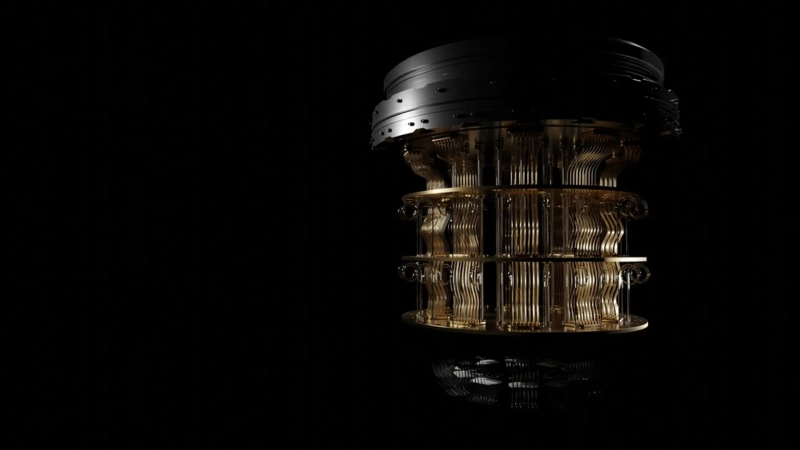
Global quantum-computing company PsiQuantum has begun construction of a quantum-computer facility on the scale of 1 million qubits (qubit, the basic unit of quantum-computer computation)—a level widely viewed as capable of breaking Bitcoin (BTC)’s cryptographic system. The company, however, drew a line by saying it has no plans to attack Bitcoin, and analysts say any impact on the market would likely be minimal.
On the 6th (local time), PsiQuantum co-founder Peter Shadbolt posted photos from the construction site in Chicago, saying on X that “a 500-ton steel-frame structure has been erected to house a quantum computer.” PsiQuantum previously said in September last year that it had raised $1 billion in funding, in collaboration with Nvidia, to build a fault-tolerant quantum-computing facility. The facility aims to support “next-generation AI supercomputers,” with computing power of 1 million qubits—said to rival tens of billions of conventional computers.

Some in the digital-asset (cryptocurrency) industry have warned that the advent of such ultra-high-performance quantum computers could render Bitcoin’s encryption ineffective. The concern is that the entire Bitcoin network—now worth about $1.4 trillion—could be put at risk. In particular, wallets mined early on and never used are considered the most vulnerable to quantum attacks.
Views differ on how many qubits would be required to crack Bitcoin’s encryption, but that threshold has been gradually falling as quantum research advances. According to a recently published paper, about 100,000 qubits would be needed to break a 2,048-bit key; Bitcoin uses a shorter 256-bit key. For reference, the largest quantum computer currently in operation is the California Institute of Technology’s 6,100-qubit system.
PsiQuantum, however, flatly dismissed concerns about hacking Bitcoin. Terry Rudolph, a PsiQuantum co-founder, said at the Quantum Bitcoin Summit in July that “we have absolutely no plan to use a quantum computer to derive a private key from a public key,” adding that “at a company where hundreds of employees work, it would be impossible in itself to conceal that kind of behind-the-scenes activity.”
Major experts also largely agree there is no immediate threat. Blockstream CEO Adam Back said he expects that “for at least the next 10 years, quantum computers will not pose a practical threat to Bitcoin.”
There are also research findings suggesting that even if a quantum attack succeeded, the damage to the digital-asset market would be extremely limited. According to an analysis by global digital-asset manager CoinShares, only about 10,230 bitcoin are exposed to quantum attacks. CoinShares said that “even if those holdings were sold into the market all at once, it would be no more than the level of institutions’ routine trading, so the shock to the broader market would be minimal.”

Doohyun Hwang
cow5361@bloomingbit.ioKEEP CALM AND HODL🍀