Bank of Korea Deputy Governor Kim Woong: “Rising international oil prices have increased upward pressure on inflation”
Summary
- The Bank of Korea said it is concerned that the rise in international oil prices linked to developments in the Middle East could push up the inflation rate in March.
- It noted that February consumer price inflation held at 2.0% due to a decline in petroleum product prices and a slowdown in increases in agricultural, livestock and fisheries product prices.
- Kim Woong, Deputy Governor of the BOK, said government inflation-stabilization measures and subdued increases in agricultural and livestock product prices will act as downside factors, but the inflation trajectory will be highly sensitive to oil price movements.
Forecast Trend Report by Period


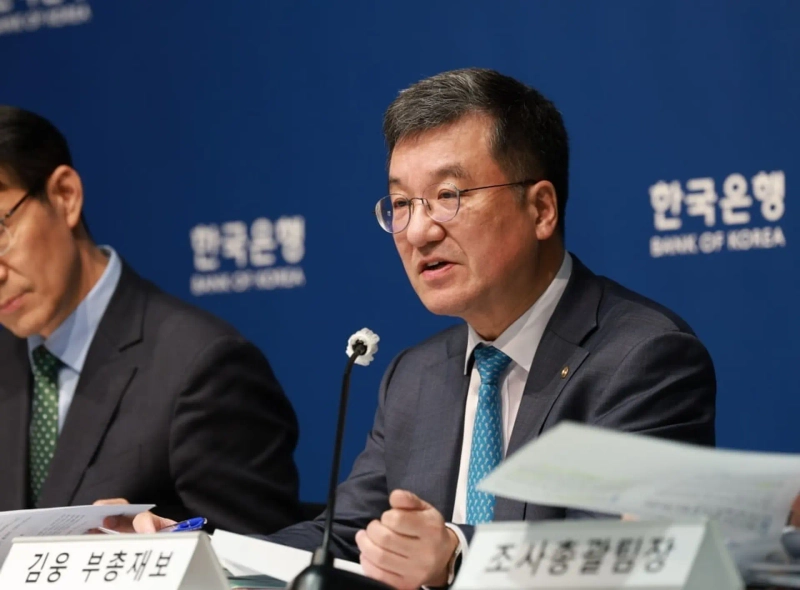
The Bank of Korea (BOK) voiced concerns that the recent rise in international oil prices stemming from developments in the Middle East could push up this month’s inflation rate. It said the key to containing inflation will be whether prices of agricultural, livestock and fisheries products continue to stabilize and whether the government’s inflation-stabilization measures prove effective.
Kim Woong, Deputy Governor of the BOK, held an “Inflation Conditions Review Meeting” on the morning of the 6th at the BOK’s headquarters on Namdaemun-ro in Seoul to review last month’s inflation rate, announced at 2.0%. Kim said, “(In February) the consumer price inflation rate came in at the same 2.0% as the previous month, as petroleum product prices fell and the pace of increases in agricultural, livestock and fisheries product prices slowed, although the rise in travel-related personal service prices temporarily widened.”
To the second decimal place, the inflation rate slipped 0.01% point from the previous month. Petroleum product prices fell 2.4% due to base effects from the high level a year earlier, pulling inflation down by 0.09% point. The increase in prices of agricultural, livestock and fisheries products eased to 1.7% in February from 2.6% in January, contributing to a 0.07%-point reduction in inflation. The contribution from other categories such as processed foods came in at -0.05% point.
However, core inflation rose 2.3%, lifting headline inflation by 0.2% point, as increased travel demand temporarily broadened gains in travel-related service prices such as passenger car rental fees and domestic and overseas group tour costs.
The issue is inflation this month. If tensions in the Middle East intensify and international oil prices rise, inflation could climb sharply. Kim said, “In March, as international oil prices rise under the influence of the Middle East situation, upward cost-side pressure on prices has increased, while recent subdued increases in agricultural and livestock product prices and the government’s inflation-stabilization measures are expected to act as downward factors,” adding, “As the future inflation path will be heavily influenced by oil price movements amid significant uncertainty over how the Middle East situation unfolds, we will closely monitor inflation conditions.”
Reporter Kang Jin-gyu josep@hankyung.com

Korea Economic Daily
hankyung@bloomingbit.ioThe Korea Economic Daily Global is a digital media where latest news on Korean companies, industries, and financial markets.