Summary
- After President Trump said the war with Iran would “end soon,” oil prices plunged and global stock markets turned higher, the report said.
- Markets are betting on the possibility that the 'TACO (Trump Always Chickens Out) trade'—which targets Trump’s tendencies—could re-emerge, the report said.
- Trump said he delivered a string of messages aimed at pushing oil prices down, including keeping navigation through the Strait of Hormuz open, waiving sanctions on Russian oil, and considering releases from the Strategic Petroleum Reserve.
Forecast Trend Report by Period


Drawing a line against a prolonged war
Oil plunges into the $90s in a single day
Leaves room for more strikes, saying “not enough”
“If they block oil flows, the blow will be far harsher”
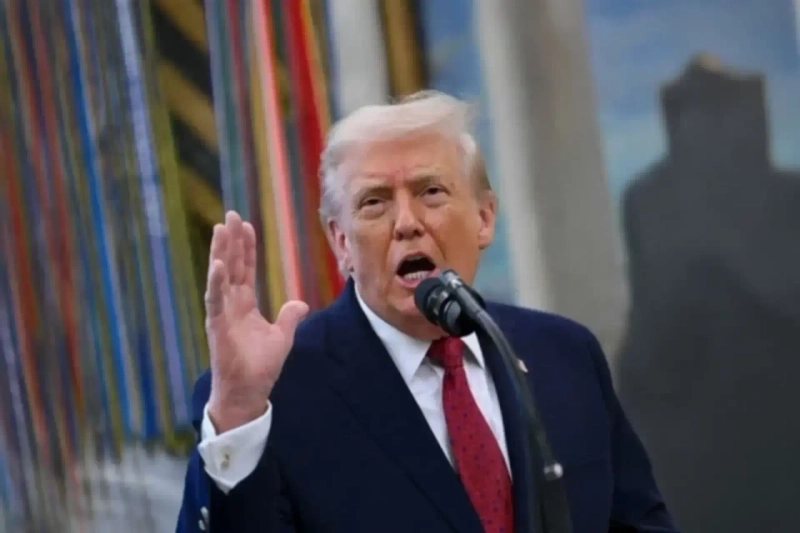
As U.S. President Donald Trump on the 9th (local time) showed his intention to bring the war with Iran to an end soon, oil prices plunged and global stock markets turned higher.
At a press briefing after a Republican event in Miami, Florida, Trump said the war would “end soon.” Asked whether it would end this week, he said no, but repeated that it would “end soon.”
He left the door open to additional attacks. In his speech at the Republican event, Trump said, “We’ve won in many respects, but we haven’t won enough.” Asked at the briefing what would constitute “enough,” he said, “They have to be in a position where they cannot start developing nuclear weapons the next day.”
Trump later posted on social media that “if Iran takes steps to block the flow of crude through the Strait of Hormuz, it will face a blow 20 times stronger than anything so far.”
U.S. Secretary of War (Defense) Pete Hegseth said in a CBS interview released on the 8th that “we’ve only just begun the fight” with Iran. When told this ran counter to Hegseth’s outlook, Trump replied ambiguously, saying “both can be true.”
As Trump signaled he could step back from the war, a “TACO (Trump Always Chickens Out) trade” played out in markets. WTI April-delivery futures, which had surged intraday to as high as $119 a barrel the previous day, fell below $90 on the day.
Stocks also welcomed the shift. In New York, the Dow Jones Industrial Average closed up 0.50%, the S&P 500 rose 0.83%, and the Nasdaq gained 1.38%.
Trump’s ‘TACO’ returns amid an oil shock… crude drops $120 → $90
He always backs down when markets wobble… record volatility in WTI and Brent
U.S. President Donald Trump said on the 9th (local time) that the war with Iran was “almost complete.” As the conflict, which began on the 28th of last month, entered its 10th day, oil prices had soared and market anxiety had intensified—prompting what looked like a step back. Markets are betting on the possibility that another “TACO (Trump Always Chickens Out) trade” could re-emerge.
◇ Confirmation of a push to steady markets
Investors focused on Trump’s remark that it would “end soon” among the flood of comments he made throughout the day about the war with Iran. In a CBS interview, Trump said, “They (Iran’s forces) have no navy, no communications, and no air force,” adding that “we are far ahead of the initial plan.” At the briefing, he also said, “We are making major progress in accomplishing military objectives,” and added, “You could say it’s almost complete.”
He also held an unscheduled press briefing, strongly hinting at an end to the fighting. It was seen as an attempt to reassure markets after oil briefly neared $120 a barrel on the 8th.
Still, at a Republican lawmakers’ event and the subsequent briefing that began after the stock market close, he struck a more hawkish tone, with remarks such as “we will never retreat until the enemy is decisively defeated” and “we’ve won in many ways, but it’s still not enough.” Around the time those comments were made, oil prices briefly turned higher, but soon resumed their decline.
◇ Reacting to approval ratings, stocks, and oil
Trump has previously repeated a pattern of stepping back on major issues and unilaterally declaring victory when his approval rating slips or stocks plunge. The TACO trade, which targets that tendency, has also been popular—based on the experience that buying into selloffs pays off as Trump retreats from prior policies and markets rebound.
This time, beyond approval ratings and stocks, oil prices became an additional variable. According to an NBC News poll released on the 8th, 54% of respondents said they generally disapproved of Trump’s handling of state affairs, up from late last year. In particular, 62% responded negatively regarding his handling of inflation. While he dismissed a short-term rise in oil as “a very small price to pay,” it is interpreted that, with midterm elections approaching, he could not ignore voters’ inflation concerns.
◇ “Sanctions waiver to push oil prices down”
All of Trump’s remarks that day carried a message aimed at lowering oil prices. To keep shipping through the Strait of Hormuz open, Trump said, “when the time comes (if necessary), the U.S. Navy and allies will escort tankers (carrying oil) through the strait.” He emphasized that issues involving the Strait of Hormuz—an international crude shipping route—“do not have a major impact on the United States,” adding that “we are doing this for the rest of the world, including countries like China.” In the CBS interview, he said he was “also thinking about taking control of it (the strait).”
He also said he would waive sanctions on countries importing Russian oil “to bring oil prices down.” He added, “If things become peaceful, we may not need to reimpose sanctions.” Russian crude had traded at more than $10 a barrel below Brent until the U.S. and Israel’s strikes on Iran, but as the Strait of Hormuz was sealed off, prices surged and it is now trading at a premium.
Meanwhile, Bloomberg reported that the Trump administration is reviewing a plan to release oil from the Strategic Petroleum Reserve. According to the U.S. Department of Energy, U.S. stockpiles stood at more than 415 million barrels as of last week—enough to last for more than 20 days.
Washington=Lee Sang-eun, correspondent selee@hankyung.com

Korea Economic Daily
hankyung@bloomingbit.ioThe Korea Economic Daily Global is a digital media where latest news on Korean companies, industries, and financial markets.