PiCK
Which message should markets believe…Energy markets roiled by mixed signals
Summary
- Amid conflicting statements from the Trump administration, international oil prices at one point fell by about 20% before paring some of the losses, it said.
- With shipping through the Strait of Hormuz halted and Gulf producers cutting output, the global energy market is being jolted and gasoline and diesel prices are coming under pressure, it reported.
- As Trump mentioned the possibility of easing oil-related sanctions, the White House said the rise in energy prices is a temporary phenomenon.
Forecast Trend Report by Period


Energy Secretary Wright: “Tanker escort through the Strait of Hormuz”
Deleted after social media post
Oil prices briefly down nearly 20%
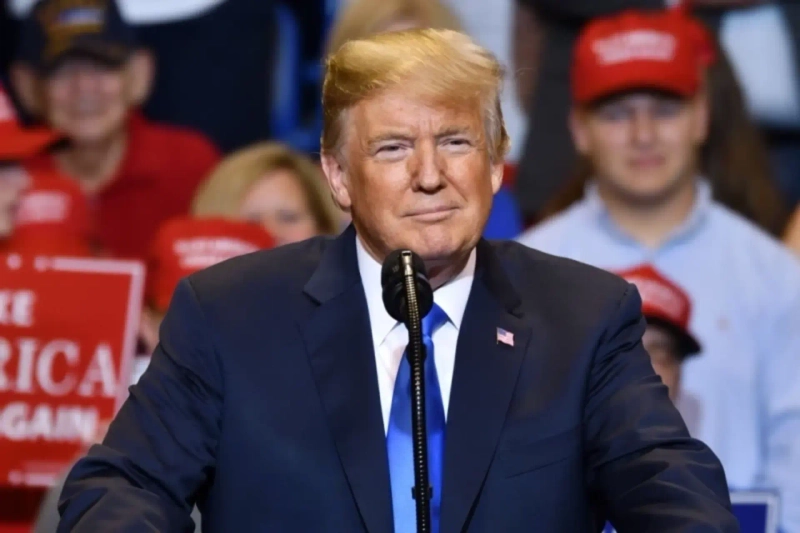
Conflicting remarks from Donald Trump’s administration regarding the war with Iran are amplifying volatility in global energy markets.
On the 10th (local time), as investors tried to parse a series of statements from the Trump administration, energy markets saw large price swings for a second consecutive day.
Earlier, U.S. Energy Secretary Chris Wright posted on social media that “the U.S. Navy successfully escorted tankers transiting the Strait of Hormuz,” only to delete the post. White House Press Secretary Karoline Leavitt later said the operation did not in fact take place.
Leavitt added, however, that “the U.S. military is reviewing additional response options” in case Iran seeks to restrict passage through the Strait of Hormuz, a key global crude oil shipping route.
Amid the confusion, international oil prices plunged. After Wright’s post, prices at one point fell by nearly 20% before paring some of the losses as further information emerged.
That afternoon, President Donald Trump also posted repeatedly on social media, further complicating the picture.
Trump first said there were “no reports that mines have been placed in the strait.” But he soon urged the removal of explosives that Iranian forces may have planted. He then said the U.S. was “using the same technology and missile capabilities it used to target drug trafficking organizations” to strike vessels laying mines.
Minutes later, Trump said, “We completely destroyed 10 inactive vessels that were preparing to lay mines,” adding that “further strikes will follow.”
Wright’s post and Trump’s rapid-fire remarks are fueling criticism in Washington and on Wall Street that policy messaging is in disarray.
At present, traffic through the Strait of Hormuz has effectively been halted for most vessels. With shipping companies suspending operations over the risk of Iranian attacks, crude exports from major producing countries are also being disrupted.
Major Gulf producers such as Saudi Arabia, Iraq, the United Arab Emirates (UAE) and Kuwait have cut output. Before the war, roughly 20% of global oil consumption was exported through the strait.
Amin Nasser, chief executive officer (CEO) of Saudi Aramco, described the situation as “the biggest crisis the Middle East oil and gas industry has faced.”
As the war spreads across the Middle East, global energy markets are also being hit. Gasoline and diesel prices have risen worldwide, and some Asian countries are weighing measures to curb fuel use.
The U.S. government believes military operations against Iran are expanding and that prospects for a diplomatic resolution are low.
Leavitt said the U.S. is carrying out operations targeting Iran’s missile production facilities.
Steve Witkoff, Trump’s Middle East envoy, said in a CNBC interview, “I question whether Iran wants a diplomatic solution,” adding, “the evidence so far points to no.”
The Pentagon also said the U.S. and Israel are conducting their most powerful attacks yet against Iran.
Defense Secretary Pete Hegseth said at a press briefing, “We will not stop until the enemy is completely defeated.”
Iran continues drone and missile attacks toward multiple parts of the Middle East.
A large refinery complex in Ruwais, United Arab Emirates, suspended operations after a drone strike sparked a fire in an industrial zone. Abu Dhabi National Oil Company (ADNOC) is assessing the damage.
Earlier this week, there were signs in some areas that the intensity of attacks was easing slightly. Airlines in the Persian Gulf region are gradually increasing flights.
However, tensions remain high. The UAE said Iran fired a ballistic missile toward its territory, while Saudi Arabia and Kuwait said they intercepted Iranian drones. Air-raid sirens sounded in Bahrain.
Iranian President Masoud Pezeshkian said he is prepared to de-escalate the conflict if neighboring countries’ territory, airspace and waters are not used to attack Iran. He conveyed the position in a phone call with Turkish President Recep Tayyip Erdogan.
NATO is strengthening air defenses in southeastern Turkey, home to a key U.S.-operated radar base that plays an important role in NATO’s ballistic missile defense system.
Australia, South Korea and the United Kingdom are also supporting Gulf allies’ defenses or reviewing requests for assistance.
Casualties from the war are also rising. By official counts, more than 1,300 people have been killed in Iran so far. At least 7 U.S. service members have been killed and about 150 wounded.
Two Israeli soldiers and about 12 civilians have also been killed, and deaths have been reported in Gulf states as well. Israel continues strikes in southern Lebanon targeting Hezbollah, an Iran-linked armed group. Lebanon’s Ministry of Health says about 486 people have been killed so far.
The U.S. and Israel are reported to be at odds over strikes on Iran’s energy infrastructure. The U.S. is said to be concerned about the collapse of Iran’s long-term energy production capacity.
Trump promised during the presidential campaign that the U.S. would not become involved in prolonged overseas wars, but analysts say political costs could mount if the conflict drags on. Rising U.S. casualties or persistently high gasoline prices could hurt Republicans in the midterm elections in November.
Views in the U.S. Congress were also divided over the war.
After a closed-door Pentagon briefing, Democratic Senator Richard Blumenthal voiced concern, saying “the strategy, objectives and an exit strategy for the war are not clear.”
Republican Senator Mike Rounds, by contrast, said “the president’s decision was right and it was a necessary step given the level of threat.”
Trump also floated the possibility of easing some oil-related sanctions to curb rising crude prices.
He said he discussed the matter with Russian President Vladimir Putin but did not disclose specific measures.
The White House said the rise in energy prices is temporary and will fall again once operations in Iran end.
Meanwhile, Iran recently selected Mojtaba Khamenei as its new Supreme Leader. His father, Ali Khamenei, ruled Iran for 37 years and was killed during U.S.-Israel airstrikes that began on February 28.
Mojtaba Khamenei, 56, has maintained close ties with the Islamic Revolutionary Guard Corps (IRGC), a key power center in Iran, and the IRGC declared its loyalty to the new Supreme Leader.
New York = Park Shin-young, correspondent nyusos@hankyung.com

Korea Economic Daily
hankyung@bloomingbit.ioThe Korea Economic Daily Global is a digital media where latest news on Korean companies, industries, and financial markets.