Bank of Korea: “Stablecoins still pose bank-run risks” … tests redemption via Hangang Platform
Summary
- The Bank of Korea said it recognizes the need for a won-denominated stablecoin, but that concerns remain over a bank run and other coin run risks.
- The Bank of Korea said it is testing the Hangang Platform as a stable back office to handle stablecoin redemption and settlement.
- The Bank of Korea said it plans a pilot project in the first half of 2026 to execute Treasury funds via the Hangang Platform, and from 2027 will research and develop use cases for the coexistence of deposit tokens and won-denominated stablecoins.
Forecast Trend Report by Period


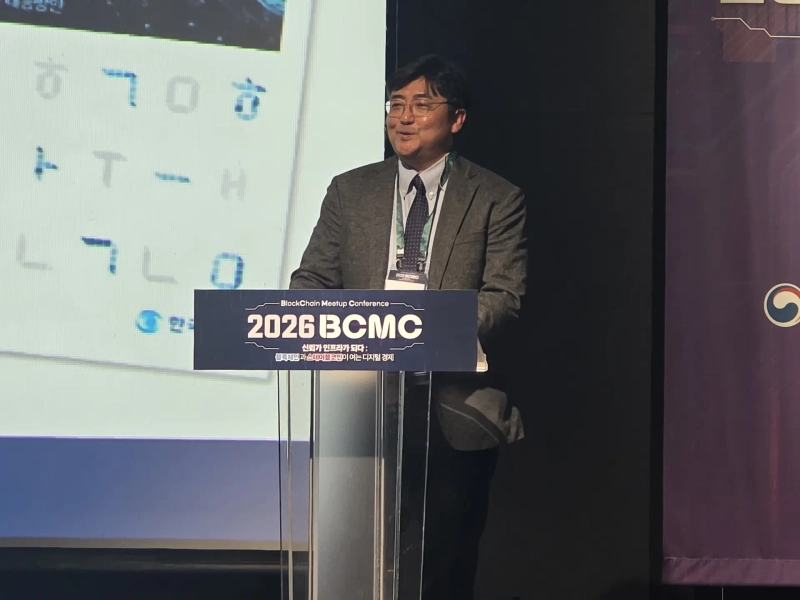
The Bank of Korea said it agrees on the need for a won-denominated stablecoin (a digital asset whose value is pegged to fiat currency), while maintaining that concerns over bank runs remain. For this reason, the BOK is reportedly conducting technical experiments aimed at reducing stablecoin risks.
On the 12th, Sung Joon-yi, a team head at the Bank of Korea, said at the “2026 Blockchain Meetup Conference” held at the Seoul Textile Center, “On the surface, stablecoins are structured to be pegged to fiat currency, but there have been occasional cases where depegging occurred or redemption became difficult,” adding, “In times of market stress, a ‘coin run’ could occur in the worst case.”
He also pointed to the liquidity of reserve assets as a key risk factor for stablecoins. “Most stablecoins hold government bonds or bank deposits as reserve assets, and if investors simultaneously demand redemptions, a ‘timing gap’ can arise in the process of liquidating those reserves into cash,” he explained.
To address such situations, the Bank of Korea is turning to the “Hangang Platform.” Hangang is a platform designed to test the issuance and transactions of a central bank digital currency (CBDC). Sung said, “Even if stablecoins circulate across multiple public blockchains, the redemption process needs to be handled on a more stable infrastructure,” adding, “The Hangang Platform aims to serve as a stable settlement and redemption channel that can act like a ‘back office’ for stablecoins.”
The presentation also unveiled the BOK’s roadmap going forward. First, in the first half of 2026, the BOK will pursue a pilot project with the Ministry of Economy and Finance to execute Treasury funds using the Hangang Platform. Then, in the second half of this year, it plans to implement real transactions for the general public, and from 2027 it plans to research and develop use cases to enable the coexistence of deposit tokens and won-denominated stablecoins.
Meanwhile, in response to a question about whether, in a coin-run-type situation, risks could spill over to banks due to a bank-led consortium stablecoin issuance structure, Sung replied, “Banks are safe because the central bank can provide support such as credit provision if such an event occurs.”

Uk Jin
wook9629@bloomingbit.ioH3LLO, World! I am Uk Jin.